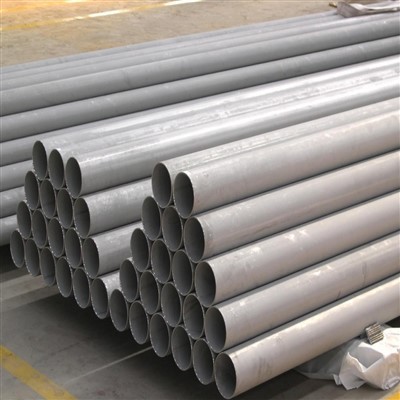
As a supplier of carbon steel pipes, I often encounter inquiries from clients about various technical aspects of these pipes. One question that frequently comes up is, "What is the critical flow velocity in carbon steel pipe?" This is a crucial topic, as the critical flow velocity has a significant impact on the performance, safety, and longevity of carbon steel pipes in different applications. Carbon Steel Pipe

Understanding the Concept of Critical Flow Velocity
Critical flow velocity refers to the maximum velocity at which fluid can flow through a pipe without causing excessive erosion, corrosion, or other forms of damage. When the flow velocity exceeds the critical value, it can lead to several problems. For instance, high – velocity flow can cause erosion of the pipe wall. The fluid, especially if it contains solid particles, can act like sandpaper, gradually wearing away the inner surface of the carbon steel pipe. This not only reduces the pipe’s thickness over time but also compromises its structural integrity.
Corrosion can also be accelerated at high flow velocities. The turbulent flow can disrupt the protective oxide layer on the surface of the carbon steel, exposing it to the corrosive elements in the fluid. This can lead to pitting corrosion, which can further weaken the pipe and potentially cause leaks.
Factors Affecting Critical Flow Velocity
Several factors influence the critical flow velocity in carbon steel pipes.
Fluid Properties
The properties of the fluid flowing through the pipe play a vital role. Viscosity is one such property. A more viscous fluid will have a lower critical flow velocity compared to a less viscous one. This is because the internal friction within a viscous fluid resists the flow, and higher velocities can cause more severe turbulence and shear forces.
Density is another important factor. Heavier fluids require more energy to move, and high – density fluids can generate greater forces on the pipe wall at a given velocity. For example, a pipe carrying a dense slurry will have a different critical flow velocity than one carrying water.
The presence of solid particles in the fluid also affects the critical flow velocity. Particles can increase the erosive potential of the fluid. The size, shape, and hardness of the particles all contribute to the degree of erosion. Larger, harder particles can cause more significant damage to the pipe wall at lower velocities compared to smaller, softer particles.
Pipe Characteristics
The diameter of the pipe is a key factor. Generally, larger – diameter pipes can handle higher flow velocities without reaching the critical limit. This is because the cross – sectional area is larger, and the fluid has more space to flow, reducing the velocity per unit area.
The roughness of the pipe’s inner surface also matters. A rough inner surface can cause more turbulence in the fluid flow, which in turn can lower the critical flow velocity. Carbon steel pipes can have different levels of surface roughness depending on the manufacturing process. For example, pipes with a smooth finish are more likely to have a higher critical flow velocity than those with a rough finish.
Operating Conditions
The pressure and temperature of the fluid can affect the critical flow velocity. Higher pressures can increase the force exerted on the pipe wall, and as a result, the critical flow velocity may be lower. Temperature can also influence the fluid properties, such as viscosity, which in turn affects the critical flow velocity. For example, an increase in temperature usually reduces the viscosity of a fluid, which may allow for a higher critical flow velocity.
Calculating the Critical Flow Velocity
There are several methods to calculate the critical flow velocity in carbon steel pipes. One common approach is based on empirical correlations. These correlations take into account the fluid properties, pipe characteristics, and operating conditions.
For example, the following empirical formula can be used as a rough estimate:
[V_{c}=K\sqrt{\frac{\rho}{\mu}}]
where (V_{c}) is the critical flow velocity, (\rho) is the fluid density, (\mu) is the fluid viscosity, and (K) is a constant that depends on the pipe material, roughness, and other factors.
However, more accurate calculations often require the use of computational fluid dynamics (CFD) simulations. CFD simulations can model the complex flow patterns within the pipe and take into account all the relevant factors, such as the shape of the pipe, the presence of bends and fittings, and the non – uniform distribution of the fluid properties.
Importance of Critical Flow Velocity in Carbon Steel Pipe Applications
In many industries, such as oil and gas, chemical processing, and water treatment, carbon steel pipes are widely used to transport fluids. Understanding the critical flow velocity is essential for ensuring the safe and efficient operation of these systems.
In the oil and gas industry, for example, carbon steel pipes are used to transport crude oil, natural gas, and various chemicals. If the flow velocity exceeds the critical value, it can lead to pipeline failures, which can have serious environmental and economic consequences. By carefully controlling the flow velocity, operators can prevent erosion and corrosion, extend the lifespan of the pipes, and reduce the risk of leaks and spills.
In chemical processing plants, carbon steel pipes are used to transport corrosive chemicals. Maintaining the flow velocity below the critical level is crucial to prevent the pipes from being damaged by the corrosive substances. This helps to ensure the safety of the plant and the quality of the products being processed.
How Our Carbon Steel Pipes Are Designed with Critical Flow Velocity in Mind
As a carbon steel pipe supplier, we take the concept of critical flow velocity very seriously. Our pipes are manufactured using high – quality carbon steel materials and advanced production techniques to ensure a smooth inner surface. A smooth surface reduces turbulence and allows for a higher critical flow velocity.
We also offer pipes in a variety of diameters to meet the different flow requirements of our clients. By carefully selecting the appropriate pipe diameter, we can help our clients optimize the flow velocity and prevent problems associated with high – velocity flow.
In addition, we provide technical support to our clients. Our team of experts can help clients calculate the critical flow velocity for their specific applications and recommend the most suitable pipe size and material. We also offer advice on how to control the flow velocity, such as through the use of flow control valves and pumps.
Conclusion
The critical flow velocity in carbon steel pipes is a complex but important concept. It is influenced by a variety of factors, including fluid properties, pipe characteristics, and operating conditions. Understanding the critical flow velocity is essential for ensuring the safe and efficient operation of carbon steel pipe systems in various industries.
Galvanized Wire As a carbon steel pipe supplier, we are committed to providing high – quality pipes that are designed to handle the flow velocities required by our clients. If you are in need of carbon steel pipes for your project, we invite you to contact us for a detailed discussion. Our team of experts will be happy to assist you in selecting the right pipes and ensuring that your system operates at optimal efficiency.
References
- Crane, D. S. (1988). Flow of Fluids Through Valves, Fittings, and Pipe. Technical Paper No. 410. Crane Co.
- Streeter, V. L., & Wylie, E. B. (1981). Fluid Mechanics. McGraw – Hill.
- Moody, L. F. (1944). Friction factors for pipe flow. Transactions of the American Society of Mechanical Engineers, 66(8), 671 – 684.
Xi’an Dongmeng Group Co., Ltd.
Xi’an Dongmeng Group Co., Ltd. is one of the leading carbon steel pipe manufacturers and suppliers in China. We warmly welcome you to buy or wholesale cheap carbon steel pipe in stock here from our factory. All customized products are with high quality and competitive price. For free sample, contact us now.
Address: Room 4107, Runfeng Building, Sanqiao New Street, Weiyang District, Xi’an City, Shaanxi Province
E-mail: office@dongmjd.com
WebSite: https://www.cndmmetal.com/
