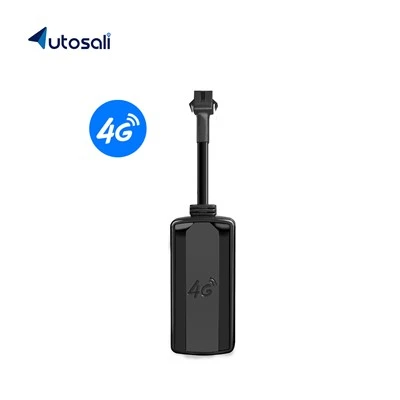
How often does a GPS Asset Tracker update its location? This is a question that I, as a supplier of GPS asset trackers, get asked quite frequently. In this blog post, I’ll delve into the factors influencing the location update frequency of GPS asset trackers, the typical update intervals, and the implications for different applications. Gps Asset Tracker
Factors Influencing Location Update Frequency
Battery Life
One of the most significant factors affecting how often a GPS asset tracker can update its location is battery life. Every time a tracker sends an update, it consumes a certain amount of power. The more frequent the updates, the faster the battery will drain. For trackers that are designed to run on battery for extended periods, such as those used in wildlife tracking or long – term asset monitoring, the update frequency is often set to a longer interval to preserve battery power. For example, in a wildlife tracking project where it may be difficult or impossible to recharge the tracker regularly, the tracker might be set to update its location every few hours or even once a day.
Network Connectivity
The availability and quality of the network also play a crucial role. If a tracker is operating in an area with poor network coverage, a frequent update interval may not be feasible. This is because the tracker may struggle to send the location data back to the server. In such cases, the tracker may be configured to retry sending data at set intervals, or it may buffer the data until a better network connection is available. For instance, in a remote forest or a deep – sea environment, the tracker might have to lengthen its update interval to increase the chances of successful data transmission.
Application Requirements
Different applications have different requirements for location update frequency. For a vehicle tracking system, real – time or near – real – time updates may be essential. Fleet managers need to know the exact location of their vehicles at all times to optimize routes, manage pick – ups and deliveries, and ensure driver safety. In this case, the tracker might be set to update its location every few seconds or minutes. On the other hand, for tracking a static asset like a storage container in a secure warehouse, a less frequent update interval, such as once a day or even once a week, may be sufficient.
Memory and Data Storage
The internal memory and data storage capacity of the tracker can also limit the update frequency. If a tracker has a small amount of memory, it may not be able to store a large number of location data points. This means that it needs to send the data to the server more frequently to avoid losing information. Conversely, a tracker with a large memory can buffer more data and send it in batches, allowing for a more flexible update frequency.
Typical Update Intervals
Real – Time or Near – Real – Time (Seconds to Minutes)
As mentioned earlier, applications such as vehicle tracking, emergency response, and high – value asset protection often require real – time or near – real – time location updates. In these scenarios, the GPS asset tracker can be configured to update its location every 5 – 30 seconds. This allows for immediate monitoring and quick decision – making. For example, in a taxi dispatch system, real – time location updates enable dispatchers to assign the nearest available taxi to a customer, reducing waiting times and improving customer satisfaction.
Frequent Updates (Minutes to Hours)
Businesses that need to monitor the movement of assets over a relatively short period but don’t require real – time tracking might opt for update intervals of 5 – 60 minutes. This is common in logistics and supply chain management, where tracking the progress of shipments between warehouses and distribution centers is important. For example, a shipping company may use GPS asset trackers to monitor the movement of containers on trucks. Updates every 15 – 30 minutes can provide enough information to ensure that the shipments are on schedule and within the expected route.
Infrequent Updates (Hours to Days)
When it comes to long – term asset monitoring or tracking in areas with limited resources, infrequent updates are more practical. For example, in the case of tracking construction equipment left at a job site overnight, an update interval of 12 hours or once a day may be sufficient. Similarly, for environmental monitoring devices that are deployed in remote areas, updates may be set to once a day or even once a week to conserve battery power and reduce data transmission costs.
Implications for Different Applications
Fleet Management
In fleet management, the choice of location update frequency has a direct impact on operational efficiency and cost. Frequent updates allow for better route optimization, reducing fuel consumption and vehicle wear – and – tear. However, more frequent updates also increase data usage and may require more advanced and expensive tracking devices. Fleet managers need to strike a balance between the need for accurate and up – to – date information and the cost of the tracking system.
Asset Protection
For high – value assets such as jewelry, art, and electronics, real – time location updates are crucial for security purposes. If an asset is stolen or moves out of a predefined area, immediate alerts can be sent to the owner or security personnel. However, in cases where the asset is stored in a secure location, such as a bank vault, a less frequent update interval can be used to save on operational costs.
Environmental Monitoring
In environmental monitoring applications, such as tracking the movement of migratory animals or monitoring the flow of pollution in a river, the update frequency depends on the research question and the nature of the phenomenon being studied. For slow – moving animals or long – term environmental trends, less frequent updates may be sufficient. But for fast – changing events, such as the spread of an oil spill, more frequent updates are necessary.
Conclusion

In conclusion, the frequency at which a GPS asset tracker updates its location is determined by a variety of factors, including battery life, network connectivity, application requirements, and memory capacity. The typical update intervals can range from seconds to days, depending on the specific use case. As a supplier of GPS asset trackers, I understand the diverse needs of different industries and offer a range of tracking solutions with customizable update frequencies. Whether you need real – time tracking for high – value assets or long – term monitoring with infrequent updates, we can provide a solution that meets your requirements.
Video Telematics If you’re interested in learning more about our GPS asset trackers or discussing your specific needs, please feel free to reach out. We’re here to help you find the best tracking solution for your business.
References
- "GPS Technology and Applications", John Wiley & Sons
- "Fleet Management Best Practices", Institute of Transportation Management
- "Wildlife Tracking with GPS", International Society for Animal Behavior
AutoSali Digital Technology
As one of the most professional gps asset tracker manufacturers and suppliers in China, we also support customized service. Please feel free to wholesale bulk advanced gps asset tracker made in China here from our factory. For pricelist, contact us now.
Address: No 282 Da Shi Street Panyu District Guangzhou, China
E-mail: violachueng@auto-sali.com
WebSite: http://www.autosaligps.com/
