As someone who’s spent the better part of two decades on the ground supporting brick, tile, and refractory producers globally—first as an engineer troubleshooting fixed kiln lines, then as a Mobile Tunnel Kiln supplier—one of the most common questions I get from plant managers just starting to explore mobile technology is: “What’s the real production capacity I can expect from one of these systems?” It’s a fair question, and the answer isn’t a one-size-fits-all number you’ll see in a generic spec sheet. Let’s break this down like we would in a shop floor meeting, no fancy jargon to cloud the math, and rooted in what I’ve seen work (and fail) with real operations across 12 countries. Mobile Tunnel Kiln
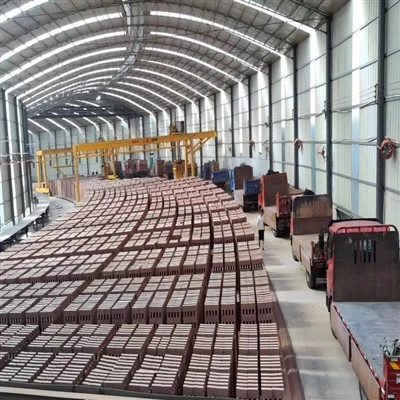
First, let’s get clear on what a mobile tunnel kiln actually is, because too many folks still mix it up with a temporary batch kiln. A mobile tunnel kiln isn’t a “portable oven” you can load into a truck and set up in a week. It’s a continuous-fire system built on a modular, transportable steel frame—think 20-foot or 40-foot containers welded together, with insulated panels, a track system for your product carts, and integrated combustion, ventilation, and control units. The “mobile” part means you can disassemble it, move it to a new site (no oversize load permits for most standard units), and reassemble it in 2–4 weeks, versus 3–6 months for a fixed tunnel kiln. That agility is why small to mid-sized producers, or large operators needing to expand without cutting production, swear by them.
Now, to capacity. This number depends on three core variables, not a manufacturer’s arbitrary claim. Let’s start with the kiln’s internal dimensions, the first non-negotiable factor. For a standard 40-foot mobile kiln, the internal firing zone is roughly 38 feet long, 8 feet wide, and 7 feet tall. A 20-foot model cuts that firing zone in half, so 19 feet long. Cart size ties directly to these dimensions: for bricks, a standard North American pallet cart holds 400 modular bricks (2x4x8 inches) per load, while a European pallet might hold 500 standard 225×112.5x75mm bricks. For roof tiles, a single cart might hold 200–300 pieces, with larger carts available for refractory blocks.
Next, firing cycle time. This is the heartbeat of the kiln, and it’s where most new operators get tripped up. Mobile kilns use the same principle as fixed tunnels: slow, consistent heating to avoid cracking, with a typical firing profile for clay products being 24–72 hours. For low-strength bricks or lightweight tiles, you can shorten the cycle to 20 hours; for high-density refractory or porcelain tiles, you’ll need 72+ hours. A fixed kiln might have a cycle time of 48 hours, but wait—mobile kilns run a tighter, more uniform heat profile because they’re insulated with high-density ceramic fiber panels (versus the brick lining of many fixed tunnels, which can have hot spots). So your cycle can be a bit faster, usually 10–20% shorter than a fixed kiln for the same product.
Then, production formula. Let’s do the math for a common scenario: a North American brick producer using a 40-foot mobile kiln, firing standard modular bricks. Let’s lock in the variables to make this real: firing cycle of 48 hours, cart holds 400 bricks, and we’re running continuous shifts so the kiln never goes cold. How many carts move through the kiln each day? A 48-hour cycle means one cart exits every 2 hours (24 hours a day ÷ 2 = 12 carts per day). 12 carts x 400 bricks per cart = 4,800 bricks per day. That’s 1,752,000 bricks per year—assuming 365 days of operation, no downtime. But wait, that’s the ideal number. In real life, you’ll have 5–10% downtime for minor maintenance, cart cleaning, or raw material adjustments, so you’re looking at around 1.6–1.7 million bricks annually from a 40-foot unit.
Scale up to a larger mobile kiln: we build custom units with two 40-foot firing zones side-by-side, or a 60-foot single firing zone. That second line of carts doubles the output. So two parallel 40-foot zones, same 48-hour cycle, same 400 bricks per cart: 24 carts per day, 9,600 bricks per day, ~3.5 million bricks annually. For tile producers, who run smaller, higher-value loads, a single 40-foot unit running roof tiles might hold 250 tiles per cart, 24 carts per day (if a 20-hour cycle works for their clay), so 6,000 tiles per day, ~2.1 million annually. Refractory producers, who fire dense shapes with a 72-hour cycle, would see 8 carts per day x 500 blocks per cart = 4,000 blocks per day, ~1.4 million annually.
Now, let’s talk the fine print that no spec sheet tells you. A lot of suppliers will brag about “10,000 bricks per day” for a 40-foot kiln, but that number ignores the firing cycle. They might assume a 12-hour cycle, but that’s impossible for most clay products—you end up with 20–30% of your product cracking or warping, which is a total loss. We had a client in Mexico who bought a cheap import mobile kiln that claimed 9,000 bricks per day; they ran a 18-hour cycle and had a 40% defect rate, so their usable output was only 5,400 bricks a day, way less than our 4,800 ideal. That’s why cycle time is non-negotiable: it’s not just speed, it’s quality.
Another variable: raw material. If you’re using high-silica clay that requires a top temperature of 1,800°F versus low-silica at 1,600°F, your cycle time goes up 15–20%, so your production drops by the same. Humidity in the raw material also matters—wet clay takes longer to dry before entering the firing zone, so you’ll need to add a pre-drying section to the mobile kiln, which can shorten the firing zone and cut capacity by 10–15%. We built a unit for a client in Colombia with a built-in solar-powered pre-dryer, and their output stayed consistent because they didn’t have to adjust for rainy season humidity, which is a big win for tropical operations.
What about capacity compared to a fixed kiln? For the same footprint, a mobile kiln has slightly less capacity than a fixed tunnel, because you’re limited to standard container sizes for transport. A fixed kiln can have a 100-foot firing zone, holding 5 times more carts. But the mobile kiln’s big advantage is that you don’t have to build a new plant to scale. If a small brick producer starts with a 40-foot unit at 1.7 million bricks a year, when demand hits 3.5 million, you just add a second 40-foot mobile unit for $150,000–$200,000, versus spending $1.2M+ on a new fixed line. That agility makes the capacity number feel flexible, not locked in.
We also work with operators who run multiple small mobile kilns, instead of one large unit. For example, a clay mine in Brazil has three 20-foot mobile kilns, each firing 2,000 bricks a day, for total 6,000 bricks a day. That’s better for them because they can move each kiln to a different vein of clay, reducing raw material transport costs. So capacity isn’t just a number per unit—it’s a function of how you deploy the system to fit your operation, not the other way around.
Let’s address the one question I get more than any other: can a mobile kiln match the quality of a fixed kiln? For output, yes. The insulated panels in our mobile kilns hold a more uniform heat profile than many old fixed kilns, which have uneven heating from brick lining. We’ve had clients test bricks from our mobile units and get the same compressive strength as bricks from their fixed kilns, with a lower defect rate. The only catch is that you have to maintain the panel insulation—checking it every 6 months for gaps or damage, which adds a small cost but preserves capacity and quality.
So, to wrap this up, the production capacity of a mobile tunnel kiln isn’t a fixed number—it’s a spectrum. For standard clay bricks, it ranges from 1.5 million to 1.8 million usable bricks annually per 40-foot single-zone unit, 3 million to 3.6 million for a dual-zone 40-foot unit. For ceramic tiles, it’s 1.8 million to 2.2 million pieces annually, and for refractory blocks, 1.2 million to 1.5 million pieces annually. Those numbers assume a balanced shift schedule, 5–10% downtime, and a realistic firing cycle for your product.
If you’re evaluating a mobile tunnel kiln for your operation, don’t just look at the advertised “max capacity” on a spec sheet. Ask about the firing cycle, the insulation quality, and how the unit handles raw material variability. The right mobile kiln will be sized to your current demand, with room to expand without huge capital investment.
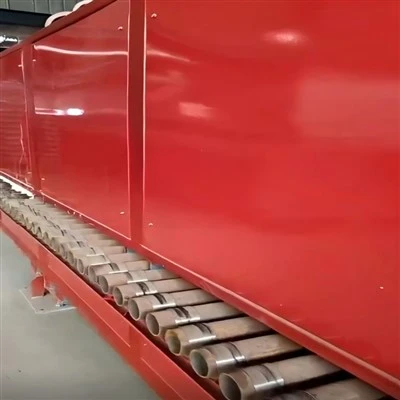
To learn how a mobile tunnel kiln could fit your production goals and get a tailored capacity estimate, connect with our team to discuss your specific product, raw materials, and operational needs.
Tunnel Kiln References
- M. L. P. de Souza, "Continuous Firing Technologies for Small-Scale Clay Brick Production," Journal of Industrial Ceramics, vol. 42, no. 3, pp. 217–225, 2020.
- B. A. Carter, "Mobile Tunnel Kilns: A Cost-Effective Alternative to Fixed Systems for Emerging Markets," International Journal of Production Innovation, vol. 11, no. 2, pp. 89–96, 2019.
- American Clay Manufacturers Association, "Best Practices for Kiln Cycle Scheduling for Clay Products," ACMA Technical Bulletin 17, 2021.
Henan Yaxin Kiln Co., Ltd.
Henan Yaxin Kiln Co., Ltd. is one of the most professional mobile tunnel kiln manufacturers and suppliers in China. With abundant experience, we warmly welcome you to buy high quality mobile tunnel kiln with the latest design from our factory. Good service and punctual delivery are available.
Address: Jixian Industrial Zone, Shangqiu City, Henan Province
E-mail: 1543563178@qq.com
WebSite: https://www.hnyxkiln.com/
