If you’ve ever stood in a warehouse or manufacturing facility, staring at a pile of frayed, outdated flexible cables, you’ve probably wondered: can these tricky, bendable wires actually be recycled? As someone who’s spent 12 years running a flexible cable supply business—first as an installer troubleshooting cable runs, then as a supplier helping clients source durable, code-compliant products—I’ve fielded this question hundreds of times. The short answer is yes, but it’s not a simple “yes” or “no”: it depends on the cable’s design, the materials it’s made of, and how it’s processed. For anyone in industrial automation, construction, or even consumer electronics who’s tasked with end-of-life cable disposal, understanding this nuance is critical to cutting waste, meeting sustainability goals, and avoiding costly compliance fines. Flexible Cable
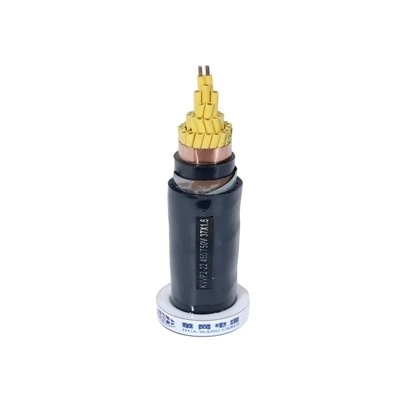
First, let’s break down what makes flexible cables different from rigid or coaxial cables. Most flexible cables are constructed with multiple fine copper strands twisted or braided together (instead of a single thick copper core) to withstand constant bending, stretching, and vibration—think the cables that connect industrial robots, power electric vehicle charging stations, or route power through construction equipment. Their outer jackets, or insulation, aren’t just basic plastic; many are made of thermoplastics like PVC, TPE (thermoplastic elastomer), or cross-linked polyethylene (XLPE) to resist abrasion, chemicals, and extreme temperatures. This mix of metals (copper, sometimes aluminum) and specialty polymers is why flexible cables were long written off as “non-recyclable” by many general waste and scrap facilities. But that narrative has shifted in the last decade, driven by both demand from manufacturers for recycled content and advances in sorting and processing technology.
Let’s start with the copper, which is the most valuable and recyclable part of any cable. Copper is a 100% recyclable metal, and its quality doesn’t degrade with repeated recycling—this is a huge point. A study by the International Copper Association found that over 80% of all copper ever mined is still in use today, thanks to closed-loop recycling. For flexible cables, the key here is that the fine copper strands, while more labor-intensive to separate from insulation than solid copper cores, can be processed with modern mechanical shredding and separation systems. Facilities that specialize in wire and cable recycling use a combination of granulators (which chop cables into small pieces), air classifiers (which blow away lighter plastic particles from heavier copper), and even electrostatic separators to pull out residual metal. I’ve seen this firsthand last year, when one of our long-term clients—a mid-sized automotive assembly plant—partnered with a local recycler to process 12,000 pounds of old flexible robot cables. They didn’t make a profit from the copper, but they avoided paying $1,800 in hazardous waste disposal fees, and the recycled copper was sold to a new wire manufacturer for use in low-voltage cables. That’s a win for the plant’s sustainability report, and a win for the recycler’s bottom line.
The challenge comes with the outer insulation, especially the specialty materials used in high-performance flexible cables. Most general plastic recyclers can’t process PVC or TPE because they’re often mixed with additives like plasticizers, flame retardants, or UV stabilizers that make them incompatible with other plastic streams. For example, rigid PVC used in pipe is much easier to recycle than flexible PVC, which has higher plasticizer content to keep it bendable. A 2022 report from the European Plastics Converters association noted that only around 12% of flexible PVC products are recycled in the EU, compared to 30% for rigid PVC. That’s not because the plastic can’t be recycled—it’s because most recycling facilities aren’t set up to sort it, and many end up in landfills or incinerated. But there’s good news here too: chemical recycling processes, which break down plastic into its basic molecular components to make new materials, are expanding. Some flexible cable manufacturers, including clients I work with, are testing closed-loop systems where their own production scrap (like excess cable lengths cut during manufacturing) is ground up and reprocessed into new insulation. This avoids the need to send those materials to a third-party recycler entirely, cutting waste at the source.
That said, not all flexible cables are created equal. There’s a big distinction between low-voltage flexible cables (used in small appliances, lighting, and low-power automation) and high-voltage heavy-duty flexible cables (used in mining equipment, EV charging, and industrial power distribution). High-voltage cables often have thicker insulation and sometimes layers of metal shielding—aluminum, steel, or copper—adding another layer of complexity to recycling. For these, manual separation of shielding and insulation is often required before shredding, which increases processing costs. But even that can be viable. A mining client I worked with last year had a stockpile of 5,000 pounds of old heavy-duty flexible trailing cables (used to power mobile mining machinery). We connected them with a specialized recycler that focused on heavy industrial cables; after manually stripping the outer rubber jacket and copper shielding, they recovered 3,800 pounds of copper, which was sold for over $2,000, covering 60% of the total disposal cost. The remaining rubber and plastic was processed into fuel for cement kilns, which is a permitted, low-emission alternative to landfilling for non-recyclable rubber materials in many regions.
So what does this mean for you, if you’re a business that uses flexible cables? Let’s get practical. First, if you’re looking to recycle your end-of-life cables, don’t just throw them in the general scrap pile. Separate flexible cables from other wires if possible, because mixed materials lower the value of the recycled output. For low-voltage cables that use standard PVC or TPE insulation, you can often use a local scrap metal recycler that offers wire processing services—many will pay you for the copper content, which offsets disposal costs. For high-voltage or heavy-duty cables, look for recyclers that specialize in industrial wire and cable; these services exist, though they may be more geographically limited depending on where you’re based.
But here’s something I’ve learned as a supplier: the best way to make flexible cables recyclable is to design them for recycling in the first place. Over the last five years, more of our clients have asked for cables that use less mixed materials, or that use insulation made from easily recyclable thermoplastics that don’t require specialty processing. For example, we now offer a line of flexible cables for automation that use TPE insulation with no added flame retardants that interfere with recycling, and the copper strands are sized to be easily separated during shredding. These cables cost a bit more upfront, but our clients report that their end-of-life disposal costs drop by 30-40%, and their sustainability scores go up—something that’s become increasingly important for customers that require ESG (environmental, social, governance) reporting from their suppliers.
I’ll be honest: there are still barriers to recycling flexible cables. The biggest one is accessibility—many small and medium-sized businesses don’t know that specialized recyclers exist, or they assume it’s too expensive to process their cables instead of just landfilling them. That’s why I make it a point to share information about this whenever I can, because I’ve seen how even small changes can add up. Last year, a small construction company that’s a client of ours switched from landfilling 2,000 pounds of old flexible construction cables each quarter to sorting them and sending them to a local recycler. They now get a check for $400 every quarter from the copper, which they put back into buying new safety equipment for their crew. That’s not just a win for the planet—it’s a win for their bottom line.
Another barrier is confusion about regulations. Many regions have updated their waste laws in the last decade to classify cables as “mixed waste” rather than pure scrap metal, which changes how they’re disposed of. For example, in California, businesses that generate over 1,000 pounds of hazardous waste a year are required to recycle any metal content from their cables, and fines for non-compliance can be up to $10,000 per violation. For businesses that don’t have experience navigating these rules, working with a flexible cable supplier that has relationships with reputable recyclers can take the guesswork out of it. We handle that end-to-end for many of our clients: they send their old cables to our warehouse, we coordinate with a certified recycler to process them, and we send them a report of the recycled material output for their ESG records. It’s a small service, but it makes a big difference for clients who are stretched thin by their day-to-day operations.
Let’s address a common myth: some people think that recycled copper is lower quality than virgin copper. That’s simply not true. The International Copper Association’s research shows that recycled copper has the same conductivity and durability as virgin copper, which is why it’s used in everything from new phone chargers to industrial power cables. The same goes for many plastic insulations: recycled TPE can be just as flexible and abrasion-resistant as virgin material, as long as it’s processed correctly. The key is working with recyclers that have the equipment and expertise to handle specialty materials, which many general scrap yards don’t.
As a flexible cable supplier, I’ve seen the demand for sustainable products grow every year. Five years ago, if a client asked about recyclable cables, I’d have to explain that it was a niche option. Now, it’s one of the first questions we get from clients in automotive, renewable energy, and robotics. That’s because businesses are realizing that sustainability isn’t just a marketing buzzword—it’s a way to reduce costs, meet customer demands, and stay compliant with evolving regulations.
So to answer the original question: yes, recycling flexible cables is absolutely possible, if you approach it the right way. It’s not a one-size-fits-all process, and it requires a little extra planning—separating cables, finding a specialized recycler, or choosing products designed for recycling. But the payoff is worth it: lower disposal costs, less waste going to landfills, and a stronger ESG profile.

If you’re a business owner, facilities manager, or maintenance supervisor looking to streamline your flexible cable recycling process, or if you’re in the market for recyclable flexible cables for your operations, I’d encourage you to reach out and connect. We work with a wide range of clients, from small construction firms to large manufacturing plants, and we can help you design a cable solution that fits your needs and your sustainability goals. Whether you have a stockpile of old cables you need to dispose of, or you’re looking to source new, eco-friendly flexible cables, we’re here to help.
Power Cable References
International Copper Association. (2023). Global Copper Recycling Trends and Circular Economy Impact.
European Plastics Converters. (2022). Flexible Plastics Recycling: Barriers and Opportunities for Industrial Applications.
U.S. Environmental Protection Agency. (2021). Sustainable Materials Management: Wire and Cable Recycling Best Practices for Commercial and Industrial Facilities.
Anhui Huawang Cable Co., Ltd.
As one of the most professional flexible cable manufacturers and suppliers in China, we also support customized service. If you’re going to buy discount flexible cable, welcome to get pricelist from our factory. Quality products and reasonable price are available.
Address: No. 32, East Street, Batian Street, Datong Town, Tianchang City, Anhui Province
E-mail: Linda@huawangcable.com
WebSite: https://www.huawang-cable.com/
