Hey there! I’m here as a supplier of Secondary Current Injection Testing Equipment, and today we’re gonna dig into what the transient response of this equipment is all about. Secondary Current Injection Testing Equipment
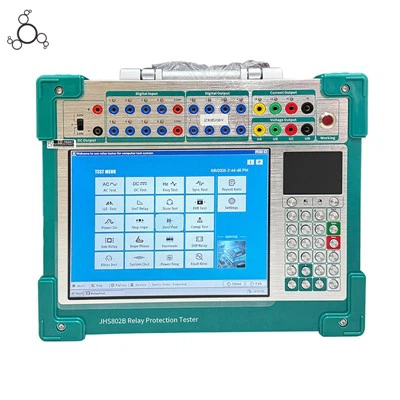
First off, let’s understand what Secondary Current Injection Testing Equipment does. It’s a crucial tool in the electrical testing world. This equipment is used to simulate fault conditions in a power system, mainly by injecting a secondary current into protective relays, meters, and other electrical components. By doing so, we can check if these devices are working properly and will respond as expected when a real – world fault occurs.
Now, to the main topic: the transient response. In simple terms, the transient response of our Secondary Current Injection Testing Equipment refers to how the equipment behaves during the short – lived, sudden changes that happen when we start or stop injecting the current.
When we begin a test, it’s not like we smoothly ramp up the current from zero. There’s a sudden switch, and that creates a whole bunch of electrical phenomena. For example, there are inductive and capacitive effects in the circuits. Inductors resist changes in current, and capacitors resist changes in voltage. So, when we start the current injection, the inductor in the circuit is like, "Hey, slow down! I don’t want to change this current so fast." And the capacitor might be saying, "I need to adjust the voltage here!"
This interaction between inductance, capacitance, and resistance in the circuit leads to oscillations and overshoots. That’s what we call the transient response. The current and voltage values might spike above or below their normal long – term values during this initial period. You can picture it as a roller – coaster ride for the electrical signals. They go up and down in a wild way before settling down to a stable state.
As a supplier, we’ve had plenty of experiences dealing with the challenges of transient response. One common issue is getting accurate test results during this transient period. Since the values are constantly changing, it can be really hard to measure the responses of the relays and other devices precisely. We’ve had customers who were frustrated because they couldn’t get reliable data right at the start of the test.
To tackle this, we’ve engineered our equipment to have a fast – settling time. Our R & D team has worked their magic to reduce the duration of these wild oscillations. We use advanced algorithms and high – quality components to dampen the effects of inductance and capacitance. This means that our equipment reaches a stable current and voltage state much faster than some of the competitors out there.
Another aspect of the transient response that we keep a close eye on is the stress it puts on the equipment itself. All those sudden changes in current and voltage can cause wear and tear on the internal components. We do a lot of testing in our labs to make sure that our equipment can withstand these transients without breaking down. We’ve even had some cases where the design of the circuit had to be tweaked to improve its durability.
One of the cool things about our understanding of transient response is how it helps us in customizing solutions for our customers. Different power systems have different electrical characteristics, like different levels of inductance and capacitance. So, a one – size – fits – all approach just won’t work. We take the time to analyze the customer’s specific requirements, and based on that, we can adjust our equipment to provide the best transient response for their situation.
For instance, if a customer has a power system with a high inductance, we can optimize our equipment to handle the large inrush currents that occur during the transient phase. We might add extra damping circuits or adjust the software algorithms to make the equipment more stable.
Now, let’s talk about how the transient response affects the overall performance of the power system components being tested. Protective relays are a key part of any power system. They’re supposed to detect faults and isolate the faulty part of the system to prevent damage. But if the relay doesn’t respond correctly during the transient period, it could lead to false trips or, even worse, fail to trip when a real fault occurs.
Our Secondary Current Injection Testing Equipment helps in making sure that the relays are properly calibrated to handle these transient conditions. We can simulate different types of faults, including those with complex transient responses, to test the relays thoroughly. This way, our customers can be confident that their relays will work as expected in the real world.
Meters are another component that can be affected by the transient response. During the transient period, the meter readings can be inaccurate. Our equipment allows us to test how the meters respond to these sudden changes. We can then make adjustments to the meter settings or recommend better – performing meters if needed.
In the market, there’s a lot of competition when it comes to Secondary Current Injection Testing Equipment. But what sets us apart is our deep understanding of the transient response. We know that it’s not just about injecting a current; it’s about how the equipment behaves during those critical first moments.
We’re constantly improving our products to offer the best transient response performance. We invest in new technologies and keep up with the latest research in electrical engineering. This ensures that our customers are always getting the most advanced and reliable testing equipment.
If you’re in the business of electrical testing, whether you’re part of a utility company, an electrical contractor, or an engineering firm, having the right Secondary Current Injection Testing Equipment with a great transient response is crucial. You need to be able to trust that your equipment will give accurate results, no matter how complex the transient conditions are.
So, if you’re looking for a supplier who really knows their stuff when it comes to transient response in Secondary Current Injection Testing Equipment, reach out to us. We’re here to have a chat with you about your specific needs, answer any questions you might have, and work together to find the perfect testing solution for your projects. Don’t hesitate to contact us for a procurement discussion. We’re eager to help you get the best out of your electrical testing operations.
HV Switch Tester References:
- Electrical Engineering Principles textbooks
- Research papers on power system testing and transient analysis
- Internal reports from our R & D team on equipment performance and improvements
Wuhan Jiuhua Jingce Power Equipment Co., Ltd.
As one of the most experienced secondary current injection testing equipment manufacturers in China, we offer a wide range of products with superior quality. Please feel free to wholesale bulk durable secondary current injection testing equipment from our factory. For price consultation, contact us.
Address: 601,Unit 1,Building D4-02,Optics Valley Center,303 OpticsValley Avenue,Wuhan
E-mail: market@wuhanjhjc.com
WebSite: https://www.powertransformertester.com/
