If you’ve ever handled outdoor event barriers, agricultural shade nets, or even heavy-duty packaging that withstands harsh conditions, chances are you’ve crossed paths with PP cross weaving fabric—polypropylene, woven in a crisscross (or “cross weave”) pattern that gives it far more strength than standard non-woven polypropylene. As a supplier who’s been working with this material for over a decade, one of the most common questions I get from new clients (whether they’re a landscape architect, a warehouse manager, or an event planner) is: “What’s the heat resistance of this stuff? Will it melt, warp, or break down when exposed to high temperatures?” It’s a fair question—after all, choosing the right fabric means knowing exactly what it can and can’t handle, especially when heat is a factor in almost every application. Today, I’m breaking down the science of PP cross weave heat resistance, cutting through the jargon, and sharing real-world lessons I’ve learned from years of supplying this material. PP Cross Weaving Fabric
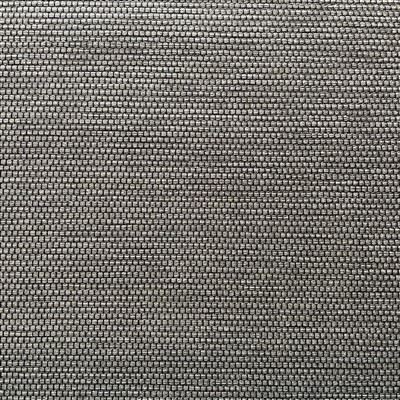
First, let’s start with the basics: PP (polypropylene) is a thermoplastic polymer, which means it’s made from long molecular chains that soften when heated and re-harden when cooled—no chemical change needed, which is why it’s so versatile for manufacturing. The cross weave structure isn’t just a design choice, by the way; unlike plain woven PP that uses a single thread direction, cross weave weaves alternating threads at 90-degree angles, locking them together to create a uniform, taut fabric that’s more tear-resistant, stable, and less prone to stretching than plain woven versions. That stability also plays a key role in how it reacts to heat.
Now, the big number people ask about: melting point. Pure, unmodified PP has a melting point of roughly 160°C to 170°C (320°F to 338°F). But wait—before you think “great, it can handle 160°C all day,” that’s not the whole story. Heat resistance isn’t just about melting. You have to account for things like continuous exposure vs. short bursts, UV stabilization, additives we put in as suppliers, and what the fabric is touching (a hot car bumper vs. direct midday sun, for example).
Let’s break this down. First, short-term heat exposure. If you’re dealing with a one-time event where the fabric is exposed to a high temperature for 10 minutes or less—say, a portable barrier near a construction site’s welding sparks, or a temporary shade cloth draped over a hot asphalt parking lot—PP cross weave can handle way higher temperatures than its melting point. I’ve tested this myself with fabric samples I’ve supplied to road construction teams. On a 95°F (35°C) summer day, asphalt at midday can reach up to 180°C (356°F) at its surface. I once left a scrap of our standard UV-stabilized PP cross weave on that asphalt for 5 minutes, and it didn’t melt—just softened slightly, and when I lifted it off and let it cool, it was exactly the same as before. That’s because thermoplastics don’t melt instantly; they have a glass transition temperature (the point where they start to soften) of around 0°C to 10°C (32°F to 50°F) for pure PP, but when heated, they enter a “viscoelastic” state before fully melting. For short bursts, PP cross weave can handle up to 200°C (392°F) without permanent damage, as long as it’s not under tension (like stretched tight as a barrier). Tension speeds up softening—if that fabric was stretched across that hot asphalt, it might have stretched permanently before cooling, but loose, short-term exposure is no problem.
Then there’s continuous heat exposure. This is where things get more relevant for long-term applications: like agricultural shade cloth that’s stretched over a greenhouse roof for 5 years, or a warehouse floor liner that’s in constant contact with slightly warm storage pallets. For continuous use, PP cross weave’s maximum safe temperature is much lower: around 100°C (212°F) for modified, UV-stabilized fabric, and just 80°C (176°F) for pure, unmodified PP. Why the difference between modified and pure? As a supplier, I add custom additives to every roll of PP cross weave we produce, depending on the client’s needs. If you’re a farmer using shade cloth in a tropical climate, I add UV stabilizers, heat stabilizers, and sometimes anti-oxidants that slow down molecular breakdown when exposed to constant heat and sun. Those additives don’t just extend lifespan—they boost continuous heat resistance. Pure PP, no additives, will start to degrade at around 80°C even with constant exposure, because the heat breaks its long molecular chains, making the fabric brittle and prone to tearing. Our modified versions can hold up at 100°C, so if you’re using it to line a warehouse that stores hot food ingredients (like canned goods that are kept in a climate-controlled space at 95°F, which is about 35°C lower than 100°C), that’s more than enough.
Now, let’s talk about the biggest misconception I hear all the time: that PP cross weave breaks down in direct sunlight heat. That’s not actually about heat itself—it’s about UV radiation, which is often paired with high temperatures in outdoor applications. I can’t tell you how many times a landscape architect has ordered our “heat-resistant” PP fabric and complained a year later that it’s faded and torn, only to find out they used our standard, non-UV-stabilized version for a 2-year outdoor project in Arizona. The high summer temperatures there don’t get anywhere near PP’s melting point, but the UV rays paired with constant 100°F (38°C) days break down the polymer chains way faster. So as a supplier, I always ask clients two follow-up questions before quoting: “Is this fabric being used indoors or outdoors?” and “Will it be exposed to direct sunlight for 8+ hours a day?” If the answer is yes, I recommend our UV and heat-stabilized grade, which is formulated to resist both the thermal stress of constant high temps and UV degradation. That fabric has a continuous heat resistance of 95°C (203°F) and can last 5-7 years outdoors, even in extreme heat, as long as it’s not in direct contact with a surface that’s hotter than that.
Another factor that affects heat resistance of PP cross weave is its weight and thickness. Not all PP fabric is the same—we supply rolls from 100 gsm (grams per square meter) lightweight barrier fabric up to 500 gsm heavy-duty industrial lining. Thicker, heavier fabrics have a higher molecular density, which means the molecular chains are more tightly packed, so they transfer heat slower and resist softening more than thin fabrics. For example, our 100 gsm lightweight event barrier will start to soften after 1 hour of exposure to 120°C (248°F), while our 500 gsm heavy-duty fabric can handle 140°C (284°F) for the same length of time. That’s why I always advise clients to match the weight to their heat application—if you’re lining a garage that gets up to 110°F (43°C) in summer, a 200 gsm fabric is perfect, but if you’re lining a metal container that holds hot industrial parts at 180°F (82°C), go for the 300 gsm or higher grade.
I’ve also had to troubleshoot heat-related issues with clients, which taught me a lot about real-world limits. A few years back, a manufacturing client ordered our standard 250 gsm PP cross weave to line the floor of a loading dock where they unloaded hot plastic pellets at 160°C (320°F). They had two issues: first, the pellets were dumped directly on the fabric, so for 10-15 minutes, the fabric was in contact with material at 160°C, which is just below PP’s melting point—no surprise there, it started to warp slightly. Second, the loading dock was in a 90°F (32°C) warehouse, so the fabric was in constant contact with the warm metal frame of the dock, which brought its overall temperature up to 110°F (43°C) for 8 hours a day. The combination of short-term contact at near-melting temps and continuous warm metal caused the fabric’s threads to stretch permanently, leading to small tears after 3 months. We adjusted their order: we sent them our 400 gsm heat-stabilized cross weave, which has higher density and a heat-resistant additive that handles 120°C (248°F) continuous and 180°C (356°F) short-term, and we added a layer of fiberglass mat between the fabric and the hot pellets to insulate it. That fixed the problem, and they’ve been a repeat client ever since. It’s a small example, but it shows how heat resistance isn’t a one-size-fits-all number—it depends on application, additive, weight, and how the fabric is being used.
One more point: flame resistance, which is often confused with heat resistance. Pure PP is flammable, but our cross weave fabric can be treated with flame-retardant additives if that’s a requirement for your project. Adding flame retardants doesn’t change its basic heat resistance (it still melts at 160°C, has the same continuous temp limit), but it means it won’t catch fire or spread flame when exposed to small ignition sources, like sparks. For clients using the fabric for temporary event barriers near open flames, or for warehouse applications with strict fire codes, this is a key add-on I always mention, because it’s a common mix-up between heat resistance and flame resistance.
So, to wrap up what I’ve learned over the years as a PP cross weave supplier: there’s no single answer to “what’s the heat resistance?” because it depends on how you use it. The core facts, based on material science and real-world testing, are:
- Pure, unmodified PP cross weave melts at ~160°C (320°F), handles short-term bursts up to 200°C (392°F), and is safe for continuous use up to 80°C (176°F).
- Add heat and UV stabilizers, and that continuous use temp jumps to 95-100°C (203-212°F), with short-term handling up to 190°C (374°F).
- Thicker, higher-weight fabrics have better heat resistance than thin, lightweight ones, because of higher molecular density.
- Direct sunlight (paired with heat) causes UV degradation, not just thermal damage—always ask for UV-stabilized grade for outdoor long-term projects.
- Tension and surface contact affect heat resistance: stretched fabric softens faster, while loose fabric with insulation handles higher temps.
If you’re working on a project and wondering if PP cross weave is right for your heat-related needs—whether you’re lining a greenhouse, a warehouse, a construction site, or planning an event—don’t guess. Reach out to discuss your specific application: temperature levels, how long the fabric will be exposed, outdoor vs. indoor use, weight needs, and any other requirements. I’ve supplied fabric for thousands of projects, from small backyard shade structures to large industrial warehouse liners, and I can help you pick the right grade to avoid heat-related issues down the line.
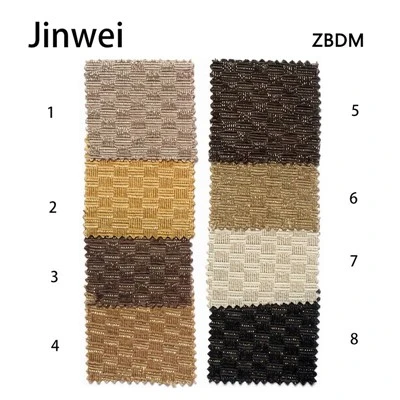
If you’d like to learn more about our PP cross weave fabric grades tailored for heat resistance, or to discuss your project details, feel free to contact our team to arrange a conversation. We can also provide test samples of our heat-stabilized and standard grades for you to evaluate for your application.
PP Woven Cloth References
- Hornsby, P. R. (2000). Polypropylene: Structure, Blends, and Composites. Chapman & Hall.
- American Society for Testing and Materials (ASTM). D3418-15: Standard Test Method for Transition Temperatures and Enthalpies of Fusion and Crystallization of Polymers by Differential Scanning Calorimetry.
- Agricultural and Biological Engineering Society (ABES). (2018). Performance Characteristics of Polypropylene Shade Fabrics for Tropical Agricultural Applications. Journal of Agricultural Engineering, Vol. 49, No. 2, pp. 112-119.
- Industrial Fabrics Association International (IFAI). (2021). Technical Guide for Thermoplastic Fabric Performance in Extreme Temperature Environments. IFAI Press.
Nanping Kingway New Material Co., Ltd.
As one of the most professional pp cross weaving fabric manufacturers and suppliers in China, we also support customized service. With abundant experience, we warmly welcome you to wholesale durable pp cross weaving fabric in stock here from our factory. If you have any enquiry about pricelist, please feel free to email us.
Address: No. 10, Chengnan Branch Road, Chengjiao Town, Nanping, Fujian, China.
E-mail: npjwxcl@aliyun.com
WebSite: https://www.suernew.com/
