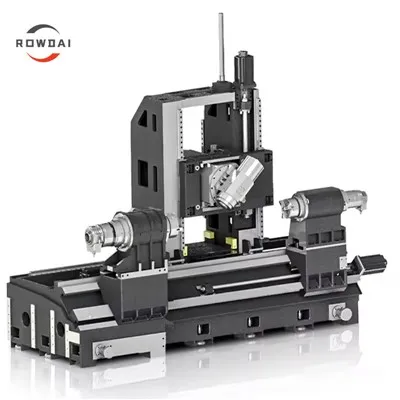
As a supplier of compound grinding machines, I often encounter inquiries from customers about the machine’s capabilities, especially regarding its suitability for grinding large – scale workpieces. In this blog, I will delve into the technical aspects, advantages, limitations, and practical applications of using a compound grinding machine for large – scale workpiece grinding. Compound Grinding Machine
Technical Features of Compound Grinding Machines
A compound grinding machine is a versatile piece of equipment that combines multiple grinding processes, such as surface grinding, cylindrical grinding, and internal grinding, into one machine. This integration allows for a more comprehensive and efficient grinding operation. The machine is typically equipped with high – precision spindles, advanced control systems, and a variety of grinding wheels to accommodate different workpiece materials and geometries.
The high – precision spindles are designed to provide stable and accurate rotation, which is crucial for achieving the required surface finish and dimensional accuracy. The advanced control systems, often based on CNC (Computer Numerical Control) technology, enable operators to program complex grinding paths and parameters, ensuring consistent results across multiple workpieces.
Advantages of Using Compound Grinding Machines for Large – Scale Workpieces
1. Versatility
One of the most significant advantages of a compound grinding machine is its versatility. For large – scale workpieces, which may have complex shapes and multiple surfaces to be ground, a compound grinding machine can handle different grinding tasks without the need for multiple machines. For example, a large – scale industrial component may require both surface and cylindrical grinding. With a compound grinding machine, the operator can easily switch between these two processes, saving time and reducing the need for additional equipment.
2. Precision
Compound grinding machines are known for their high precision. When grinding large – scale workpieces, maintaining dimensional accuracy and surface finish is crucial. The advanced control systems and high – precision spindles of compound grinding machines allow for extremely accurate grinding operations. This is especially important in industries such as aerospace, automotive, and heavy machinery, where large – scale components must meet strict quality standards.
3. Efficiency
By combining multiple grinding processes, compound grinding machines can significantly reduce the overall processing time for large – scale workpieces. Instead of moving the workpiece between different machines for different grinding operations, the entire process can be completed on one machine. This not only saves time but also reduces the risk of errors that may occur during workpiece transfer.
Limitations of Using Compound Grinding Machines for Large – Scale Workpieces
1. Machine Size and Capacity
Although compound grinding machines are versatile, they may have limitations in terms of the size and weight of the workpieces they can handle. Large – scale workpieces, especially those with extremely large dimensions or heavy weights, may exceed the machine’s physical capacity. In such cases, specialized large – scale grinding machines may be required.
2. Cost
Compound grinding machines are generally more expensive than single – purpose grinding machines. The initial investment in a compound grinding machine can be a significant barrier for some businesses, especially small – to medium – sized enterprises. Additionally, the maintenance and operation costs of compound grinding machines are also relatively high, which may further increase the overall cost of using the machine for large – scale workpiece grinding.
Practical Applications of Compound Grinding Machines for Large – Scale Workpieces
1. Aerospace Industry
In the aerospace industry, large – scale components such as turbine blades, aircraft engine casings, and wing spars require high – precision grinding. Compound grinding machines can be used to grind these components, ensuring the required surface finish and dimensional accuracy. The versatility of compound grinding machines allows for the efficient processing of complex geometries, which is common in aerospace components.
2. Automotive Industry
The automotive industry also benefits from the use of compound grinding machines for large – scale workpiece grinding. Components such as engine blocks, crankshafts, and transmission housings can be ground using compound grinding machines. The high – precision and efficiency of these machines help to improve the quality and productivity of automotive manufacturing.
3. Heavy Machinery Industry
In the heavy machinery industry, large – scale components such as gears, shafts, and hydraulic cylinders need to be ground to meet strict quality standards. Compound grinding machines can handle these components, providing the necessary precision and surface finish. The ability to perform multiple grinding operations on one machine is particularly useful in the heavy machinery industry, where large – scale components often require complex grinding processes.
How to Determine if a Compound Grinding Machine is Suitable for Your Large – Scale Workpiece
1. Workpiece Size and Weight
The first step is to determine the size and weight of your large – scale workpiece. Check the specifications of the compound grinding machine to ensure that it can accommodate the workpiece. If the workpiece is too large or heavy, you may need to consider a specialized large – scale grinding machine.
2. Workpiece Geometry
The geometry of the workpiece is also an important factor. If the workpiece has complex shapes and multiple surfaces to be ground, a compound grinding machine may be a good choice due to its versatility. However, if the workpiece has a simple geometry and only requires a single grinding process, a single – purpose grinding machine may be more cost – effective.
3. Quality Requirements
Consider the quality requirements of your workpiece, such as surface finish, dimensional accuracy, and tolerance. Compound grinding machines are generally capable of providing high – precision grinding, which is suitable for workpieces with strict quality requirements. However, if the quality requirements are relatively low, a less expensive grinding machine may be sufficient.
Conclusion
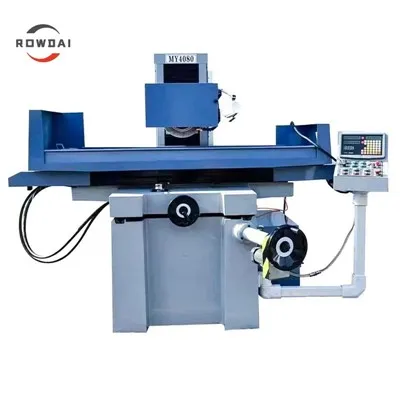
In conclusion, a compound grinding machine can be used for grinding large – scale workpieces, and it offers many advantages such as versatility, precision, and efficiency. However, it also has some limitations, such as machine size and capacity and cost. When considering using a compound grinding machine for large – scale workpiece grinding, it is important to carefully evaluate your workpiece’s size, geometry, and quality requirements.
Horizontal Machining Center If you are interested in learning more about our compound grinding machines and how they can meet your large – scale workpiece grinding needs, we encourage you to contact us. Our team of experts is ready to work with you to find the best solution for your specific requirements. We look forward to discussing your project and helping you achieve your grinding goals.
References
- "Grinding Technology: Theory and Applications of Machining with Abrasives" by Stephen Malkin.
- "Manufacturing Engineering and Technology" by Serope Kalpakjian and Steven Schmid.
- Industry reports and white papers on grinding machine technology and applications.
Henan Rowdai Machinery Equipment Co., Ltd.
As one of the most professional compound grinding machine manufacturers in China, we’re featured by quality products and good price. Please rest assured to buy high-grade compound grinding machine for sale here from our factory. If you have any enquiry about cooperation, please feel free to email us.
Address: Building 9, E-Commerce Industrial Park, High-Tech Zone, Zhengzhou, Henan, China
E-mail: rowdai@rowdai.com
WebSite: https://www.rowdai.com/
