Yo, I’m a supplier of gypsum block production lines. Over the years, I’ve seen a bunch of common problems pop up in these setups, and I’m here to share how to fix ’em. Gypsum Block Production Line
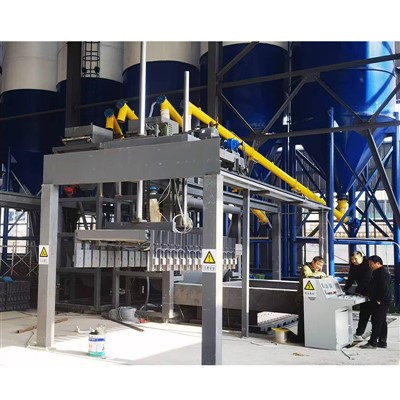
First off, let’s talk about material mixing issues. One of the most frequent problems is uneven mixing of gypsum and other additives. When the gypsum and additives don’t blend properly, you end up with blocks that have inconsistent properties. Some parts might be stronger, while others are weaker. This can lead to quality control issues down the line.
The reason for uneven mixing can be a few things. Sometimes, the mixing equipment isn’t powerful enough. A low – speed mixer might not be able to break up clumps of gypsum and thoroughly combine the additives. Also, if the feeding of materials into the mixer isn’t well – regulated, you could have too much of one ingredient in one area of the mixer.
To solve this, you need to invest in a high – quality mixer. Look for one with a good mixing speed and proper blade design. The blades should be able to reach all parts of the mixing chamber to ensure a thorough blend. Another thing is to use a reliable feeding system. This can be a conveyor belt with a metering device that precisely controls how much of each material goes into the mixer at a time.
Another common headache is block deformation. You’ll notice that some gypsum blocks come out of the mold looking all warped or with uneven surfaces. This is a big no – no in the construction industry where proper dimensions are crucial.
There are a few reasons for block deformation. One major factor is improper curing. If the gypsum blocks are not cured at the right temperature and humidity, they can shrink or expand unevenly. For example, if the curing area is too hot and dry, the surface of the block might dry out too quickly, causing it to crack and deform.
Another possible reason is issues with the mold. A worn – out or poorly designed mold can impede the proper formation of the block. If the mold has rough surfaces or isn’t well – sealed, it can affect the final shape of the block.
To combat block deformation, you need to set up a proper curing environment. Use a curing chamber where you can control the temperature and humidity precisely. Follow the recommended curing parameters for the type of gypsum you’re using. As for the molds, regularly inspect them for wear and tear. Replace any damaged molds and ensure that the new ones are of high quality with smooth and well – fitting surfaces.
Now, let’s touch on problems with the production line’s electrical system. Electrical glitches can bring the whole production to a grinding halt. You might experience power surges, short – circuits, or issues with the control panels.
Power surges can damage sensitive electrical components in the production line, such as motors and sensors. Short – circuits are not only a safety hazard but can also cause significant damage to the equipment. And problems with the control panels can lead to incorrect operation of the machinery, resulting in production errors.
The root causes of these electrical problems can be poor wiring, overloaded circuits, or outdated electrical components. To fix these issues, start by having a professional electrician inspect the entire electrical system of the production line. They can check for loose connections, frayed wires, and other potential hazards. Upgrade any old or worn – out electrical components to ensure better performance and reliability. Also, install surge protectors to safeguard against power surges.
Clogging in the material conveying system is yet another common problem. The pipes and chutes that transport gypsum and other materials can get blocked, which disrupts the flow of production. This usually happens when there are large particles or lumps in the material, or when the conveying speed is too slow.
To prevent clogging, install a screening device at the input point of the conveying system. This will filter out any large particles before they enter the pipes. You can also increase the conveying speed, but make sure that the machinery can handle the faster flow. Regularly clean the pipes and chutes to remove any accumulated material.
Product quality variations are also a real pain. You might find that from batch to batch, the quality of the gypsum blocks can vary. This can be due to inconsistent raw materials, improper process control, or operator error.
To ensure consistent product quality, start by sourcing high – quality raw materials from reliable suppliers. Establish strict quality control measures for the incoming materials. In terms of process control, use automated systems as much as possible. These systems can monitor and adjust key parameters like mixing time, curing temperature, and pressure. And don’t forget about training your operators. Well – trained operators are less likely to make mistakes that can affect product quality.
Now, let’s talk about the mold release problem. Sometimes, the gypsum blocks stick to the molds, making it difficult to remove them. This can damage the blocks and slow down production.
The main reason for this is usually an improper mold release agent or incorrect application of it. If the release agent isn’t compatible with the gypsum and the mold material, it won’t work effectively. Also, if it’s not applied evenly or in the right amount, the blocks may still stick.
To fix this, choose a high – quality mold release agent that is specifically designed for gypsum block production. Follow the manufacturer’s instructions for application. Make sure to apply it evenly on the mold surfaces before pouring in the gypsum mixture.
Maintenance is another aspect where things can go wrong. If you don’t maintain your gypsum block production line regularly, you’re asking for trouble. Machinery can break down, and the overall efficiency of the production line will decrease.
Create a maintenance schedule that includes regular inspections, lubrication of moving parts, and replacement of worn – out parts. Train your maintenance staff well so they can handle routine checks and minor repairs. It’s also a good idea to have a stock of essential spare parts on hand so you can quickly replace any faulty components.
In conclusion, running a gypsum block production line can be a bumpy ride with all these common problems. But with the right solutions, you can keep your production running smoothly and your products at a high – quality standard.
If you’re in the market for a gypsum block production line or facing issues with your current one and need some advice, don’t hesitate to reach out. We’re here to help you get the most out of your production.
Paperboard Gypsum Board Production Line References:
- Industry – specific textbooks on gypsum block manufacturing
- Technical manuals from equipment manufacturers
- Professional insights from experienced colleagues in the gypsum production field
Shineye Mach Co., Ltd.
Shineye Mach Co., Ltd. is one of the most reliable manufacturers and suppliers of gypsum block production line in China, also supports customized service with reasonable price. Please feel free to buy advanced gypsum block production line made in China here from our factory. For quotation, contact us now.
Address: Jinzhou Circular Industry Park, Jinzhou City, Shijiazhuang City, Hebei Province, China
E-mail: xiangyijixielucia@yeah.net
WebSite: https://www.shineyemach.com/
