Hey everyone, let’s talk about something that’s probably making a bunch of stuff you use every single day, and you just didn’t stop to think about it: injection molding. I’m Jake, and I run an injection molding supplier business—so this isn’t just textbook stuff for me, it’s the stuff I get my hands on every single week, fixing mold issues, tweaking temperatures, and working with clients to turn their random ideas into actual parts. Let me break this down without all the jargon, promise. Injection Molding

First off, what is injection molding, really? At its core, it’s basically the fastest, most budget-friendly way to make plastic parts in huge batches. Like, if you’ve got a part that needs to look the same 10,000 times, this is how you do it. It’s like the assembly line for plastic, but way more precise than just squirting goop into a mold and calling it a day. Let’s walk through the process step by step, because that’s where it clicks for most people.
First, you start with a material. Almost always plastic pellets—think of them like tiny, hard beads. Wait, not just any plastic, by the way. There’s ABS for things like phone cases, polypropylene for food containers, even high-temperature stuff for car engine parts. You feed those pellets into a big machine, right? It’s called an injection molding machine, and it looks kind of like a giant metal clamp with a barrel and a screw inside. That screw is key. It spins and pushes the pellets down the barrel, and there are heaters along the barrel that melt those pellets into a thick, syrupy liquid—like warm honey, not water thin. No lumps, though—super important, because if there’s a hard pellet left, your part will have a bump or a flaw.
Next up, the mold. This is the magic part, and it’s custom-made for every single part. Like, if you need a plastic Lego brick, the mold would have two halves: one with the stud on top, one with the hollow part on the bottom. These molds are usually steel (sometimes aluminum for smaller runs, but steel lasts way longer) and super precise—we’re talking tolerances of a few thousandths of an inch. That’s why the parts come out identical every time. The two halves of the mold are clamped together super tight—like, with hundreds of tons of force, usually. That’s not to hold it closed so stuff doesn’t leak, though the pressure from the melted plastic would try to push it apart—it’s also to make sure the mold halves line up perfectly. If they’re even a tiny bit off, you get a flash, that thin extra plastic edge you have to file off, or a part that’s warped.
Once the mold is clamped shut, the machine’s screw shoves that melted plastic into the mold cavity at high speed. It’s like squeezing toothpaste out of a tube, but way more controlled. You have to get the pressure right, too. Too little, and the plastic won’t fill every nook and cranny of the mold—like if you tried to fill a cup with a syrup that’s too thick and didn’t pour it all the way. Too much pressure, and you’ll crack the mold or get that flash I mentioned earlier.
Then comes the waiting game—cooling. The mold has cooling lines running through it, usually with cold water or oil, that take the heat out of the plastic fast. How long you wait depends on the part size. A tiny plastic button might take 10 seconds, a big car bumper could take a minute or more. This is where I used to mess up when I first started—if I tried to rush the cooling, the part would warp as it shrank, because different parts of the mold cool at slightly different rates. Now I’ve got it dialed in, but it took way too many scrapped parts to learn that.
Once the plastic is solid, the mold opens back up, and an ejector pin (or a bunch of them, depending on the part) pushes the finished part out. Boom—done. Then the mold closes again, and it repeats, over and over. Some machines can do thousands of parts an hour. That’s why injection molding is perfect for mass production.
Now, let’s talk about why this is such a big deal, not just for factories but for literally everyone. Think about the stuff around your house: your toothbrush handle, the buttons on your remote, the frame of your laptop, the parts inside your vacuum, even the little water bottle caps you twist off. All of that was almost certainly made with injection molding. Even non-plastic parts sometimes use it, too—like metal parts with powdered metal mixed in, or even ceramic for some medical devices. The process is super versatile.
Wait, but let’s get real about working with this, because it’s not all perfect. I’ve been in this game for 8 years, and I can count on one hand the number of times a mold ran exactly the way we planned on the first try. Most of the time, there’s a kink. Maybe the plastic is too brittle, maybe it’s sticking to the mold, maybe the color is off (yes, we can dye the plastic, but you have to test the dye with the material first, because some dyes mess with the strength). I had a client last year who made custom phone cases for a new model, and the first run came out with tiny air bubbles inside that made the case crack if you dropped it. We had to tweak the injection pressure and the cooling time, and fixed it on the second run. That’s the stuff no textbook tells you—how to problem-solve when the machine’s being finicky.
A lot of people ask me: “Is injection molding only for big companies?” Hell no. I work with small startups, too—guys who have a random idea for a custom dog feeder part, or a kid who made a prototype for a toy they want to sell, and they need 500 parts, not 500,000. The cool thing about injection molding now is that you can do small runs too, not just mass production. Before, if you needed less than 10,000 parts, it was too expensive because you had to pay for the mold. Now, with faster mold making and more flexible machines, we can do smaller batches without breaking the bank. That’s why startups love working with us—they don’t have to bet their entire budget on a huge first order.
Let me also clear up a common myth: a lot of people think injection molding is bad for the environment, and yeah, if you’re wasting plastic, that’s a problem. But good suppliers (that’s us, for what it’s worth) work super hard to cut down on waste. First, we use recycled plastic whenever possible—most of the time, we can mix in 25-50% post-consumer recycled plastic without losing any part strength or quality. Second, the runners—those little channels of plastic that are left when the part is ejected, before you trim it off—we grind those up and reuse them too. Only about 5% of the plastic we process ends up as actual scrap, and most of that gets sent to recycling centers, not a landfill. I know a lot of factories that just dump runners, but that’s lazy, and we never do that.
Another thing I wish more people knew: injection molding isn’t just plastic. I’ve worked with custom materials for medical parts, like medical-grade silicone that’s flexible and safe to go inside the body. I’ve done parts for aerospace that use high-heat plastic that can stand up to being in a plane’s engine bay. Even some metal parts use a similar process, called metal injection molding, where you mix tiny metal powders with plastic, inject it into a mold, then burn off the plastic and melt the metal to make a solid part. It’s wild how adaptable this process is.
Now, if you’re reading this, chances are you’ve got something that needs injection molding. Maybe you’re a startup looking to turn a prototype into real parts, maybe you’re a big company that needs a consistent supply of parts, maybe you’re a small business owner who needs a custom part for your product. Let me tell you what we bring to the table that makes us different from other injection molding suppliers. First, we don’t treat every client the same. If you need 100 parts for a test run, we don’t charge you the same as a guy who needs a million. We’ll walk you through the material choices, help you pick the right plastic for your budget and your needs, and even help you tweak your design to make it easier to mold (that saves you money, trust me—changing a part design before the mold is made is way cheaper than fixing a bad mold later).
Wait, that’s another big one: design for manufacturing, or DFM. When a client comes to us with a part design, we don’t just say “okay, let’s make the mold.” We look at their drawing and say, “hey, this thin wall will be too weak, or this sharp corner will cause a stress crack, or this hole will be hard to eject.” We’ll suggest changes that don’t change how the part works, but make it way cheaper to make in injection molding. That’s the value we add—we’re not just a machine that squirts plastic, we’re a partner that helps you make a better product, for less.
I’ve had clients come to us with a prototype they 3D printed, and it looks great, but they can’t figure out why it’s so expensive to make. 3D printing is awesome for prototypes, but injection molding is way cheaper for actual production, and way stronger. We’ll test the prototype, tweak the design, and get them ready for production quickly.
Let’s wrap this up. Injection molding is the workhorse of modern manufacturing. It’s the reason you have cheap, consistent plastic parts for everything from toys to medical devices. It’s not magic, but it is precise, and it’s evolved a lot in the last 20 years—with better materials, faster machines, and more flexible options for small and big runs alike.
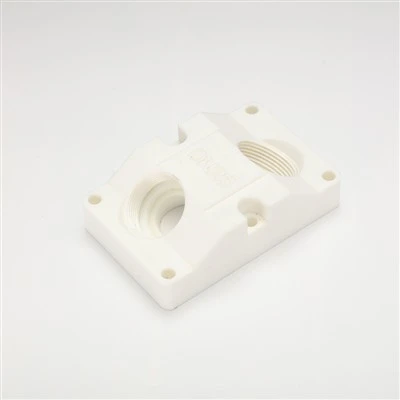
If you’re someone who needs injection molded parts—whether it’s a test run of 50 parts or a big order of 500,000—we’re here to help. We don’t do jargon, we don’t hidden fees, and we’ll be straight with you about what’s possible, what’s not, and how to get your parts made right. Hit us up to chat through your project, no obligation, no pressure.
Injection Molding References
- Rosato, D. V., & Rosato, M. G. (2000). Injection Molding Handbook (3rd ed.). Kluwer Academic Publishers.
- Engineering Properties of Plastics (2022). Society of Plastics Engineers.
- Design for Manufacturing: Injection Molding Guidelines (2019). American Society of Mechanical Engineers.
Zhejiang Hayi Technology Co., Ltd.
With abundant experience, we are one of the most professional injection molding manufacturers in China. We warmly welcome you to wholesale bulk injection molding in stock here and get quotation from our factory. All customized products are with high quality and competitive price.
Address: Room 112, 1st Floor, No. 103, Siwangdai, Pingzhai Village, Renhe Subdistrict, Yuhang District, Hangzhou City, Zhejiang Province
E-mail: 18368133797@163.com
WebSite: https://www.zhejianghayi.com/
