When you step into a steel workshop, you’re not just walking into a space with steel beams and concrete floors. You’re stepping into a controlled environment where heavy loads move, material is shaped, and timelines have to hit deadlines—every single day. As a steel workshop buildings supplier, I’ve seen firsthand how a crane system can make or break that space. A lot of buyers come to me thinking, “Just put a big crane in there, and we’re done.” But that’s never the case. The crane system isn’t just equipment; it’s integrated with every part of the workshop structure, workflow, and safety protocols. Over the years, I’ve worked with fabricators, structural engineers, and maintenance teams to nail down exactly what those requirements are. If you’re planning a new steel workshop or upgrading an old one, you need to get these right before you even pour the foundation. Steel Workshop Buildings
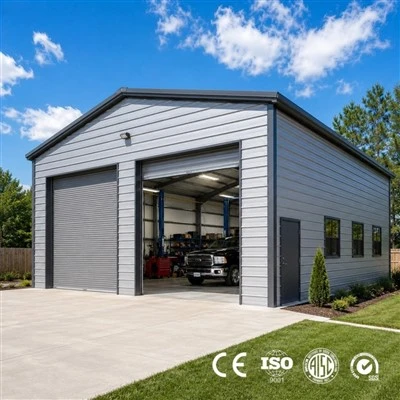
First and foremost, load capacity is non-negotiable. Not the “average” load you think you’ll move, but the absolute maximum—times two. Let me explain: I once worked with a team that installed a crane rated for 20 tons because that’s the heaviest beam they handled. Six months later, they got a contract for a 35-ton custom I-beam, and their crane couldn’t lift it. They had to shut down half the workshop for three weeks to retrofit the crane, and they lost a $200k order. That’s a mistake no one wants to make. Load capacity has to account for two things: the heaviest single load in your current workflow, plus a 25 to 50% safety margin for future projects. For a steel workshop, that might mean steel plates, large structural beams, or even pre-assembled steel sections. If your crane will move multiple loads at once—say, a beam and its lifting clamp—you have to add the weight of the attachments too. I always advise clients to work with a structural engineer here, because the crane’s capacity directly ties to the steel workshop’s ceiling height, column strength, and floor load. You can’t just pick a number; it has to line up with what your building can support.
Next, runway design and clearance. The runways are the tracks where the crane’s bridge moves, and they’re not just a pair of steel beams. In a steel workshop, runways have to be perfectly aligned, because even a 1/8-inch misalignment can cause the crane to wear out faster or derail. I’ve seen runways installed with just a quick level check, and within a year, the crane’s wheels were grinding so loud the whole workshop shook. Runway requirements depend on the crane’s span—how far apart the columns are. The span dictates the length of the bridge, which affects how much weight the runways have to hold. Clearance is another big one. You need space between the crane’s hook and the floor (for lifting materials), and between the bridge and the workshop’s ceiling (for moving the crane itself). For steel shops working with tall beams, that minimum clearance is often 18 to 24 inches. If you don’t plan for that, you’ll end up with a crane that can’t reach the highest stacks of material, forcing you to rearrange the workshop layout every time you run a job. Also, don’t forget the end trucks—those are the parts of the crane that ride on the runways. They need to fit the runway width exactly, and the runway has to be set at the right height so the crane doesn’t swing too much when it’s moving heavy loads. In my experience, rushing the runway design leads to constant maintenance headaches.
Then there’s crane type and operation mode. Not all cranes are the same for a steel workshop. You have overhead cranes, which are the most common, but even among those, there are single-girder and double-girder cranes. Single-girder cranes are cheaper, but they only work well for lighter loads—up to 20 tons. For anything heavier, like large steel plates or girders, you need a double-girder crane. It’s sturdier, more stable, and has a longer lifespan. Another factor is how the crane is operated: is it a pendant-controlled crane, or will it be run from a cab? For a busy steel workshop with multiple cranes moving at the same time, a cab-operated crane is better because the operator has a full view of the space. Pendant cranes are cheaper, but operators can have blind spots, which raises safety risks. Also, operation mode ties into the workflow. If your workshop is running 24/7, you need a crane designed for heavy-duty cycles. Light-duty cranes will burn out in a year if they’re used every hour, so you have to match the crane’s duty class to your usage. I always ask clients to track how many hours a day their crane will run before I make a recommendation. It’s better to pay a little more upfront for a heavy-duty crane than to replace it every two years.
Safety features are another set of requirements that you can’t skip. Steel workshops are high-risk spaces—heavy materials, loud machinery, tight quarters. The crane system has to have built-in safety features to protect workers, the building, and the crane itself. First, overload protection. If someone tries to lift more than the crane’s rated capacity, it should shut down automatically. I’ve seen operators try to push a crane past its limit because they thought they could, and it damaged the runway so bad they had to replace half the structure. Then there’s limit switches: upper limit switches to stop the hook from hitting the bridge, and lower limit switches to prevent the hook from running off the drum. For steel workshops where cranes move past columns, anti-collision devices are a must—especially if you have multiple cranes on the same runways. These devices prevent cranes from crashing into each other, which is a disaster waiting to happen. Also, emergency stop buttons—they shouldn’t just be on the pendant or cab; they should be visible from every corner of the workshop. Some clients also ask for warning alarms, so workers know when the crane is moving. I always make sure to highlight these features to buyers, because cutting corners on safety isn’t worth it.
Integration with the steel workshop’s structure is a final, often overlooked, requirement. The crane isn’t separate from the building; it’s part of it. The columns, beams, and roof support have to be engineered to handle the crane’s load, not just the workshop’s regular floor loads. For example, if a crane is rated for 50 tons, the columns have to be strong enough to support that weight plus the weight of the crane itself. Also, the crane’s installation has to be coordinated with the workshop’s layout. If your workshop has bays for storage, cutting, and assembly, the crane has to be able to move material between those bays without hitting walls, support columns, or other equipment. I once worked with a client who installed the crane after the workshop was built, and the crane’s bridge had to be shortened by 3 feet just to fit through a bay door. That delayed production for two months, and they had to pay extra for modifications. The takeaway? The crane system has to be planned at the same time as the building, not as an afterthought. That’s why as a steel workshop buildings supplier, I always offer to work with crane manufacturers and structural engineers early in the process. It saves time, money, and stress down the line.
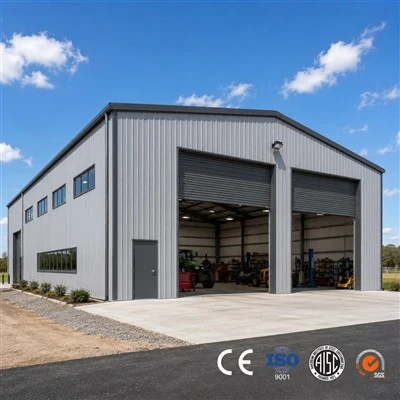
Now, I want to be clear: every steel workshop is different. A small fabricating shop making light steel parts has different crane needs than a large mill moving heavy beams. There’s no one-size-fits-all rule, but these core requirements—load capacity, runway design, crane type, safety features, and structural integration—are the foundation of any good crane system. Over the years, I’ve seen clients make every mistake in the book: underestimating load capacity, ignoring clearance, skipping safety features. The ones that succeed are the ones that take the time to get these right. They don’t rush, they ask questions, and they work with suppliers who understand both steel workshop construction and crane systems.
Aircraft Hangar If you’re in the process of planning a steel workshop, or if your current crane is holding you back, don’t guess at these requirements. Working with someone who knows how to tie the crane system to the building’s structure, workflow, and long-term needs is the best way to avoid costly mistakes. Let’s talk through your project—whether you’re building a new workshop from scratch or upgrading an existing one—and make sure your crane system fits your needs, not the other way around.
References
- American Institute of Steel Construction (AISC). "Specification for Structural Steel Buildings," 2022.
- Crane Manufacturers Association of America (CMAA). "Specification for Overhead and Gantry Cranes," 2020.
- Occupational Safety and Health Administration (OSHA). "Crane and Hoist Standards for General Industry," 2021.
- Steel Building Institute (SBI). "Guide to Designing Steel Structures with Integrated Crane Systems," 2019.
Liaoning Zhongbei Steel Structure Engineering Co., Ltd.
Liaoning Zhongbei Steel Structure Engineering Co., Ltd. is one of the most professional steel workshop buildings manufacturers and suppliers in China, also supports customized service. We warmly welcome you to buy advanced steel workshop buildings made in China here from our factory. Also, quotation is available.
Address: No. 239 – 1, Shenbei West Road, Yuhong District, Shenyang, Liaoning.
E-mail: Info@cnssgroup.cn
WebSite: https://www.cnssprefabbuildings.com/
