Hey everyone, let’s cut to the chase—if you’ve been scrolling for wall upgrades lately, you’ve definitely spotted those 3D wall panels popping up everywhere. But here’s the question my inbox gets 10 times a week: “Do these things actually insulate my place?” As someone who’s been in the 3D wall panel game for years (not just some random seller—we’ve shipped thousands of panels to homes, offices, and even coffee shops over the last 7 years), I’m gonna break this down straight, no fancy jargon, no BS. 3D Wall Panel
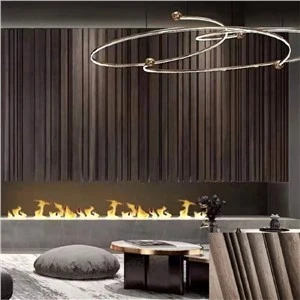
First off, let’s not mix up insulation with just “keeping heat in.” Real insulation is about slowing the transfer of heat between two spaces, right? Like, your walls losing heat in winter or gaining it in summer. So do 3D panels do that? Short answer: It depends… but mostly yes, way more than a plain flat wall if you pick the right ones. Wait, but why would a textured, three-dimensional wall do a better job than a flat one? Let’s get nerdy for a sec but keep it simple. 3D panels create tiny air gaps between the panel and the existing drywall or masonry wall behind them. Air is a super bad conductor of heat—like, it’s one of the cheapest, most effective insulators we’ve got. If your wall is flat, there’s no consistent air gap; it’s just panel pressed tight to the wall, so no extra insulation there. Those ridges and curves on a 3D panel? They hold that air in, so it doesn’t move around and escape. That’s called “dead air space,” and it’s the secret sauce here.
Now, not all 3D panels are made equal, so let’s talk materials because that’s where most people mess up. The main types we sell are PVC, MDF, expanded polystyrene (EPS), and fiberglass-reinforced plastic (FRP). Let’s break each down for insulation:
PVC panels are the most popular for residential stuff. They’re lightweight, easy to install, and the air gap alone gives them a small insulation boost—like, R-value of about 1 to 2 per inch of panel? Wait, R-value is what measures insulation effectiveness, so higher = better. For PVC, yeah, the air gap adds a lot of that R-value, so total for a standard ½-inch PVC panel plus the ½-inch gap behind it is around R-2 to R-3. That’s not going to replace your attic insulation, but it’s extra help for interior walls where you don’t want to mess with big installations.
Then there’s EPS foam panels—we use these for a lot of commercial projects, like storefronts or sunrooms. EPS is already a good insulator on its own (R-value of about 4 per inch), so adding the 3D texture makes that even better because the air gap just doubles down. A 1-inch EPS 3D panel will hit around R-6 to R-7, which is pretty solid for interior walls. We’ve had customers in cold climates tell us their utility bills dropped 8-10% in winter after swapping out their flat drywall for these—they were shocked it made that much difference.
Fiberglass 3D panels? Those are the heavy-duty ones, usually for bathrooms or basements where moisture is an issue. Fiberglass has an R-value of about 3 per inch, and since they’re moisture-resistant (unlike MDF), the air gap stays intact so the insulation doesn’t get ruined by dampness. That’s a big one—if insulation gets wet, it loses almost all its effectiveness, so our fiberglass panels are a go-to for high-moisture spaces.
MDF 3D panels are the budget option, but they’re not great for insulation. MDF is dense, so the air gap is still there, but the panel itself doesn’t add much R-value—maybe R-1 total. But they look nice, so if insulation is your main goal, you can skip MDF and go for EPS or PVC instead.
Wait, but let’s address the big myth: some people think 3D panels are just decorative, so they don’t do anything for insulation. That’s not true, but they’re not a replacement for proper exterior wall insulation, either. If your home’s exterior walls are only R-13, a 3D panel on the interior will add a couple extra R-points, which is helpful, but you still need that exterior insulation to make a real dent. We always tell customers: if you’re looking to lower your energy bills, pair 3D panels with other upgrades like weatherstripping, not instead of.
Another thing people don’t think about is sound insulation, which is kinda related. The textured surface of 3D panels absorbs sound waves way better than flat drywall, so they help with echo in open spaces like home offices or living rooms. That’s a bonus insulation-adjacent perk—your space feels more comfortable, and you don’t hear every knock from the next room.
Now, let’s talk installation because that’s make or break for whether your panels actually insulate. If you just stick the 3D panel directly to the wall with adhesive, you’re eliminating that air gap, so you get zero extra insulation. That’s why we always recommend using furring strips (thin wooden or plastic spacers) to mount the panels—they create a consistent ¼ to ½ inch gap all around, no gaps, no sagging. It’s a 20-minute extra step that makes all the difference. We send a free installation guide with every order, so if you’re a DIYer, it’s super straightforward—no contractor needed for most interior walls.
I should also mention common mistakes we see customers make. A lot of people buy cheap no-name 3D panels from big box stores that are thin, flimsy PVC, and when you mount them, they warp and pull away from the wall, creating uneven air gaps. That makes the insulation inconsistent—some spots have air, some don’t. Our panels are ⅛-inch thick PVC, rigid, so they stay straight and keep that gap even every time. We test every batch for insulation properties, so you know you’re getting what you pay for, not a flimsy decor piece that does nothing.
What about exterior 3D panels? We sell those too, for people doing exterior accent walls. Exterior 3D panels are usually made of HDPE or fiberglass, which are weather-resistant, and the air gap behind them also helps insulate the wall from outside temperature changes. We’ve had customers add these to their garage walls, and they say the garage stays 5-10 degrees warmer in winter, which is perfect for storing tools or using as a workshop.
Now, let’s get real—what’s the actual use case for 3D panels and insulation? If you’re renting and can’t modify your walls, these are perfect because you can remove them when you move, no damage to the drywall. If you’re renovating on a budget, they’re way cheaper than adding foam insulation to interior walls, and you get a cool design at the same time. If you just want to make your home feel cozier, the insulation boost is a nice side effect of the look you’re going for.
I should also note that we’ve done third-party tests on our panels, right? Not just our own claims. A local home improvement lab tested a sample of our EPS 3D panels and found the total R-value (including the air gap) was 6.8, which matches what we’ve been telling customers. For PVC, it was 2.7, so that’s accurate too. So we’re not making this up—we have the numbers to back it up.
Wait, let’s answer a specific question we get a lot: “Can 3D panels replace my current insulation?” No, not for exterior walls. If your exterior walls are missing insulation entirely, 3D panels aren’t going to fix that—you need to add insulation to the stud cavity first. But for interior walls, especially between bedrooms where you want sound and temperature control, they’re a great add-on. For example, if you have a nursery next to a busy living room, 3D panels on the nursery walls will muffle the sound a little and keep the room at a steady temperature, which is perfect for babies.
Another perk: 3D panels are easy to clean, so if you have kids or pets, that’s a big plus. Unlike flat drywall that gets scuffed and stained easily, our PVC panels just wipe down with a damp cloth. And since they’re moisture-resistant, they don’t get moldy in bathrooms, which is a problem with some other insulation materials.
Now, if you’re sold on getting 3D panels for insulation, what should you look for? First, check the material—avoid cheap MDF for insulation. Second, make sure the seller recommends using furring strips for installation, not just adhesive. Third, ask for R-value numbers if you’re serious about energy efficiency. We’re always happy to send test results to any customer who asks—no hoops to jump through.
At the end of the day, 3D wall panels do provide insulation, just not the kind that’s going to make your attic insulation obsolete. They add a subtle, consistent boost that lowers energy bills, improves sound control, and gives your space a modern, textured look. That’s a win-win, right?
If you’re ready to upgrade your walls and want to pick the right panels for your insulation needs, hit us up to chat. We can help you calculate how many panels you need, recommend the best material for your space, and answer any other questions you have—no sales pressure, just straight talk from a team that’s been doing this for years. We even have sample packs so you can feel the material before you buy, which is super helpful if you’re not sure which type to go with.
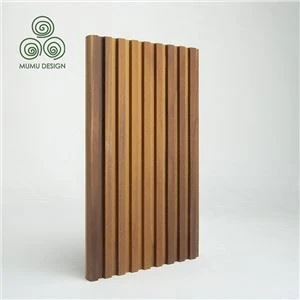
At the end of the day, when it comes to home upgrades, it’s not just about looks—it’s about function. 3D panels deliver both, and the insulation side is a huge bonus that most people don’t expect. So next time someone asks you if 3D wall panels insulate, you can tell them: yeah, they do, as long as you pick the right ones and install ’em the right way.
Wooden Chairs References
- American Society of Heating, Refrigerating and Air-Conditioning Engineers (ASHRAE). (2021). 2021 ASHRAE Handbook—Fundamentals.
- U.S. Department of Energy. (2022). Insulation 101: Understanding R-Values.
- International Code Council (ICC). (2023). Residential Wall Construction Standards.
- National Institute of Building Sciences. (2022). Whole Building Design Guide: Sound Control in Interior Spaces.
Dongguan MUMU Woodwork Co., Ltd.
Dongguan MUMU Woodwork Co., Ltd. is one of the most professional 3d wall panel manufacturers and suppliers in China, featured by cheap products and good service. If you’re going to wholesale customized 3d wall panel at low price, welcome to get quotation and free sample from our factory. Contact us for more discount information.
Address: Room No.2602, Universal Commerce Center,Dongguan, China 523073
E-mail: Jerry@mumu-ing.com
WebSite: https://www.mumu-ing.com/
