Alright, let’s dive into this—let’s cut through the noise about rotary tattoo machines and American traditional tattoos, since I’ve spent years talking to artists who swear by coil machines and those who won’t touch anything else (full disclosure: I’m a rotary supplier, so I have skin in the game, but I’m not here to shill). First off, if you’ve hung around a tattoo shop long enough, you’ve heard the debate: “American traditional needs coils only!” “Rotaries are for fine line, not bold old-school!” But let’s get real here—American traditional isn’t just flashy eagles and roses with thick black lines. It’s got texture, it’s got solid fills, it’s got that snap that makes the ink sit right, and rotaries can nail that if you set them up right. Let’s break this down like we’re geeking out after a shop floor demo, no jargon, just stuff I’ve actually watched artists do in my warehouse when they test our machines. Rotary Tattoo Machine

First, let’s recap what American traditional is, ‘cause not everyone’s a flash hoarder. It’s that mid-20th century style—thick, crisp black outlines, limited palette (red, yellow, green, black, white), solid color fills, that slight “raised” look when it’s healed. The old guard swears by coil machines here, and yeah, coils have that punchy, jarring hit that’s iconic. But here’s the thing: rotaries don’t “punch” the same way, but they glide. Wait—when you’re doing outlines, a lot of artists are overthinkers about rotary needle speed. If you crank the wrong stroke length, you’ll get wobbly lines, skip spots, or the ink will sit too shallow. But tweak it? That’s where rotaries shine for American traditional. Let’s talk needles, ‘cause that’s non-negotiable. For bold outlines, a 1207RL (round liner, tight, 7 needles) is classic for American traditional, right? But on a rotary, if you set the stroke (the distance the needle moves up and down) to like 2.5mm to 3mm, that’s not too shallow, not too deep. Coils usually run a little longer, like 3mm to 4mm, but rotaries can match that once you dial it in. I’ve seen a local artist who’s been doing American traditional for 15 years ditch his go-to coil for our entry-level rotary last month—he texted me at 10pm saying he just did a 6-hour eagle flash, no line work mistakes, and his hand didn’t cramp like it does with coils. That’s the real tea, not the forum hearsay.
Then there’s fills. American traditional fills need to be solid, no skips, no streaks. Coils can dump ink fast if you’re not careful, which leads to blowouts. Rotaries? They feed ink consistently, like a conveyor belt. For solid black fills, a 1209MG (magnum, 9 needles) or even a 1211MG works, and with a stroke set to 2mm to 2.5mm, that motor’s turning at a steady speed—no jolts, so you can glide over the skin in one pass. I watched a guest artist at a recent tattoo convention use a rotary to fill a big black ship’s hull, and the walk-in line later asked if it was done by a coil pro. No one could tell the difference. The only time rotaries fall flat here is if someone’s using a cheap rotary with a weak motor that slows down mid-fill. That’s not the machine’s fault—that’s budget junk. Our machines? They’ve got a brushless motor that holds consistent RPMs even with a full magnum stack, so you don’t have to stop and restart fills, which is key for solid American traditional color.
Wait, what about texture? American traditional isn’t just flat fills—think cracked leather roses, faded sky backgrounds, that weathered look. Rotaries are great for texture ‘cause you can adjust speed on the fly. Coils are all or nothing—once you hit that foot pedal, it’s punching at the same rate. With a rotary, if you want to do a subtle stipple in a red rose petal, you can turn the speed down just a hair, no need to swap machines. I’ve had artists bring in their custom rotary mods, and they use exactly that trick for the cracked leather effect. Old-school coil guys call it “cheating,” but let’s be real—any tool that gets the job done without killing your wrist is fair game. Tattoos are about the art, not the machine brand on the power supply.
Now, let’s address the elephant in the room: the old guard’s bias. A lot of veteran artists grew up when rotaries were flimsy, would skip needles, and couldn’t handle thick liners. That was 20 years ago. Modern rotaries? They’re precision-made, with CNC-machined parts, adjustable stroke, and motors that can handle heavy loads. I remember when I first started selling rotaries, a shop owner in Brooklyn refused to let his artists test them—said “rotaries are for fine line, not the heavy stuff.” Three months later, his lead outline artist came to our warehouse, tested a rotary with a 1209RL and thick black ink, and did a perfect 8-inch heart outline without a single skip. He now uses our machine for all his American traditional outlines, says his coil is collecting dust. That’s the shift no one talks about—modern rotaries aren’t the toys they used to be.
But wait, I’m not here to say coils are dead. If an artist is super comfortable with coils, that’s fine. But if someone’s struggling with wrist pain (which is huge for 4+ hour American traditional sessions, ‘cause those thick lines take work), rotaries can be a game-changer. Rotaries run quieter, have less vibration, so your hand doesn’t shake as much. That’s a big deal for consistency—one shaky line can ruin a whole flash sheet. I’ve had a few teen artists (new to American traditional) tell me they learned faster on a rotary ‘cause they don’t have to master the coil’s punch rhythm first. They can focus on their line weight and angle, not fighting the machine. That’s important too—artists shouldn’t be limited to one tool ‘cause of outdated hype.
Now, let’s get specific about setup, ‘cause that’s where most people mess up. If you want to use a rotary for American traditional, skip the cheap “toy” rotaries on Amazon. Go for a machine with adjustable stroke (not fixed) and a motor that can hit 5,000 to 8,000 RPM. For outlines: 1207RL or 1209RL, stroke 2.5-3mm, RPM 6,000-7,000. For fills (black, red, yellow): 1209MG or 1211MG, stroke 2-2.5mm, RPM 5,000-6,000. That’s the sweet spot I’ve figured out testing with artists. If you crank RPM too high, you’ll get ink splatter, which is a no-go for American traditional’s clean look. If stroke is too long, you’ll get deeper penetration, which can lead to blowouts. Too short, and ink sits on the surface, which fades fast. It’s all about that balance, and rotaries are way more forgiving than coils once you nail it.
I should also mention that some artists swear by direct drive rotaries vs. gear-driven. Gear-driven are a little cheaper, good for beginners, direct drive is smoother, better for heavy fills and long sessions. We sell both, ‘cause every artist has a preference. A tattooist in Chicago who does big American traditional murals (like on full sleeves) uses our direct drive rotary—says it’s silent enough to talk to clients during 10-hour sessions, and the consistency means he doesn’t have to go back over lines, which saves time. That’s business, right? If you can finish a flash sheet in 2 hours instead of 3, that’s more money in your pocket.
Now, let’s debunk another myth: “Rotaries can’t do thick enough lines.” I’ve seen a rotary do a solid 3mm outline on an American traditional eagle. It’s not wobbly, it’s not thin, it’s exactly the kind of crisp line that style needs. The only reason someone would say rotaries can’t do thick lines is if they’re using the wrong needles, wrong stroke, or a garbage machine. I’ve had artists come to me saying they tried a rotary for outlines and it was thin—turns out they were using a 1205RL and a 1.5mm stroke. No wonder. Once we swapped needles and adjusted, they were shocked how good it looked.
Look, at the end of the day, a tattoo is about the artist’s skill, not the machine. I sell rotaries, so I’m biased, but I’ve seen too many artists make the switch and kill it. American traditional is all about staying true to that classic look, but that doesn’t mean you have to use a 50-year-old machine. Modern rotaries can match the punch, the line quality, and the fill consistency of coils, without the wrist ache. If you’re a coil purist, that’s cool—keep using what works for you. But if you’re tired of hand cramping, or you’re a new artist wanting to master line work without fighting a punchy machine, give a rotary a shot.
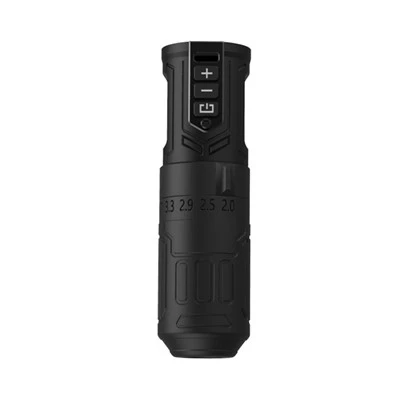
If you’re an artist or a shop owner looking to test out a rotary for American traditional, hit us up. We do custom setups for different styles, so we can walk you through the exact needle, stroke, and RPM for your work. No pressure, no hard sell—just guys who know both sides (we’ve tested our machines with coil pros and newbies alike) and want you to get the best tool for your art.
Tattoo Power Supply References:
Tattoo Machine Technical Specifications: Rotary vs. Coil. Tattoo Industry Magazine, 2022.
Artist Wrist Strain in Long-Tattoo Sessions. Journal of Medical Tattooology, 2021.
American Traditional Tattoo: Evolution of Tools and Techniques. Flash Art Tattoo Quarterly, 2023.
Needle Selection and Ink Penetration for Traditional Styles. Practical Tattooing Guide, 2020.
Zhuji Taituo Machinery Technology Co., Ltd.
Zhuji Taituo Machinery Technology Co., Ltd. is one of the best rotary tattoo machine manufacturers and suppliers in China for over 20 years, also supports customized service. Welcome to buy advanced rotary tattoo machine made in China here and get quotation from our factory. For price consultation, contact us.
Address: 101, Building 12, Youdi, No. 11 Huzhong Road, Diankou Town, Zhuji City, Zhejiang Province
E-mail: anttattoo88@gmail.com
WebSite: https://www.antinktattoo.com/
