If you’ve ever watched an inkjet printer spit a tiny drop of ink onto canvas and form a crisp, non-blotted dot—or gasped when a stray drop beaded up and rolled right off your material—you’ve observed surface tension at work. As an inkjet canvas supplier, my team and I get asked about this property all the time: “What is the surface tension of inkjet canvas, and why does it matter for my prints?” It’s not just a technical detail—it’s the quiet backbone of every sharp, fade-resistant, long-lasting print our customers create. Let’s break this down, plain and simple, no jargon overload, from someone who lives and breathes canvas for inkjet every day. Inkjet Canvas

First, let’s start with the basics for anyone who isn’t a chemistry major: surface tension is the “skin” that forms on the surface of a liquid, caused by molecules pulling inward toward the rest of the liquid. For inkjet printing, this directly impacts how ink interacts with your canvas, which in turn impacts print quality. If the surface tension of your canvas is wrong, you get blurry edges, feathering, ink pooling, or even ink beading and falling off entirely. As a supplier, we test this property relentlessly because getting it right is non-negotiable for our customers—whether they’re fine artists, photographers, small business owners making marketing materials, or home crafters printing family photos.
Now, to answer the core question: what is the typical surface tension range for inkjet canvas, and why does it vary? Most commercial inkjet inks, whether water-based (the most common for home and professional use), solvent-based, or UV-cured, have a surface tension of roughly 30 to 40 dynes per centimeter (dyn/cm). That number is the standard unit used to measure surface tension in printing industries. For a canvas to work with those inks, its own surface tension needs to be slightly higher than the ink’s. If canvas surface tension is too low (below 30 dyn/cm), ink will bead up and refuse to spread evenly, creating gaps or splotches. If it’s too high (above 45 dyn/cm), ink will spread too far, leading to feathered edges, blotted text, and lost detail—especially in fine art prints where crisp lines matter.
Wait, but why does canvas surface tension not just fall into one perfect number? Because canvas is a porous, organic material at its core—made from cotton, polyester, or a blend, right? Raw cotton canvas is hydrophobic, which means it repels water, so its natural surface tension is actually way too low, like 25 to 28 dyn/cm. That’s why we (as a supplier) apply a special coating, called a primer or sizing layer, to adjust the surface tension to exactly where it needs to be. The coating is tailored for each type of ink we know our customers use, because not all inks are the same.
Let’s use a real example from last month, when a professional fine artist reached out to our support team panicking. She’d been using a cheap, generic canvas from a big box store for her water-based inkjet prints, and her landscapes were coming out with blurry tree lines and sky gradients that looked muddy. She was ready to switch to oil-based printing, which she hated because it’s messy and toxic. When we tested her old canvas, its surface tension was only 29 dyn/cm—just barely above her ink’s 28 dyn/cm, which meant the ink was repelling instead of adhering. We sent her a roll of our standard fine art cotton canvas, which has a coating calibrated to 38 dyn/cm, perfect for her water-based ink. A week later, she sent us photos of her new prints—sharp, vivid, no blurs—and wrote to say she’d be ordering 10 more rolls that year. That’s the difference surface tension makes, and it’s why we don’t cut corners on our coating process.
Another thing most people don’t know: surface tension of inkjet canvas also changes with storage and use, not just right off the roll. If canvas is stored in a humid basement or a hot attic for months, the coating can break down, lowering surface tension over time. That’s why we recommend storing our canvas in a cool, dry place, in its original packaging, and why we add extra protective packaging to every roll we ship—so our customers get the exact surface tension we tested, not a degraded version. For customers who print with UV-cured inks, which have a higher surface tension (around 38 to 40 dyn/cm), we make a specialized canvas with a 42 dyn/cm coating, so the ink bonds fully when it cures, no peeling even years down the line.
Let’s talk about how we test surface tension at our facility, just to give you an idea of the rigor we put into every batch. We use a simple, reliable method called the dyne test, where we paint a series of liquid solutions with known dyn/cm values onto a small sample of canvas. If a solution beads up and rolls off, the canvas’s surface tension is lower than that solution’s value; if it wets evenly and stays, it’s higher. We test every batch of coating we apply to our canvas, because even a 1 or 2 dyn difference can make a huge impact. Last year, a batch of our premium polyester canvas had a tiny error in the coating mix, leading to a 2 dyn drop in surface tension. We caught it during quality control, recalled the batch before it shipped, and adjusted the formula—lost us a week of production, but saved our customers from bad prints, which is what matters most.
I get asked all the time why suppliers don’t just make one canvas for all inks, and that’s a fair question. The truth is, surface tension requirements aren’t one-size-fits-all. Solvent-based inks, used for large-format banners and outdoor signage, have a lower surface tension (around 28 to 32 dyn/cm), so their canvas needs a coating around 35 dyn/cm to work. If you used our fine art canvas (38 dyn/cm) for solvent inks, the ink would bead right off, leading to ruined signage. That’s why we categorize our canvas into lines: fine art water-based inkjet canvas, outdoor large-format solvent canvas, UV-cured specialty canvas, and even budget-friendly canvas for home crafters printing photos for scrapbooks—each with a calibrated surface tension to match the ink it’s made for.
You might also be wondering about the difference between surface tension and other properties, like absorbency, which is another big one for canvas. Surface tension is about how the ink sits on top of the canvas’s surface, while absorbency is about how much ink soaks into the canvas’s fibers. For example, a canvas that’s too absorbent might soak ink too deep, leading to faded prints over time, even if its surface tension is perfect. We balance surface tension and absorbency in our coating process, so ink sits just right on the surface for vibrant color, and absorbs just enough to avoid smudging when it’s dry. That’s why our prints have such long fade resistance—up to 75 years for our fine art canvas, when printed with archival inks—because the surface tension and coating work together to lock the ink in place, not just sit on top.
Let’s circle back to that customer story I mentioned earlier, because it illustrates how this technical detail translates to real people. That fine artist was a small business owner who sold her landscape prints at local galleries; bad prints would have hurt her reputation, and switching to oil-based printing would have limited her creativity. By using a canvas with the right surface tension, she got the sharp, vivid, archival prints she wanted, and was able to keep using the inkjet workflow she preferred. That’s why we don’t just sell canvas—we solve problems, and surface tension is one of the biggest problems we solve for our customers.
If you’re a photographer, artist, or business owner shopping for inkjet canvas, surface tension is a detail to ask about. Don’t just buy the cheapest roll at the craft store—ask the supplier what the surface tension is calibrated for, and what inks it works with. If you’re printing with water-based inks, you need a canvas around 35 to 40 dyn/cm; if you’re printing solvent or UV-cured, look for 32 to 42 dyn/cm. At our company, we list the surface tension for each canvas line right on our product pages, so you don’t have to guess—no hidden technical jargon, just clear, honest info so you can get the right canvas for your work.
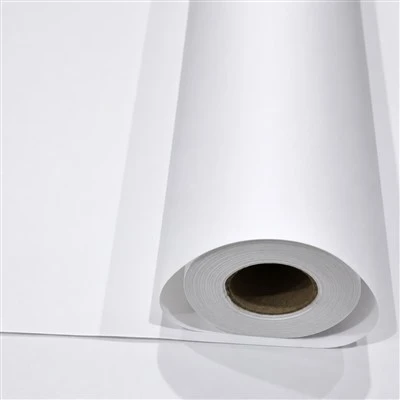
Whether you’re printing a 8×10 family photo for your wall or a 10-foot outdoor banner for a trade show, surface tension is the quiet factor that makes your print look its best. As an inkjet canvas supplier, we take pride in getting that number right, every single time, because we know how much your prints mean—whether you’re selling them, gifting them, or displaying them for your business. If you’re shopping for canvas and want to make sure you get the right surface tension for your specific ink and project, reach out to our team to discuss your needs and order the perfect rolls for your next print job.
Special Fabric References
- Kipphan, H. (2001). Handbook of Print Media: Technologies and Production Methods. Springer.
- Pawłowski, L. (2013). Surface Tension of Inkjet Inks and Substrates in Digital Printing. Journal of Imaging Science and Technology, 57(2), 20501.
- Van Nostrand Reinhold. (1998). The Printing Ink Manual (5th ed.). Wiley.
- Allen, S. M., & Thomas, E. L. (1999). Fundamentals of Polymer Engineering (2nd ed.). Springer.
- American National Standards Institute. (2018). Standard for Digital Inkjet Print Substrates – Fine Art Canvas. ANSI IT7.215-2018.
Lanxi Wenting Home Textiles Co., Ltd.
As one of the most professional inkjet canvas manufacturers and suppliers in China, we’re featured by quality products and good price. Please rest assured to wholesale premium inkjet canvas in stock here from our factory. Customized orders are welcome.
Address: No.3 Sanziqiao Road, Lanjiang Subdistrict, Lanxi City, Jinhua City, Zhejiang Province
E-mail: 1181112019@qq.com
WebSite: https://www.wentinghometextiles.com/
