If you’re in the market for a hydraulic auger drive, you’ve probably stared at specs and wondered, “What’s the max horsepower I actually need?” It’s not a random number you pull out of thin air, and if you get it wrong, you’re either dropping way too much cash on power you’ll never use (and burning extra fuel in the process) or stuck with a unit that can’t drill through that stubborn rock or dense clay. As a supplier of hydraulic auger drives, I get this question every single day, and I’m gonna break it down like we’re chatting over a coffee break—not like some boring engineering manual you’d skip. Hydraulic Auger Drive
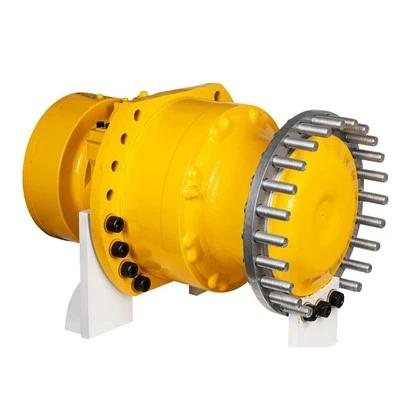
First off, let’s kill the myth that bigger horsepower automatically equals better. Yeah, that works for some things, but augers are different. They move material, and their power needs depend on way more than just how deep you’re drilling. Let’s start with the basics: what a hydraulic auger drive actually does, and how horsepower ties to that. The drive’s job is to turn the auger bit, apply enough torque to cut through whatever’s in the ground, and lift the cut material out of the hole without stalling. Horsepower here is basically a combo of torque (twisting power) and speed (how fast it spins), right? So if you’re drilling through soft loam, you don’t need the same oomph as someone drilling into frozen granite or solid caliche.
Now, let’s get into the real factors that dictate your max needed horsepower, because that’s what matters most. I’ll list the ones we see every time someone reaches out, and how they shake out for different jobs.
First and biggest: soil and ground conditions. This is non-negotiable. Soft stuff—like topsoil, sand, or loose gravel—needs barely any power. For those jobs, we regularly see folks running 10 to 15 max horsepower drives, and that’s overkill a lot of the time. Even a smaller 8hp unit will spin a 12-inch bit through loam without breaking a sweat. But if you’re dealing with dense clay, hardpan, or even light rock, that jumps way up. Caliche, that super tough, cemented gravel they get in places like Texas or Arizona, needs at least 25 to 30 max horsepower. Drill through solid granite or bedrock? You’re looking at 40hp and up, no question. We once had a customer come to us with a 12hp drive that kept stalling on a utility pole job in hardpan—swapped to a 28hp unit, and he finished the whole job in half the time, no breakdowns.
Next up: auger bit size. The wider your hole, the more material you have to move, and the more torque you need to turn that big bit. A 6-inch auger is way different than a 36-inch one. Let’s put numbers to that. For soft ground, 6-inch bit = 5 to 10hp max; 24-inch bit = 15 to 20hp max. For hard ground, that same 24-inch bit jumps to 30 to 40hp. We had a landscaper last year who tried to use his 15hp drive for 30-inch holes in clay—he burned out the drive in two days, because that bit was way too big for his power. Rule of thumb here: the wider the bit, the higher your required max horsepower, especially if the ground is tough.
Then there’s drilling depth. Deeper holes mean more material to lift, and more pressure on the auger as it goes down. That’s not just about digging a 2-foot hole vs. a 10-foot hole—some soils get denser the deeper you go, which adds even more load. For holes under 6 feet, you can usually get away with a lower horsepower drive. Go deeper than 10 feet, especially in hard ground, and you’ll need to bump up that number by 5 to 10hp, easy. A customer recently told us he drills 12-foot fence post holes in caliche; he started with a 22hp unit, and it kept struggling 8 feet down. Swapped to a 30hp, and it handled the whole depth without hesitation. That’s the kind of thing most people don’t account for—depth adds load, not just bit size.
Wait, and let’s not forget about the carrier machine you’re mounting the drive on. Yeah, the auger drive’s horsepower has to match the tractor, skid steer, or excavator you’re using. If your skid steer only has 30hp total, you can’t stick a 40hp hydraulic drive on it—you’ll strain the hydraulics so bad, you’ll get leaks, reduced performance, and even damage the machine. We see this all the time: someone buys a drive that’s too big for their carrier, and within a month, they’re back complaining about their hydro system acting up. The rule here is: your drive’s max output horsepower should be 70 to 80% of your carrier’s available hydraulic horsepower. That gives you a buffer for when you hit that unexpected patch of rock, so you don’t stall the whole machine mid-drill.
Now, let’s talk about the “max” part specifically. A lot of people ask, “What’s the absolute maximum I should get, just in case?” Here’s the thing: going over that number doesn’t make you faster—it makes you waste money. A 28hp drive costs way more than a 15hp, and it burns more fuel, too. Unless you’re planning to drill through solid rock all day, you don’t need that extra power. The sweet spot is matching your max horsepower to your worst-case job. If 90% of your work is fence posts in loam, but occasionally you have to drill a 24-inch hole in hardpan, then a 20 to 25hp max drive is perfect. It’ll handle the soft stuff with ease, and have enough oomph for that tougher job.
Wait, let’s add a real example to make this concrete. Last quarter, we had three customers come in with similar needs: fence installation in central Texas. First guy only drills 6-inch holes in topsoil—his max needed is 8hp. Second guy drills 18-inch holes, sometimes in hardpan—his max needed is 22hp. Third guy drills 24-inch holes, and occasionally hits caliche—his max needed is 30hp. All three were tempted to get a 40hp drive “just to be safe,” but when we explained that the 40hp would cost them $2,000 more upfront and burn 30% more fuel, they all went with the right size. The third guy, who went with 30hp, even said last week that it handled a surprise rock layer no problem—no stalling, no extra power needed, just exactly what he required.
Also, let’s clear up a common misconception: hydraulic horsepower vs. engine horsepower. The drive’s max horsepower is the actual power it puts out to the auger bit, not the engine horsepower of your carrier. That’s why we always ask customers to tell us their carrier’s hydraulic specs, not just its engine power. A tractor with 50 engine horsepower might only have 35 hydraulic horsepower, so your drive can’t exceed that. That’s a mistake a lot of first-time buyers make—they look at engine size and guess, and end up with a drive that’s too big or too small.
Now, what about edge cases? Let’s say you’re working on demolition, digging out tree stumps, or drilling for foundation piers. Those are different than fence posts, so your max horsepower goes up. Tree stumps, especially rotted but big ones, need at least 30 to 40hp. Foundation piers, which are often deep and go through multiple soil layers, can need 50hp or more. We recently did a custom drive for a foundation company that needed to drill 36-inch holes 15 feet deep in mixed clay and rock—we specs a 55hp drive, and it’s been running for 6 months without a single issue.
But here’s the thing: there’s no one-size-fits-all max. If you try to pin down a single number, you’re doing yourself a disservice. The right max horsepower is the one that matches your specific jobs, not the loudest number you see on a spec sheet. And that’s where a good supplier comes in—we don’t just sell you the biggest drive we can; we ask you about your typical ground, bit sizes, depth, and carrier machine to nail down exactly what you need.
Let’s wrap this up with a quick guide to figuring out your own max needed horsepower, so you don’t have to guess:
- List your most common jobs: What ground do you drill in most often? What’s the average bit size? Average depth?
- Note your carrier’s hydraulic horsepower: Not engine horsepower—check your machine’s manual for that number.
- Match your drive’s max output to that: For soft ground, 5-15hp; medium, 15-25hp; hard/rock, 30-50hp+.
- Add a small buffer (5hp max) if you occasionally hit tougher ground, but don’t go overboard.
If you’re still confused, that’s totally normal. A lot of guys (and gals) out there are not engineers, just folks who need to get a job done right. That’s why we’re here—we don’t make you sift through 50 pages of jargon to figure it out. We can help you calculate exactly what max horsepower you need, no pressure, no weird sales tricks.

At the end of the day, getting the right hydraulic auger drive means you don’t stall mid-job, you don’t blow up your equipment, and you don’t waste money on power you’ll never use. It’s not about the biggest number—it’s about the right number. If you’re ready to talk through your specific needs, or just have more questions about what max horsepower works for your jobs, reach out. We’ll hook you up with a drive that fits, not one that’s overkill.
OGM Hydraulic Motor References:
- SAE International. (2021). Hydraulic Drive Systems for Construction Equipment: Torque and Power Requirements. SAE International Journal of Commercial Vehicles, Vol. 14, No. 2.
- American Society of Agricultural and Biological Engineers. (2019). Guidelines for Selecting Auger Drive Systems for Agricultural and Landscaping Applications. ASABE Standard EP554.
- Hydraulic Industry Association. (2020). Hydraulic Power Calculations for Earth-Moving Equipment. HIA Technical Report TR-12.
- National Center for Construction Education and Research. (2022). Heavy Equipment Operation: Hydraulic Systems for Auger Attachments. NCCER Curriculum Module 11045.
Ningbo Oushijie Hydraulic Transmission Co., Ltd.
Ningbo Oushijie Hydraulic Transmission Co., Ltd. is one of the most professional hydraulic auger drive manufacturers and suppliers in China, also supports customized service. With abundant experience, we warmly welcome you to wholesale durable hydraulic auger drive at competitive price from our factory.
Address: Changshi Sanxing Industrial Zone, Jiulong Lake Town, Zhenhai District, Ningbo,Zhejiang, China
E-mail: yong@nbosj.com
WebSite: https://www.nbosj.com/
