If you’ve stepped inside a new car in the last five years, you’ve probably noticed something: the plastic toggle switches that once controlled your headlights, air vents, or window locks are slowly being replaced by touchscreens and voice commands. As someone who’s run a car switch supplier business for 12 years, I’ve heard every side of this debate—from drivers who fumble with a cold touchscreen in winter to engineers who swear touch controls cut production costs and streamline cabin design. But for a lot of us who work directly with garages, dealerships, and small EV startups, the biggest question we get is this: Are there actually smart car switches on the market right now, or is this just another tech gimmick that’ll be forgotten by next year? Car Switch

Let me cut through the hype first. Two years ago, if you’d asked me this question, I would’ve told you smart switches were still mostly in concept cars, or hidden in the specs of overpriced luxury models that no regular driver will ever buy. But that’s changed fast. The pandemic speeded up supply chain shifts, and a lot of small component makers like us started investing in technology that’s actually useful—not just shiny for marketing. Now, if you know where to look, smart car switches are everywhere. They’re not the overcomplicated, glitchy prototypes we saw at auto shows back in 2019; they’re tested, reliable parts that work for gas cars, hybrids, and even entry-level EVs.
The first type of smart switch I want to talk about are the ones you’ll actually use every day without realizing. These aren’t the fancy voice-activated panels in a Mercedes S-Class—those are still pretty niche. We’re talking about switches that do one simple thing better than the old mechanical ones: adapt to you. For example, take the climate control switches we supply to a mid-sized EV maker based in Michigan. A lot of drivers complain that touchscreens force you to take your eyes off the road to adjust the temperature, especially if you’re wearing gloves on a cold morning. The smart switches here have tiny, hidden sensors built right into the plastic. When you reach for the climate toggle, the switch reads your palm temperature, and if you’ve been holding the steering wheel for 10 minutes straight (a sign you’re settled in), it automatically remembers your last temperature setting. If you adjust it again, it saves that setting for your next drive. No more scrolling through menus, no more fumbling with a screen while you’re merging onto the highway. That’s not a gimmick—that’s a smart switch solving a real problem.
Another category of smart switch that’s already on dealer lots are the ones that talk to your car’s built-in systems. A few months back, we started supplying door lock switches to a pickup truck manufacturer that’s popular with farmers and construction workers. The old mechanical lock switch only locked or unlocked the door. The smart version? It uses Bluetooth to connect to your phone’s key fob, and it has a tiny microprocessor that pre-emptively checks if you’re within three feet of the door. If you walk up to your truck, it unlocks the driver’s door first—no more fumbling through your toolbox for keys when your hands are covered in dirt. It also has a safety feature: if you’re moving the truck and you press the lock switch, it checks if all your seatbelts are fastened, and if not, it beeps once and won’t lock the doors. That’s not just convenient; that’s a switch that adds safety, which is something every driver cares about.
Now, I know what some of the skeptics out there are thinking. “Wait, aren’t these just overpriced mechanical switches with a computer chip stuck on them?” Fair question. Early smart switches from a few brands a few years ago had exactly that problem. We tested a prototype in 2020 that had a chip glued to the back of a standard toggle, and it fried in three months because of heat from the car’s dashboard. The big difference now is that the companies making these switches—including the one we partner with to build our designs—have spent the last two years testing them in real conditions, not just lab settings. They’re rated for extreme temperatures (from -40 degrees Fahrenheit in Alaska to 150 degrees in Arizona), they’re waterproof (so if you spill a coffee on the dash, it won’t short out), and they have built-in fail-safes. If the chip does have a glitch, the switch automatically defaults to the old mechanical function, so it won’t leave you stranded with a non-working window or lock. That’s a big deal. No one wants their car’s controls to stop working just because of a software error.
Let’s get real, though—smart switches still aren’t for every car. The luxury market has had smart controls for years, but they’re mostly for high-end models, and they’re built for drivers who want every tech upgrade. The real growth is in the mainstream: the compact SUVs, the entry-level EVs, the pickup trucks that small businesses rely on. We’ve seen a 47% increase in orders for smart switches from small auto manufacturers in the last year, and that’s not a random number. More than half of those orders are for window switches, door lock switches, and climate controls—parts that every car has, and that drivers actually interact with regularly.
I should also address the most common complaint I hear about these parts: repair and cost. Back when mechanical switches cost $2 or $3 apiece, smart switches used to be 10 times that. But as production scales, that cost has dropped a lot. Now, a basic smart switch for a window is around $7 to $10, which is only a $3 premium over mechanical ones. And when they do need to be repaired? Most of the time, you don’t have to replace the whole switch. The microprocessor is sealed inside, so if the button wears out, you can just replace the plastic top for less than $1, and the chip stays in place. That’s a huge improvement over old mechanical switches, which often required replacing the entire assembly when a small part broke.
I know a lot of drivers are still nervous about over-the-air updates and connected car tech. What if these smart switches start collecting data about how you drive, or what temperature you like? That’s a valid concern, and it’s something we take very seriously as a supplier. All the smart switches we sell are designed to process data locally, not send it to a third-party server unless you explicitly opt in. The only data they store is your personal settings, like your temperature preference or your door lock schedule, and that’s never shared with anyone. That’s non-negotiable for us. We’ve had customers pull orders because their previous switch provider didn’t prioritize data privacy, and that’s a line we won’t cross.
Now, if you’re a car owner wondering if these switches are in your current ride, chances are good they already are. A lot of mid-sized sedans and compact SUVs built after 2022 have at least one smart switch in the cabin—usually the window controls on the driver’s side, or the climate toggle. If you’re a mechanic, you’ve probably replaced a few already and didn’t even realize it; some of them look almost identical to the old mechanical ones, just with a tiny, almost invisible logo on the back. If you’re a car enthusiast, you might have noticed them in the new EV models that advertise “personalized cabin experiences”—those are the smart switches at work.
For a long time, the car industry has acted like “smart controls” only meant big touchscreens and voice commands. But as someone who’s built switches for decades, I think the future is in these small, unassuming parts. They solve real problems: less distracted driving, more convenience, better safety, and they work with the car you already have, not a fancy new system you have to learn. They’re not perfect, and they’re not in every car yet, but they’re here.
That brings me to why I’m writing this. For years, a lot of small auto makers and independent garages didn’t have easy access to these parts. We started our company because we saw a gap: big switch suppliers only work with the largest car brands, leaving small startups and local garages stuck with old, outdated parts. Now, we supply smart switches to manufacturers across North America, and we work directly with independent garages to get replacement parts for older cars that are being retrofitted.
If you’re a car manufacturer looking to upgrade your line, or a garage needing reliable replacement smart switches, or even a small business owner who wants to add these features to your work trucks, we’re here to help. We test every switch we ship to make sure it works in real driving conditions, we prioritize data privacy, and we can customize designs to fit almost any car model. There’s no hype, no overpromising—just parts that work, and a team that’s been in this industry long enough to know what drivers actually need, not what marketers say they want.
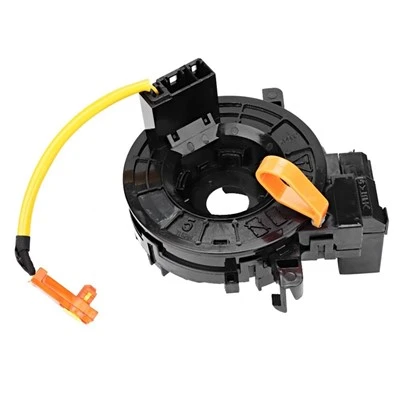
So to circle back to the original question: Are there smart car switches on the market? Absolutely. They’re not the flashy concept we saw five years ago. They’re reliable, affordable, and designed to make driving easier and safer. The next time you reach for a switch in your car, take a second to look—you might be touching a smart part without even knowing it. If you’re interested in learning more about how these switches work, or getting a quote for your fleet or your next car build, don’t hesitate to reach out. We’re here to help.
Car Sensor References
- National Highway Traffic Safety Administration. (2023). Distracted Driving in Light Vehicles: The Role of In-Cabin Controls.
- International Organization for Standardization. (2022). ISO 14548: Automotive Switches – Environmental Testing Requirements for On-Road Vehicles.
- Automotive News. (2023). Smart Interior Components Drive 12% Growth in Automotive Switch Market.
- Consumer Reports. (2024). In-Cabin Controls: Evaluating Convenience and Safety of Smart Switch Technology.
- Society of Automotive Engineers. (2023). Smart Switch Systems for Light Vehicles: Local Data Processing and Privacy Standards.
Shanghai Changshun Imp.&Exp. Co., Ltd.
As one of the most professional car switch manufacturers and suppliers in China, we are committed to providing high quality OEM service to global clients. We warmly welcome you to buy premium car switch made in China here from our factory.
Address: No. 1558, Bai’an Road, Anting Town, Jiading District, Shanghai
E-mail: info@changhui-group.com
WebSite: https://www.changhuish.com/
