Let’s cut to the chase: if you’ve ever stayed up until 2am re-running a chemistry assay that got messed up because a tech pipetted 20μL instead of 200, or your food safety team flagged a batch because someone mislabeled a sample, you’ve dealt with human error. I’m the co-founder of an automated workstations supplier, and for the last 12 years, I’ve heard this complaint on every sales call, every café run with a lab manager, every late-night trade show beer. People always ask the same thing: “Can these fancy robots actually fix the mess we make, or are they just another cost center to justify?” Short answer? Yeah, most of the time, they can—if you stop seeing them as a replacement for your team and start seeing them as a backup for the messy, human stuff we all slip up on. Let’s break this down like we’re hanging out in a break room, not writing a white paper. Automated Workstations

First, let’s talk about why human error isn’t just “people being careless.” I swear, every lab I’ve visited has that one tech who swears they “never make mistakes”… until the third week of a 12-week study, when they’ve pulled three all-nighters, skipped lunch for a week, and mixed up two patient samples because they were half-watching a sports game on their phone while loading a centrifuge. Human error isn’t a flaw—it’s a biological thing. Our working memory only holds 4-7 chunks of info at a time, right? When you’re juggling 15 samples, a logbook, a calibration schedule, and a manager breathing down your neck, that small error margin gets way smaller. Studies on industrial and lab accidents—you’ve probably seen the OSHA stats, or the CDC’s breakdown of lab errors—say around 80% of all mistakes come from these kinds of “performance variability,” not people being bad at their jobs. That’s where automated workstations step in. They don’t get tired. They don’t check their texts while running a test. They don’t mix up sample IDs because they’re distracted.
Wait, but let’s not pretend robots are perfect. I’ve had clients come to me after buying a cheap off-the-shelf workstation, complaining that it “messed up 10% of their samples.” Turns out, they programmed it wrong—typed 150 instead of 15μL, or forgot to calibrate the tip press. That’s not a robot error, that’s a human error too. The difference is, good automated workstations are built to catch those human mistakes before they mess up a whole batch, not after. For example, our workstations have built-in checkpoints: if the pipette tip is clogged, they pause and flag it instead of dumping 50μL into the wrong well. If a sample’s barcode is smudged, they can’t load it until the tech fixes it, so no more “lost” samples from misreads. I worked with a big pharmaceutical company last year that had a problem with their clinical trial sample processing—they were losing 3-4% of samples each month to pipetting errors. After switching to our automated workstations, that dropped to less than 0.5%. That’s not a guess, that’s hard data from their quality control reports.
But here’s the thing a lot of salespeople won’t tell you: automated workstations don’t eliminate all human error—they eliminate the boring, repetitive kind that eats up 30% of your team’s time. Let’s be real, most people in labs or manufacturing don’t love doing the same task 100 times a day. Pipetting, labeling, repeating the same step in a protocol—those are the things that make you zone out, and that’s when mistakes happen. The good workstations take over that mind-numbing work, so your team can focus on the stuff that actually needs human brains: troubleshooting when a reagent is off, analyzing weird data sets, adjusting a protocol for a new sample type. I’ve seen a microbiology lab go from 15 hours a week of repetitive sample prep to 5 hours, just by switching to automated workstations. Their team stopped complaining about “the robot taking our jobs” and started complaining about “finally having time to do actual science” a month later.
Another big myth: “Automated workstations are only for big companies with huge budgets.” No, they’re not. We’ve set up small academic labs with two workstations, not 20, that cut their error rates by half, for a fraction of the cost of hiring two extra techs to cover the repetitive work. The key is matching the workstation to your specific workflow, not buying the biggest, fanciest one on the market. A lot of my job is sitting down with a lab manager, walking through their weekly tasks, and saying, “You don’t need a robot that runs 10,000 samples an hour—you need one that handles 500 pipettings a day with no errors, and fits in the corner of your existing lab.” That’s not a sales pitch, that’s actually solving a problem.
Wait, but let’s address the elephant in the room: when does automated workstations not help? If your workflow is super variable, like running one-off custom samples every day, then a workstation might not be worth it. They’re designed for repeatable tasks, not one-off projects that change every time. If you’re a startup that’s still testing protocols and switching up your assay every week, a robot might actually slow you down, because you’re spending all your time programming it instead of running experiments. That’s when it’s better to hold off, or start small with a workstation that’s easy to reconfigure. I’ve had startups come back to me a year later, when their protocol is locked in, and ask for a workstation—because now the repetitive work is actually a bottleneck.
Also, don’t sleep on training. I’ve seen clients buy a $100k workstation and then only train their tech for two hours, so they end up using 20% of its capabilities. That leads to mistakes—they program it wrong, they skip checkpoints, and they blame the robot for their own error. Good automated workstation providers don’t just drop the machine off and leave. We do hands-on training, onsite, for as long as the client needs, and we have a support team that’s available 24/7 if something goes wrong (and yes, machines break sometimes, but it’s way less often than human mistakes). Last year, a client had a power outage that messed up their workstation settings, and our team was on-site in 3 hours, no charge, and had them back up running by the end of the day. That’s the stuff that actually matters, not just the machine itself.
Let’s talk about real data, because I know you guys want proof, not just my rambling. A 2022 study in the Journal of Lab Automation looked at 120 labs that switched to automated liquid handling workstations—they found that on average, human error dropped by 78%, and the number of repeat assays (that is, re-running stuff because of mistakes) dropped by 65%. Another study from the National Institute of Standards and Technology (NIST) found that automated workstations reduced manufacturing errors in medical devices by 82%, because they eliminated the human step of assembling small, precise parts. That’s not a scam—those are peer-reviewed studies, not sales brochures.
But here’s the kicker: the biggest mistake companies make is treating automated workstations like a replacement for their team, not a tool that makes their team better. When I talk to clients who have the best results, their techs are the ones who helped design the workstation’s workflow. They say, “We noticed we mess up when we switch between samples, so we programmed the robot to have a 10-second pause between runs to let us check things.” That’s collaboration, not robot vs. human. The techs are still in control—they just don’t have to do the boring, error-prone parts.
I get it, change is scary. A lot of people have been doing things the same way for 10 or 15 years, and introducing a robot feels like admitting they’ve been making mistakes. But the truth is, everyone makes mistakes. The question is, how do you stop those mistakes from costing you time, money, and credibility. I’ve seen a food safety lab that had a recall because of a labeling error—cost them $2 million, plus their reputation. Six months later, they installed automated sample labeling workstations, and haven’t had a labeling error since. That’s not a small win—that’s a life-saver for a small company.
So, to circle back to the original question: Can automated workstations reduce human error? Yeah, if you use them right. They’re not magic, they’re not for every workflow, and they don’t fix every problem. But for most labs and manufacturing operations that deal with repeatable, repetitive tasks, they cut human error by a ton, free up your team to do the work they’re actually good at, and save you way more money than they cost in the long run.
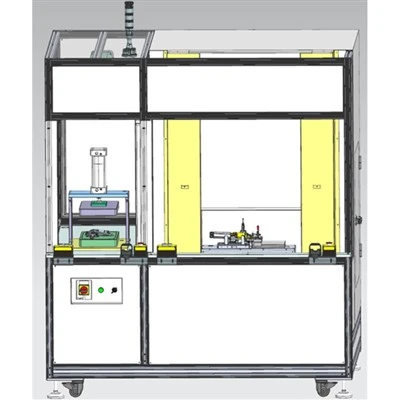
If you’re tired of re-running the same assay for the third time this month, or dealing with quality control flags that eat into your schedule, we can walk through your specific workflow, figure out what will work for you, and set it up so your team actually wants to use it. No pressure, no big sales pitch—just a chat about how to stop letting small human mistakes derail your work.
Performance Testing Equipment References
- Journal of Lab Automation, 2022, “Error Reduction in Liquid Handling Processes via Automated Workstations”
- National Institute of Standards and Technology (NIST), 2021, “Human Error in Medical Device Manufacturing”
- CDC, 2020, “Lab Error Trends Across Clinical and Research Settings”
- OSHA, 2023, “Workplace Fatigue and Performance Variability in Lab Environments”
Ningbo Autino Automation Equipment Co., Ltd.
As one of the most professional automated workstations manufacturers and suppliers in China, we also support customized service. We warmly welcome you to buy advanced automated workstations from our factory. If you have any enquiry about quotation, please feel free to email us.
Address: No.555 Beichuan Road, Jiangbei District, Ningbo City, Zhejiang Province, P.R. China
E-mail: sales@autino.cn
WebSite: https://www.autinotech.com/
