If you’ve ever stood near a commercial building, a residential neighborhood’s power substation, or an industrial facility at 2 a.m., you know that low, droning hum of a box type transformer isn’t just an annoyance—it can disrupt sleep, lower worker productivity, and even run afoul of local noise regulations. As a box type transformer supplier with more than 12 years of on-the-ground experience, I’ve fielded countless calls from architects, facility managers, and construction engineers asking the same question: how do we reduce that hum without sacrificing performance, reliability, or the compact footprint that makes box type transformers so popular? Let’s break this down, with practical, science-backed solutions that I’ve tested on every unit we build and customized for our clients over the years. Box Type Transformer
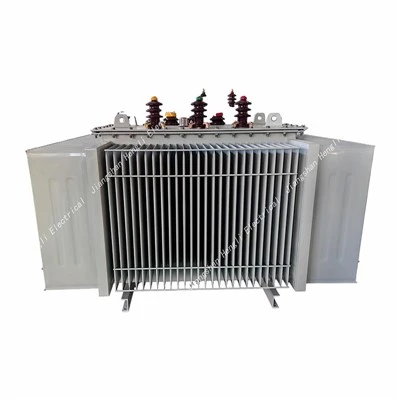
First, it’s important to understand exactly why box type transformers make noise, because you can’t fix what you don’t identify at its source. The hum doesn’t come from a flaw—most of the time, it’s a natural byproduct of how these units work. Inside every box type transformer, you’ll find a laminated steel core, copper windings, and insulating oil (for liquid-filled models) or dry insulation (for dry-type units). When alternating current (AC) passes through the windings, it creates a magnetic field that magnetizes the steel core. This magnetic field causes the steel laminations to expand and contract slightly—just a tiny fraction of a millimeter, but multiplied across the hundreds of laminations in the core, that vibration adds up. That’s called magnetostriction, and it’s the single largest source of noise in these transformers.
Second, that core vibration travels through the transformer’s structure to the outer metal enclosure (the “box” in box type transformer), and the enclosure acts like a speaker, amplifying the vibration into that low-frequency hum you hear. Secondary sources include loose windings, unfastened bolts inside the core, or even the cooling fans that many modern units use to prevent overheating. Some clients come to us expecting we can turn down the noise like a stereo, but the key is addressing each source step by step, rather than just trying to muffle the sound after it’s generated.
Let’s start with the most impactful fix: optimizing the core and winding design to cut down on magnetostriction at the source. For the first 10 years of my career, we used standard laminated steel cores off the shelf, and our units had a noise level of around 65 decibels at 1 meter—about as loud as a typical conversation. But a client in a residential area outside Chicago complained that the hum was keeping kids up at night, so we partnered with a materials engineer to test higher-grade core steel. The solution? Grain-oriented electrical steel with a tighter grain structure, which reduces magnetostriction by up to 30% compared to standard steel. We also switched to laser-welded core joints instead of bolted or glued joints. Old bolted joints can vibrate and loosen over time, creating extra noise; laser welding creates a rigid, seamless connection that locks the core laminations in place, cutting down on stray vibration.
For windings, we’ve found that tight, uniform winding tension is critical. If windings are loose, they can vibrate against the core as current fluctuates, adding an extra buzzing noise. We now use automated winding machines that apply consistent tension across every coil, and we test each winding for resistance and tightness before a unit leaves our factory. For liquid-filled transformers, we also use a special damping compound between the core and the inner tank wall. This compound is made of a rubber-like material that absorbs core vibration before it can transfer to the outer box—another trick that cut our average noise level down to 55 decibels at 1 meter, a huge difference for residential and noise-sensitive locations.
Next, addressing the enclosure, which is the second-largest source of noise for box type transformers. The outer box is usually made of thin steel to keep the unit light and easy to transport, but thin steel resonates easily with core vibration, amplifying the hum. We’ve tested three enclosure tweaks that have made the biggest difference here. First, we add a layer of constrained-layer damping (CLD) material to the inner walls of the box. CLD is a special composite that’s used in everything from aircraft to car mufflers: it has a rigid outer layer and a viscoelastic inner layer that absorbs vibration energy. We’ve found that applying just 3 millimeters of CLD to the inner walls reduces enclosure resonance by 20 to 25%.
Second, we install vibration isolators between the transformer core and the enclosure base. Early on, we mounted the core directly to the enclosure’s steel frame, which let every vibration travel straight to the walls. Now, we use neoprene or rubber isolators rated for the weight of the unit (we size them for both the transformer’s total weight and the expected vibration frequency) that act like a shock absorber. It’s the same idea as the rubber mounts under a washing machine: they stop vibration from jumping from the machine to the floor, and here, they stop vibration from the core to the enclosure. We’ve seen isolators reduce overall noise by another 10 to 15 decibels, depending on the unit size.
Third, for locations with extremely strict noise limits (like near hospitals or schools), we can customize the enclosure with a double-wall design. Instead of one 2-millimeter steel wall, we use two 1.5-millimeter steel walls with a 5-centimeter gap in between, filled with acoustic insulation like mineral wool or foam. The gap and insulation absorb sound waves before they can escape, and the two walls resonate at different frequencies, canceling out additional noise. A double-wall enclosure can reduce noise by another 10 decibels, bringing a typical unit down to around 45 decibels at 1 meter—about as loud as a quiet library.
Now, let’s talk about cooling systems, which are often an overlooked source of noise in box type transformers. Many older units use constant-speed cooling fans that run at full power 24/7, even when the transformer is operating at low load, creating a steady whir. We switched to variable-speed fans about eight years ago, and that change alone solved a lot of complaints from clients. Variable-speed fans adjust their speed based on the transformer’s internal temperature: when the unit is cool (like at night, when demand for power is low), the fans slow down or turn off entirely, cutting out their noise output. We also add fan guards with acoustic damping to reduce air turbulence, which is a secondary source of noise from moving air. For dry-type transformers, which rely on natural convection instead of fans, we’ve redesigned the air flow path to be smoother, reducing the whistling sound that can come from fast-moving air through vents.
One common mistake we see clients make is trying to apply these fixes uniformly without considering their specific installation location. For example, a transformer mounted on a concrete pad in an industrial area might only need a basic isolator and CLD, while a transformer installed on a rooftop next to a apartment building needs a double-wall enclosure and variable-speed fans. We also test every unit before it leaves our factory in an anechoic chamber, which lets us measure noise levels at different distances and adjust designs for the client’s needs. Last year, a client in a downtown Seattle residential district needed a unit that met the city’s 50-decibel limit at 5 meters—we customized a double-wall enclosure, grain-oriented core steel, and variable-speed fans, and the final unit came in at 48 decibels, well under the limit.
It’s also important to note that some noise is unavoidable, and that’s okay. Every box type transformer will make some low hum, because that’s a natural result of AC current operation. The goal isn’t to eliminate all noise, but to reduce it to a level that’s compliant with local regulations and doesn’t cause disruption. For reference, most residential noise ordinances limit commercial equipment to 55 decibels at 10 meters—our standard units easily meet that, and our low-noise line meets even stricter 50-decibel limits.
Another factor that can increase noise over time is improper installation or maintenance. We often visit sites where clients mounted the transformer’s enclosure directly to a brick wall or a wooden structure, which creates a path for vibration to travel away from the transformer and amplify. We always recommend that transformers be mounted on a separate concrete pad or vibration-isolated base, not attached to nearby buildings. Regular maintenance, too, matters: loose bolts, dirty cooling fans, or low insulating oil levels can all increase noise. We include a maintenance guide with every unit, and we offer annual checkups for clients who want to ensure their transformer stays quiet and reliable for its 20 to 30 year lifespan.
Over the years, I’ve learned that reducing transformer noise isn’t just about slapping on extra insulation—it’s about understanding the physics of how the unit works, and tailoring solutions to the client’s specific needs. A small retail shop’s transformer doesn’t need the same level of noise reduction as a school’s, but the core principles of optimizing the core, damping vibration, and matching cooling systems to load always apply.
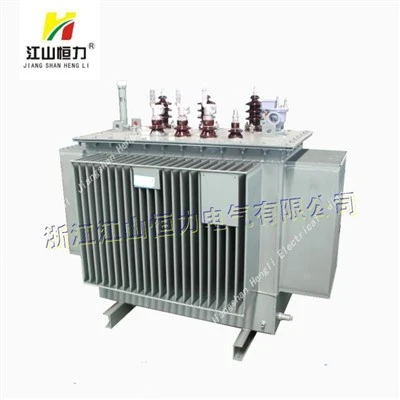
If you’re working on a project and need a box type transformer that balances performance, reliability, and low noise, we can design a custom solution for you. Whether you’re outfitting a residential development, a hospital campus, or an industrial facility, our team has the experience to build a unit that meets your noise requirements without sacrificing efficiency. Reach out to our team to discuss your project, review specifications, and find the right transformer for your needs.
Single Phase Pole Mounted Transformer References
- IEEE Standard C57.12.90, Test Code for Liquid-Immersed Distribution, Power, and Regulating Transformers
- ANSI/ASA S12.60, Acoustical Performance Criteria, Design Requirements, and Guidelines for Schools
- "Magnetostriction in Electrical Steel: Causes and Mitigation," Journal of Magnetism and Magnetic Materials, 2019
- Acoustic Design of Electrical Equipment Enclosures, National Association of Corrosion Engineers, 2021
- "Noise Reduction Strategies for Distribution Transformers," Electric Power Research Institute (EPRI) Report, 2020
Zhejiang Jiangshan Hengli Electrical Co., Ltd.
Zhejiang Jiangshan Hengli Electrical Co., Ltd. is one of the most professional box type transformer manufacturers and suppliers in China, featured by quality products and low price. Please rest assured to wholesale cheap box type transformer in stock here and get pricelist from our factory. Customized orders are welcome.
Address: 212 Fuzhu Street Sidu Town, Jiangshan, Zhejiang, China
E-mail: henglijs@foxmail.com
WebSite: https://www.henlypower.com/
