Alright, let’s break this down to what you actually need to know about FCL container freight—especially if you’re working with a supplier like me. I get it, if you’re new to shipping internationally, the whole “FCL vs LCL” thing can feel like decoding a secret code. But let’s keep this real, no fancy jargon that makes your head hurt. Let’s start with the basics. FCL/LCL
First, FCL stands for Full Container Load, right? It’s exactly what it sounds like: when your shipment is big enough (or worth it enough) to fill an entire shipping container by itself. Wait, hold on—before you think “my stuff would never fit in a whole container,” let’s clarify that it’s not 100% full every time. Some shippers take a smaller container (like a 20ft) that’s only 70-80% full, but they book the entire space so they don’t have to share it with anyone else. That’s still FCL. Compare that to LCL, which is Less Than Container Load—where you split a container with other people’s goods, like sharing a Uber instead of renting the whole car. Makes sense, right?
Now, let’s talk about when you’d pick FCL over LCL. I hear this question all the time from small business owners and warehouse managers. Let’s say you’re a clothing boutique in New York ordering 500 custom hoodies from a factory in Guangzhou. That’s probably going to fill at least half a 20ft container—maybe even all of it. Why not just book FCL here? Because even if you’re only using most of it, FCL usually saves you money per unit when your shipment hits that threshold. LCL charges by the cubic meter (or weight, whichever is higher), and those extra fees for consolidating, unpacking, and repacking add up quick. Also, with FCL, you have what’s called a “door-to-door” option that’s more secure—no one else is touching your stuff mid-shipment. LCL means your goods are mixed with other people’s, so there’s a tiny risk of damage or misplacement (though most good LCL suppliers handle that, but still).
Wait, let’s get specific on container sizes because that’s where a lot of people mix things up. The most common ones are 20ft and 40ft. A 20ft container is about 5.9m long, 2.35m wide, 2.39m tall—so total volume around 33 cubic meters. The 40ft is double the length, so around 67 cubic meters, and there’s also a 40ft High Cube (40HC) that’s a foot taller, hitting ~76 cubic meters. If your shipment is, say, 25 cubic meters, FCL 20ft is perfect. If it’s 50+, 40ft or 40HC is your move. I always tell my clients: calculate the volume of your goods first. Length x width x height of each item, add them all up. If that number is over 15 cubic meters, FCL is almost always cheaper than LCL. That’s a quick rule of thumb I’ve used for years.
Now, how does the FCL process actually work? Let’s walk through it step by step like I’m explaining it to a new client. First, you give me your shipment details: origin port, destination port, cargo type (is it fragile? hazardous? perishable?), volume, and pickup/delivery dates. Then I get quotes from the shipping lines (Maersk, MSC, CMA CGM—those are the big ones) for the container size you need. Once we lock in the rate, I arrange for the container to be picked up from the factory or warehouse at origin. The driver drops off the empty container, your team loads the goods, then seals it with a unique seal number (you get to keep the seal code too—important for tracking). The sealed container goes to the port, gets loaded onto a ship, and sails to the destination port. At destination, the container is unloaded, and I arrange for it to be delivered straight to your door (or your warehouse—you choose). The whole process is way more streamlined than LCL because there’s no consolidation step. No other trucks picking up and dropping off your goods, no extra handling. That’s why FCL is faster too—usually a 7-10 day difference from origin warehouse to destination door, depending on the route.
Wait, but what about the costs? Let’s be real—everyone cares about money with shipping. FCL has two main cost parts: the ocean freight rate (that’s the cost to put the container on the ship) and the local charges at origin and destination. Ocean rates fluctuate all the time—like, last year rates from Shanghai to LA were super high, now they’re way more reasonable. But the cool thing about FCL is that the total rate is fixed per container, so you don’t have to worry about surcharges for extra volume like you do with LCL. LCL rates are per CBM (cubic meter), so if your shipment is 10 CBM, you pay for 10. If it’s 15 CBM, you pay for 15, even if the container only has space for 5 more. FCL removes that “dead space” cost. For example, a 20ft FCL from Ningbo to Houston might be $1,800 total. LCL for 15 CBM on the same route might be $120 per CBM, so that’s $1,800 too—wait, but if you go 20 CBM, LCL is $2,400, while FCL 20ft is still $1,800. So that’s when FCL starts saving you cash. I make a point to tell clients to do that quick math before booking—no hidden fees, no surprises.
Now, common myths about FCL. Let’s bust a couple because I hear these all the time. First myth: “FCL is only for huge companies.” Nah, I had a small business owner last month importing custom coffee mugs—they ordered 18 CBM, so FCL 20ft was cheaper than LCL, even though it wasn’t a full container. We just booked the whole space, they filled it, and it got there faster. Second myth: “FCL is more complicated.” No, it’s actually simpler because you’re only dealing with one set of documents: the bill of lading. With LCL, you have multiple bills because different people’s goods are combined. Less paperwork, less stress. Third myth: “My goods are too fragile for FCL.” Actually, FCL is better for fragile goods because they don’t get tossed around with other cargo. We can arrange for reinforced containers, or even add extra dunnage (packing material) during loading to make sure everything stays safe. Last quarter, I had a client importing glass table tops in FCL 20ft—no damage at all, which is way better than when they tried LCL a year ago and had 10% breakage.
Now, as someone who works with both FCL and LCL every single day, I have to say—there’s a time and place for both. FCL is ideal for shipments over the volume threshold (again, ~15 CBM is a good baseline), for fragile or high-value goods, when you want faster transit, and when you value less handling. LCL is better for small shipments (under 15 CBM) where you don’t want to pay for extra space. But a lot of shippers overuse LCL because they think it’s the cheaper option, but that’s not always true. I had a client last year who imported 12 CBM of outdoor furniture and chose LCL, thinking it was cheaper. Turned out the consolidation fees, documentation fees, and extra handling at both ports added $500 to their total, making it more expensive than FCL 20ft. That’s why I always do a side-by-side quote for both FCL and LCL when a client reaches out—no pressure, just clear numbers so they can make the best choice.
Wait, let’s talk about tracking too, because that’s a big one for most people. With FCL, tracking is straightforward because you have the container number and seal number. You can plug those into any shipping line’s website and see exactly where your container is, 24/7. No guessing if your goods are on a truck or in a warehouse somewhere. With LCL, you have to wait for the consolidator to update the tracking, which can take a few days. That peace of mind is worth something, right? Especially if you’re waiting on goods to fill a retail order.
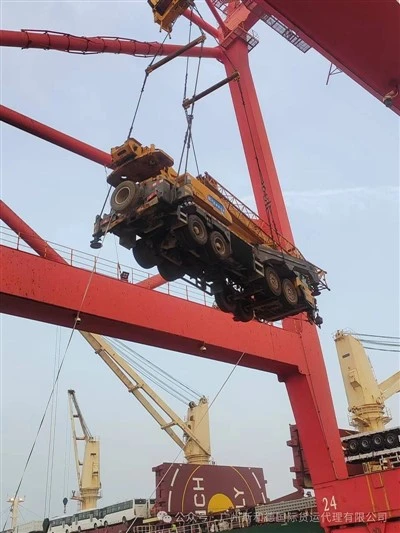
Also, let’s not forget about special cargo. If you’re shipping hazardous goods (like chemicals, batteries), perishable goods (like food, flowers), or oversized cargo (like machinery), FCL is almost the only way to go. LCL providers usually don’t handle hazardous stuff because of safety risks, and oversized cargo needs the whole container to fit. I work with several companies that ship industrial machinery—they all use FCL because LCL can’t accommodate the size, and it’s way safer to have that big piece of equipment in a sealed container.
Now, let’s get to the part that matters most if you’re reading this and wondering if FCL is right for you. If you’re a business owner importing or exporting goods, whether you’ve used FCL before or it’s your first time, don’t overcomplicate it. The first step is to figure out your shipment volume—measure your goods, calculate the total CBM, then reach out to a supplier who knows their stuff (like me, hint hint). We’ll give you a no-obligation quote for both FCL and LCL, explain the timeline, the costs, and the pros and cons so you can pick what works for your budget and your timeline. I’ve worked with startups, mid-sized companies, and big corporations, so I adapt to what each client needs—no one-size-fits-all approach.
Wait, one last thing to mention: booking FCL doesn’t mean you have to lock into a long-term contract unless you want to. A lot of my clients book one-off FCL shipments, especially if they’re launching a new product. We handle everything from pickup at origin to delivery at your door—you don’t have to deal with customs brokers, port fees, or trucking companies (unless you want to handle that part, but most clients prefer we do it all). It’s like a one-stop shop for your shipping needs.
At the end of the day, FCL container freight is all about simplicity, cost-effectiveness when it makes sense, and security. It’s not just for big guys—it’s a great option for any shipment that hits that volume sweet spot. If you’re curious about what FCL would cost for your next shipment, just reach out and we can chat. No pushy sales talk, no hidden fees, just straight answers about what works best for your goods.
West Africa Lane References:
- International Chamber of Commerce (ICC). (2020). Incoterms® 2020: Rules for the use of domestic and international trade terms. ICC Publishing.
- Federal Maritime Commission (FMC). (2022). FCL and LCL Shipping: A Guide for Small Businesses. FMC Office of Consumer Affairs.
- Maersk Line. (2023). Container Sizing Guide: Understanding 20ft, 40ft, and 40HC Containers. Maersk Supply Chain Solutions.
- World Shipping Council. (2021). Consolidation Practices in International Freight Shipping: Benefits and Risks. World Shipping Council Research Report.
Speed Supply Chain (Guangzhou) Co., Limited
Speed Supply Chain (Guangzhou) Co., Limited is a licensed NVOCC and first-level freight forwarder in China. With a professional team, we deliver reliable, efficient and cost-effective fcl/lcl service for global customers. If you have any enquiry about quotation, please feel free to email us.
Address: Room 2001-2002, Dongzhao Building, No. 515 Dongfeng Middle Road, Yuexiu District, Guangzhou, Guangdong, China
E-mail: mika.li@speedsucc.com
WebSite: https://www.speedsupplychain.com/
