If you’ve ever stood in a remote valley where your cell service cuts out mid-call, or fumbled with a bulky analog radio trying to coordinate a construction job site at dusk, you’ve probably wondered: what’s the actual range of 4G compared to old-school analog radio? As a supplier that works with both 4G gear and analog radio systems every single day, I get this question all the time—and it’s not a one-size-fits-all answer. But I’ll break it down like I would to a farmer checking our field gear or a construction manager prepping for a big project, no jargon, just real-world numbers I’ve seen play out on jobs and in client reports. 4g and Analog Radio

First, let’s nail down what we’re even talking about here, because “range” means totally different things for each tech, and it’s not just about how far a signal travels. For analog radio (think walkie-talkies, the two-way radios construction crews use, or old school ham radios), range is all about line of sight, frequency, and power. 4G? It’s a cellular broadband system, designed to send data (calls, texts, videos) back and forth through cell towers, so its range is tied to tower placement, bandwidth, and how many devices are trying to connect at once. No small overlap there, but the gaps are huge.
Let’s start with analog radio, since that’s the older, still super popular tech we deal with. When people ask for analog range, I always first ask what they’re using it for. If it’s a small job site—say, a 10-acre housing development where everyone’s within a few hundred feet of each other? A basic analog handheld (the kind that fits in your pocket) will easily cover that, no problem. But get a little more spread out: say, a wind farm spanning 50 miles of rolling hills, or a search and rescue team working in a national forest with no cell service? That’s where the range jumps. We sell analog base stations with high-gain antennas that can hit 30 to 50 miles line of sight. Wait, line of sight is key here—if there’s a mountain between the radio and the base station, that number drops to 5 or 10 miles, tops. And power matters too: a 5-watt handheld is good for 1 to 5 miles line of sight, while a 50-watt mobile unit mounted on a truck or a tower? That can push 20 to 30 miles easy, no obstructions. But here’s the catch with analog: it’s not great for big groups. If you have 20 trucks spread across 200 miles, a single analog base station won’t cover that—you need repeater towers every 20 or 30 miles to bounce the signal. Also, analog doesn’t handle obstacles well—trees, fog, even heavy rain can eat up range fast, which is why we’ve had clients in the Pacific Northwest add extra analog repeaters just to keep their logging crews connected.
Now, 4G. When most people hear “4G” they think of their phones at home, which work through big urban cell towers that cover a mile or two in the city. But that’s urban range. We sell industrial 4G gear for guys who are working way outside the city—farmers, miners, pipeline crews, event organizers. A standard rural 4G cell tower (the kind that’s not packed with hundreds of city users) can cover 5 to 10 miles from the tower, line of sight. But wait, if we bump up the power and use a wider bandwidth, that jumps to 20 to 30 miles, same as analog, right? But the big difference is what happens when there are obstacles. 4G uses frequency bands that can go through stuff way better than analog, especially the lower frequency bands (called sub-1 GHz) that we use for remote projects. A 4G signal can punch through a forest, or a small hill, or even a light storm without cutting out nearly as bad as analog. But here’s the gotcha for 4G: capacity. If you have 50 devices all trying to connect to the same 4G tower (like a construction camp with 50 workers all streaming videos or sending data), the range drops. That same tower that works for 10 devices at 20 miles only works for 50 devices at 5 miles. Analog doesn’t have that problem—you can have 100 radios on the same channel, and they’ll all work the same distance, no slowdown.
Wait, let’s do a real comparison example, because I think that’s where it clicks. Last year, we had two clients: a construction company building a new highway through rural Ohio, and a search and rescue team operating in the Rockies. The construction crew first tried analog: they had 20 handhelds and a base station on a hill at the start of the site. They covered the 10-mile stretch of highway, plus access roads branching off, so total analog range was around 15 miles, no repeaters needed. But when they added 30 more workers with 4G devices (tablets, job site cameras, two-way radios that run on 4G), their 4G tower only covered 8 miles from the main base, because so many devices were on it. So they ended up needing a second 4G tower 5 miles down the road to cover the rest of the site, which added cost, but they could send live job site videos back to their office in Columbus, which analog couldn’t do at all.
The search and rescue team? They’ve used analog for 20 years, covering 300 square miles of backcountry. Their analog radios work up to 40 miles line of sight, but when they’re in a canyon, that drops to 5 miles, so they have repeaters every 25 miles. Last year, they tested our 4G rugged radios. Out in open alpine, the 4G hit 30 miles, same as analog, but when they were in a narrow canyon, it hit 15 miles—way better than their analog’s 3 miles. The only catch? If there’s no cell tower, they need a portable 4G base station, which is the size of a small suitcase, vs. analog repeaters that are mounted on trees or rocks and run on solar. For remote locations with no existing cell infrastructure, analog still wins for super long range without extra gear.
Another thing people forget: range isn’t just distance, it’s what you need to do with the signal. If you just need to talk to one other person, analog is totally fine for up to 30 miles, no internet required. But if you need to send a photo, a video, or track a vehicle’s location, 4G is non-negotiable—even if its raw distance is similar to analog. That’s why we see a lot of clients buying both: analog radios for short-range job site coordination, and 4G devices for long-range data transfer or connecting multiple sites.
Wait, let’s talk about the extremes, because that’s where the numbers get wild. For analog, the maximum range I’ve ever seen is around 100 miles—only with a super high-gain antenna mounted on a mountain top, and absolutely no obstructions. That’s rare, though, almost only for ham radio operators. For 4G? The maximum range we’ve seen in real use is around 50 miles, and that’s with a tiny number of devices, a huge antenna, and a super low frequency band. Anything beyond that? The signal gets so weak that even a single tree can kill it, and you’re better off adding a repeater anyway, same as analog.
Common myths busted here, too. A lot of guys think 4G is always better range, but that’s not true. If you’re in the city, 4G towers are packed close together, so you might get 2 miles, but analog radios might get 1 mile, so 4G wins there. But out in the middle of nowhere, where 4G towers are 20 miles apart, and analog repeaters are 25 miles apart, they’re almost the same. The only time 4G is way better is when you need to send data, not just voice.
Another thing we deal with daily: cost and maintenance. Analog radios are cheaper upfront, and they’re super easy to fix—if one breaks, a tech can patch it in 10 minutes, no extra fees for data plans. 4G? You have to pay for a data plan every month, which adds up, especially for remote sites. But if you have multiple sites, 4G lets you connect all of them to a central office, which analog can’t do without a ton of extra gear. So it’s not about which is better—it’s about what you need.
As a supplier, I see people pick the wrong tech all the time because they only look at range. Last quarter, a mining company bought 50 high-power analog radios for their 50-mile mine site, and ended up needing 3 extra repeaters because the canyons and hills cut their analog range in half. They could have saved money (and gotten data tracking for their trucks) by going with 4G, which only needed two towers, and worked better through the rock formations. Another client, a small farm, bought 4G thinking it would cover their 1000-acre spread, but ended up with dead zones in the far corners because their 4G tower only did 10 miles, and they didn’t want to pay for a data plan. So they went back to analog, which covers the whole farm with one base station, no extra fees.
So to wrap this up, the quick, real-world range comparison for most of our clients is this:
- Analog radio (handheld, 5W): 1–5 miles line of sight, less with obstacles; mobile (50W) or base station: 20–50 miles line of sight, 5–20 miles with light obstacles.
- 4G (standard rural tower, 10 devices): 5–10 miles line of sight; high-power tower, low devices: 20–30 miles line of sight; drops to 2–8 miles with high device count or heavy obstacles.
But the biggest difference isn’t the distance—it’s what the signal can carry. Analog is simple, cheap, good for just voice, works anywhere even if there’s no cell service, but bad for data. 4G is more flexible, can send all kinds of data, connects multiple points, but needs cell infrastructure (or portable base stations) and costs for data plans.
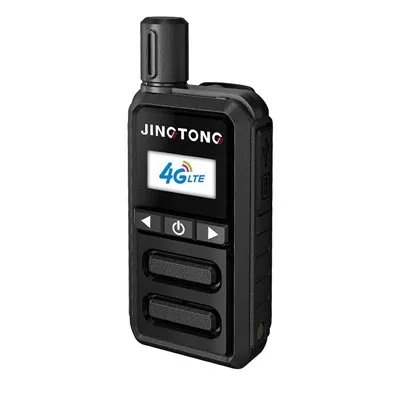
If you’re trying to figure out which tech is right for your project, or you need to upgrade your current analog or 4G setup, our team has worked with everything from small job sites to large remote operations. We can help you test signal ranges on your specific site, compare gear options, and find a setup that fits your budget and needs. If you’re looking to replace old analog gear, add 4G to your site, or compare the two for a new project, reach out to our team to connect for procurement and consultation.
Analog Radio References:
Federal Communications Commission. (2021). Radio Frequency Range and Propagation Characteristics.
3GPP. (2022). 4G LTE Rural Coverage and Capacity Standards.
National Association of Broadcasters. (2020). Two-Way Analog Radio Range Best Practices for Commercial Use.
Jingtong (Quanzhou) Electronics Co., Ltd.
We are one of the most professional 4g and analog radio manufacturers and suppliers in China, specialized in providing high quality customized service. We warmly welcome you to buy durable 4g and analog radio made in China here from our factory. For price consultation, contact us.
Address: No.288, Si Huang Industry Zone, Xia Mei Town, Nan An, Quanzhou, Fujian province, China 362302
E-mail: jtdjj@jtdjj.com
WebSite: https://www.jteradio.com/
