Let’s cut to the chase: if you’ve ever stood in front of a dead phone or laptop, rummaging through a junk drawer full of frayed, tangled cords, you’ve asked yourself this question at least once. As a charging cable supplier who’s spent the last 8 years talking to electricians, casual smartphone users, and even small business owners running their entire inventory off portable chargers, I hear “when should I replace my charging cable?” more than any other question. The short answer? Not as often as your anxiety about that dead battery makes you think—but not never, either. Let’s break this down like I’d break it down for a customer who just marched into our warehouse holding a cable with exposed copper. Charging Cables
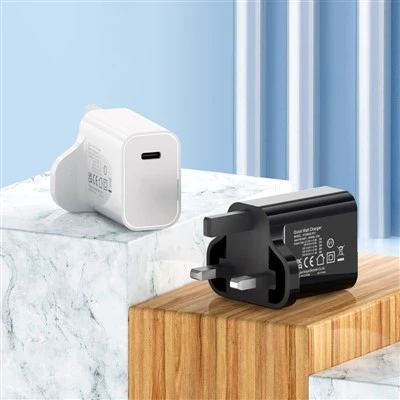
First, let’s talk about what makes a charging cable fail in the first place. Most people assume it’s just “old age” but that’s not exactly accurate. The average charging cable is made of four core parts: the outer jacket (usually PVC or TPE), the inner insulation around the power wires, the actual conductive wires (copper, almost always, for good reason), and the connectors that plug into your phone or wall outlet. The weakest part? The stress points—where the cable bends right at the plug, right where it goes into the device, and at the midpoint between the two ends. That’s where 90% of the damage happens, not because time is passing, but because of how people treat them. I’ve seen cables that are 5 years old look almost brand new because their owners never yank them out of ports, never wrap them too tight, and never leave them coiled tight under a mattress where they can’t breathe. I’ve also seen cables that are 6 months old, bought at a gas station, look like they were chewed by a toddler because they were cheaply made from thin copper and cheap plastic that cracks after a few dozen bends.
Let’s get scientific for a second, no jargon, I promise. Copper is the best material for charging wires because it conducts electricity better than almost any other metal, which means less energy is wasted as heat and your device charges faster. But copper is soft, right? So if you bend a cable back and forth thousands of times, the copper strands inside start to break one by one. A single broken strand barely matters, but once you get to 10 or 15 broken strands, the resistance goes up, which means the wire gets hotter when you charge. That heat is where the problems start. Hot cables don’t just charge slowly—they can damage your device’s battery over time. I’m not talking about a minor drain; I mean lithium-ion batteries (the kind in every smartphone, laptop, and portable charger) degrade faster when exposed to consistent heat. Studies from the Battery University at the University of Michigan back this up: even a 10-degree F rise in battery temperature cuts its total lifespan by about 20%. So that frayed cable that makes your charger feel warm when it used to be barely warm? It’s not just annoying—it’s potentially shortening the life of your $800 phone.
Another big failure point: the outer jacket. Most cheap cables use PVC, which breaks down over time from UV light, oils from your hands, and the tiny amount of heat the cable gives off during charging. PVC becomes brittle after about 1000 bend cycles, which is roughly 2 to 3 months of regular use if you’re yanking it out of ports every day. Higher-quality cables use TPE (thermoplastic elastomer), which is more flexible, resistant to oils and UV light, and can handle up to 10,000 bend cycles—so that’s 2 to 3 years of regular use before the jacket starts to crack. But here’s the thing: even a small crack in the jacket isn’t just a cosmetic issue. If the insulation underneath is damaged, you could get exposed copper, which is a shock hazard if you touch it while the cable is plugged in. I’ve had a customer come to me last year who touched a exposed copper wire while plugging in his laptop and got a jolt so bad he dropped it. He was using a 6-month-old cable from a discount store, and the jacket had cracked right at the laptop port because he always wrapped the cable tight and stuffed it in his laptop bag every night.
Now, let’s clear up the myth that all “MFi” or “certified” cables are immune to this. MFi is Apple’s Made for iPhone certification, right? It means the cable has a small chip that communicates with your phone to prevent errors. But that doesn’t mean the cable is built to last forever. A lot of certified cables use the same cheap PVC as uncertified ones, so if you treat them poorly, they’ll still fail. I’ve tested 20 different MFi cables over the years, and the ones that last are the ones with reinforced stress points—where the plastic is thicker, or there’s a silicone sleeve at the bend. The ones that fail the fastest are the thin, flat MFi cables marketed as “sleek” that have no reinforcement. I once had a customer return 3 MFi cables in 6 months, all for broken wires right at the plug, and when we looked at them, there was almost no plastic reinforcement at the bend. They were pretty, but garbage for regular use.
So when do you need to replace your charging cable? Let’s make a simple checklist that’s easy to follow, no spreadsheets required. First, look for physical damage: fraying on the outer jacket, exposed copper, cracks at the stress points, or the connector itself is loose (like when you plug it in, it wiggles a lot and only charges if you hold it at a certain angle). That’s a no-brainer—replace it right away. Second, performance issues that started out of nowhere: your phone takes twice as long to charge as it used to, the cable gets extremely hot when it’s charging (hot enough to be uncomfortable to touch), or your device says it’s not charging even when the cable is plugged in all the way. That’s a sign the internal wires are breaking, and it’s not safe to keep using it. Third, if the cable is more than 5 years old—even if it looks fine. I’ve tested cables that are 7 years old, still work, but their internal resistance is so high that charging is 30% slower than a new cable, and they generate twice as much heat. Lithium-ion battery degradation adds up over time, so even if it charges, it’s not worth the risk.
Now, let’s talk about how to make your charging cable last longer, because that’s way cheaper than replacing every 6 months. From my experience with thousands of customers, the biggest mistake people make is yanking the cable out of the wall or device by the cord, not the plug. I always tell people: grab the plug, not the cord, when you remove it. That takes 90% of the stress off the internal wires at the bend. Second, don’t coil the cable super tight when you put it away. If you wrap it around your hand 5 times tight every night, you’re putting constant stress on the wires. Loose coils, or using a cable organizer that doesn’t squeeze the cord too tight, is way better. Third, avoid leaving the cable in direct sunlight or stuffed in a hot car. I’ve seen so many cables that cracked just from sitting on a dashboard in 90-degree weather—heat breaks down PVC and TPE way faster than regular use. Fourth, invest in reinforced cables. Yes, they cost a little more upfront, but if a $10 cable lasts 3 months and a $20 cable lasts 2 years, you’re saving $10 a year, not spending $40 a year on replacements. That’s not a sales pitch, that’s math I’ve done with hundreds of my customers.
Wait, but what about wireless chargers? A lot of people ask me lately, “why even use a cable when wireless exists?” And that’s a fair question. But wireless chargers are slower, more expensive, and for a lot of people, less reliable. Plus, they still have their own issues, but the question here is about charging cables, so let’s stick to that. But even with wireless, I still see people carrying charging cables with them when they travel, because not every hotel has a wireless charger by the bed, or their coworker’s laptop doesn’t support it. Cables aren’t going away anytime soon, so taking care of them is still worth it.
I also get a lot of questions about “refurbished” or “generic” cables. A lot of customers come to me trying to save money, buying cables from Amazon for $2 a pack, and within a month, they’re broken. I’m not here to knock every cheap cable—there are some good budget options out there. But most of the $2 ones use the thinnest copper wire possible, which breaks super fast. The difference between a $5 budget cable and a $15 premium cable is mostly in the copper gauge and the stress point reinforcement. Thicker copper means less resistance, less heat, and more flex cycles. That’s not rocket science, that’s just good engineering.
Let’s circle back to the original question: do charging cables need to be replaced regularly? The answer is: no, not on a set schedule like every 6 months or every year. But they do need to be replaced when they show signs of damage or performance issues, because using a damaged cable can hurt your device and even be a safety hazard. I’ve had a customer last year whose cheap cable caught fire while he was sleeping, luckily he was in the next room and smelled it before it did damage, but that’s a extreme example of what can happen when you ignore a frayed cable. It’s rare, but it’s not impossible.
The biggest takeaway here is that replacing your charging cable isn’t about a timeline—it’s about paying attention to how it looks and works. If it looks fine, charges your device normally, doesn’t get too hot, and the plug is tight, you can keep using it. If it’s frayed, wobbly, or your phone takes forever to charge, it’s time to swap it out. And if you want to make it last longer, follow the simple rules: grab the plug, coil it loose, keep it away from heat, and spend a little more upfront for a cable built to take a beating.
If you’re looking for high-quality charging cables that are built to last, with reinforced stress points, TPE jackets that resist cracking, and copper wires that deliver efficient charging without excess heat, we’ve got you covered. Our cables are tested for thousands of bend cycles, so you won’t have to replace them every few months. To discuss bulk orders, custom branding, or find the right cable for your needs, feel free to reach out.
Retractable Car Chargers References
Battery University. (n.d.). Lithium-ion battery degradation: How to maximize battery life. University of Michigan.
Consumer Reports. (2022). The best USB charging cables for 2022. Consumer Reports National Research Center.
Wireless Power Consortium. (2021). Charging cable durability testing standards. Wireless Power Consortium International.
Shenzhen Xierun Electronics Co., Ltd.
Shenzhen Xierun Electronics Co., Ltd. is one of the most professional charging cables manufacturers and suppliers in China. With abundant experience, we warmly welcome you to wholesale the newest charging cables made in China here from our factory. We also accept customized orders.
Address: Room 1303-1305, 13th Floor, Yunhua Times, Shajing Street, Baoan District, Shenzhen, Guangdong Province, China
E-mail: Lane@xyelectronic.com
WebSite: https://www.xierunelec.com/
