If you’re working with GX1010C17 dry prime pumps, you’ve probably hit a snag at some point: the thing loses prime out of nowhere, and suddenly you’re dealing with weird, inconsistent performance—no suction, weird noise, maybe even total shutdown. As someone who’s been supplying these pumps for years, I’ve fielded dozens of these calls from technicians, plant managers, and even small business owners who swear they did everything “right” when setting up or maintaining their pump. Let’s break this down, no fancy jargon, just the real reasons your GX1010C17 is losing prime, and what to do about it. GX1010C17 Dry Prime Pump
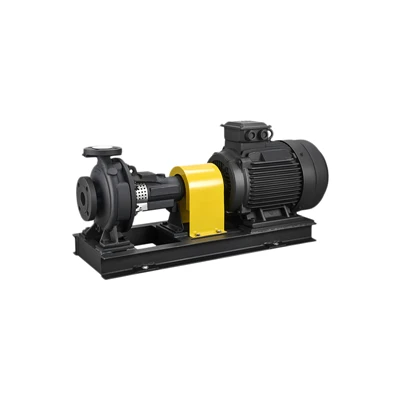
First, let’s get clear on what “losing prime” actually means for your GX1010C17. Unlike a standard wet pump that sits submerged in fluid, this bad boy is a dry prime unit—its whole thing is pulling a vacuum on the suction line to lift fluid up and into the pump chamber. For prime to hold, there has to be a tight, air-free seal between the pump, suction line, and the fluid you’re moving. If any air sneaks in, the vacuum breaks, and the pump can’t pull fluid anymore. That’s the core issue, but the specific triggers for this on a GX1010C17 are super common, even if they’re easy to miss.
Let’s start with the most frequent culprit: suction line leaks. I see this way more often than people think, especially on older setups or ones that’ve been jostled around. The GX1010C17’s suction line connects to whatever tank, sump, or source you’re pulling fluid from, and even a tiny pinhole, loose clamp, or cracked coupling will let air in. Wait, you might say, “I checked those clamps when I installed it!” Yeah, I get it—vibration from the pump running will loosen clamps over time, or if you ever routed the line around a sharp edge, that edge could’ve rubbed a hole in the hose. Another thing: if your suction line is too long, or has too many 90-degree bends, that creates extra friction, and the GX1010C17 has to work harder to pull vacuum, making it way more likely to draw in air through even a small leak. Pro tip for the GX1010C17 specifically: the manufacturer specs a max suction lift of 25 feet for this model. If you’re pushing that limit, you’re asking for prime loss, period.
Next up: priming fluid issues. A lot of folks forget that the GX1010C17 needs a small amount of priming fluid at startup—usually 1-2 quarts, depending on the setup— to create that initial seal. If you skipped adding that fluid when you first fired it up, or if it evaporated over time (yes, it can happen through tiny gaps in the pump housing if it’s not sealed right), then the pump can’t build vacuum. Another mistake: using the wrong priming fluid. Some people just dump any old compatible fluid, but for the GX1010C17, you want a light, non-corrosive fluid that won’t thicken up and ruin the impeller seal. Thick oils or dirty process fluids will gunk up the internals, break the seal, and cause prime to slip way faster than normal. I had a customer last month who tried priming with his process water (super sticky, has sediment) and lost prime twice a day until he switched to the recommended priming fluid. That was an easy fix he never would’ve guessed.
Then there’s foot valve problems, and I mean this specifically for the GX1010C17 since it’s a dry prime pump that relies on a foot valve at the end of the suction line to hold fluid in the line when the pump’s off. If that foot valve is dirty, cracked, or stuck open, all the priming fluid drains back into the sump or tank when the pump shuts off. When you go to restart it, you have to re-prime from scratch, and if you don’t do it right, prime drops immediately. Common foot valve issues for our GX1010C17 customers: sediment buildup from process fluids, which prevents the valve from seating tight, or a broken spring that won’t keep the valve closed when the pump’s not running. I tell people to check the foot valve every 3 months—small, easy maintenance, and it’s stopped so many prime loss headaches for them.
Another one that flies under the radar: air leaks in the pump’s mechanical seal or O-rings. The GX1010C17 has a mechanical seal between the impeller chamber and the motor shaft, plus a bunch of O-rings on the suction and discharge ports, the housing halves, and the prime plug. Over time, those seals wear out—either from normal use, process fluid corrosion, or just age—and tiny gaps form. Again, air sneaks in, vacuum breaks, prime is gone. How to tell? If you turn off the pump, take off the prime plug, and it doesn’t hold fluid when you pour it in, that’s a seal issue. We sell replacement O-rings and mechanical seals for the GX1010C17 all the time, and it’s a 10-minute fix for most folks. Way cheaper than replacing the whole pump, obviously.
Wait, what about vapor lock? A lot of people mix this up with losing prime, but it’s related, and it’s super common for the GX1010C17 when you’re moving volatile fluids or fluids at high temperatures. Vapor lock happens when the vacuum from the pump turns the liquid in the suction line into vapor. That vapor takes up space, so the pump can’t pull enough liquid to build prime. For example, if you’re moving water at 120°F, the vacuum the GX1010C17 generates can easily turn that water into steam, which blocks the line. The fix here? Check the temperature and vapor pressure of your fluid. If it’s too high, you might need to lower the suction lift, or add a cooling coil to the suction line to keep the fluid below its boiling point at the vacuum level your pump is creating. I had a food processing client last year dealing with this on hot syrup—we adjusted their suction lift by 6 feet, and the prime loss stopped entirely.
Oh, and let’s not forget pump speed issues. The GX1010C17 is rated for a specific RPM, usually around 3500, depending on the configuration. If your motor is running slower than that—from a faulty voltage regulator, a worn belt, or a motor issue—the pump can’t generate enough vacuum to pull and hold prime. I’ve seen this with small businesses that try to cheap out on motor maintenance: their belt slipped, RPM dropped 500, and the pump could never build enough suction. Test your motor’s RPM with a cheap tachometer, and if it’s off, adjust it or get the motor serviced. That’s another super simple fix.
Now, let’s talk about how to troubleshoot this step by step, specifically for the GX1010C17, so you don’t have to guess. First, do a quick visual check: look at all suction line connections, clamps, the foot valve, and the prime plug for obvious leaks or damage. Next, test the priming fluid: pour the recommended amount into the prime port, wait 10 seconds, and see if it stays. If it drains immediately, you’ve got a seal or foot valve issue. If it stays, check the suction line for leaks by spraying soapy water on all connections while the pump’s running—bubbles mean air is leaking in. Then, check motor RPM to make sure it’s at spec. If all that checks out, your GX1010C17 might have an internal impeller issue—like a broken impeller or a clogged impeller housing, which can prevent fluid from moving even when prime is set. We see that sometimes with customers moving abrasive fluids, like gravel slurry or sand-laden water, that wear down the impeller over time.
Wait, I should clarify something: the GX1010C17 is built for specific applications, right? It’s not meant for extremely abrasive, highly corrosive, or very high temp fluids. A lot of prime loss issues come from using it outside its design specs. For example, if you’re pumping acid that’s not compatible with the pump’s housing material, that will eat away at seals and internal parts, leading to leaks and prime loss. If you’re not sure what fluids your GX1010C17 can handle, that’s a quick check to do too—we include the compatibility chart with every pump we supply, but if you lost it, just reach out and I can send it over.
Here’s the thing: most prime loss issues with the GX1010C17 are preventable with regular, cheap maintenance. It’s not a complicated machine, so don’t overthink it. A lot of people wait until the pump is dead to do anything, but checking clamps every month, replacing O-rings every 6 months, and testing prime after any line adjustment will save you hours of downtime. I’ve had customers who do this and go years without a prime loss issue, while others who skip it have to call me every other week for a repair.

If you’ve tried all these steps and your GX1010C17 is still losing prime, or if you’re looking to replace an old one with a reliable, built-for-purpose unit, don’t hesitate to reach out. We supply new and refurbished GX1010C17 pumps, plus all the replacement parts you need to keep it running. No runaround, just straight answers for anyone working with this specific model. Don’t let a prime loss issue kill your workflow—get in touch to chat about what you need, and we’ll get you set up with the right solution.
GX53C19 Dry Prime Pump References
- Industrial Pump Maintenance Handbook, 5th Edition, Pumps & Systems Magazine, 2022
- GX Series Dry Prime Pump Technical Manual, Manufacturer’s Engineering Department, 2021
- “Common Vacuum Pump Prime Loss Diagnostics”, Fluid Handling Review, Vol. 18, No. 4, 2023
Ocean Pump Co., Ltd.
Ocean Pump Co., Ltd. is one of the leading gx1010c17 dry prime pump manufacturers and suppliers in China. We warmly welcome you to wholesale high-grade gx1010c17 dry prime pump made in China here from our factory. All our products are with high quality and competitive price.
Address: No. 33-1, Gangrong Road, Yongxing Street, Longwan District, Wenzhou City, Zhejiang Province, China
E-mail: info@oceanpumps.com
WebSite: https://www.oceanpumps.com/
