When you’re working with small equipment—think portable power tools, robotic arm end-effectors, agricultural hand harvesters, or compact packaging machinery—you’ve probably faced a common headache: fitting a lubrication system that doesn’t add bulk, fails under constant movement, and doesn’t require a team of maintenance techs to keep running. That’s where a compact lubrication joint comes in, and as a supplier who’s worked with dozens of small equipment manufacturers over the past eight years, I’ve seen firsthand how this small, overlooked component solves problems that stop otherwise reliable machines dead in their tracks. Lubrication Joint
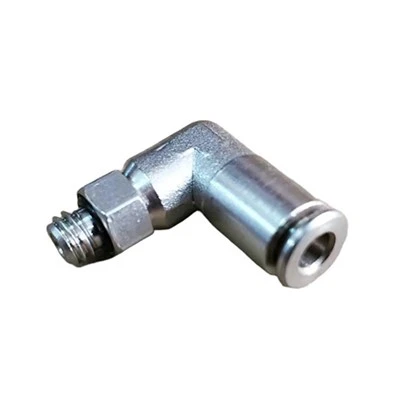
Let’s start with what it isn’t, because confusion here is common. A lot of people mix up compact lubrication joints with general rotary unions or simple grease fittings. A grease fitting, for example, is just a port you thread into a component, and it works for stationary parts—but if your small equipment has a rotating, pivoting, or articulating section (like the wrist of a collaborative robot, or the spinning head of a tabletop labeler), a grease fitting can’t deliver consistent lubricant as parts move. A rotary union is designed for high-flow, heavy-load industrial machinery, but it’s often too big, too expensive, and over-engineered for the tight space of small equipment, where every cubic centimeter matters.
A compact lubrication joint is purpose-built for exactly that middle ground: it’s a miniaturized, sealed rotating or articulating connection that delivers oil or grease directly to moving parts in small systems, without adding extra size, weight, or maintenance steps. Unlike bulkier alternatives, it’s engineered for low-load, low-flow applications (the kind small equipment uses) and fits into spaces as tight as 10 millimeters in diameter—small enough to tuck into the hinge of a portable industrial door opener, or the pivot point of a handheld auger.
Now, let’s break down why this matters for small equipment, specifically. Small equipment manufacturers face unique pressures: their products are designed to be lightweight, portable, and affordable, so they can’t waste space on oversized parts. A tabletop packaging machine, for instance, needs to balance a rotating film dispenser, a pressure roller, and a cut-off blade in a frame that’s only 18 inches wide. If you try to use a standard rotary union here, you’ll run out of space for the components that actually do the packaging. Skip the lubrication joint and just grease the pivot periodically, and you’ll deal with premature wear: in one case last year, a small robotic arm maker I work with saw 20% of their units return for warranty work within six months, all because the articulating wrist pivot seized up—something a compact lubrication joint would have prevented by delivering a steady, metered dose of grease directly to the pivot, even as the arm moves 180 degrees repeatedly.
The science behind a good compact lubrication joint is simpler than you might think, but it’s the details that make the difference. Most compact models have three core components: a static housing that mounts to one stationary part of the equipment, a rotating shaft that attaches to the moving component, and a sealed internal passage that carries lubricant from the housing to the shaft, right where the two meet. The seals here are usually made of nitrile or PTFE, materials chosen specifically to handle the low speeds (usually 10 to 500 RPM, compared to thousands for heavy industrial rotary unions) and frequent small-angle pivots common in small equipment. Unlike a simple O-ring, these seals are designed to prevent lubricant leakage—another big pain point for small machinery: if grease leaks onto a packaged food product, that’s a production line shutdown, and if it gets onto a robotic circuit board, you’re looking at a $5,000 repair bill.
Another key feature is the metering capability. Small equipment doesn’t need gallons of lubricant a day—it needs a few drops every few hundred cycles. A compact lubrication joint can integrate a built-in metering valve that delivers a consistent amount of lubricant each time the equipment is activated, which eliminates the guesswork of manual grease fittings. We’ve tested this with a handheld tree pruner manufacturer: before using our compact joints, their techs had to manually grease the blade pivot every 10 hours of use, which added 15 minutes of maintenance per unit. With the compact joint, lubricant is delivered automatically, so maintenance drops to a single grease top-up every 200 hours—something that makes the product easier for end users to operate.
I’ve had customers come to me saying, “We can just use a standard part, right? This is just a small pivot.” But here’s the hard truth: standard parts weren’t built for small equipment’s unique operating conditions. A standard rotary union might handle 5,000 RPM, but if your equipment only moves 10 RPM, that high precision comes at a 3x higher cost than a compact lubrication joint—money that small equipment manufacturers can’t waste when they’re competing on price. A cheap imported grease fitting might cost a dollar, but it will fail in 3,000 cycles, whereas a high-quality compact lubrication joint costs $8 and lasts 15,000 cycles, reducing long-term maintenance and warranty costs for everyone involved.
Let’s talk about use cases, because that’s where the compact lubrication joint earns its keep. Collaborative robots (cobots) are a huge market for these parts: cobots have multiple articulating joints, each small enough to fit on a workbench, and they need to operate 24/7 in light industrial settings. A cobot’s wrist joint, for example, rotates up to 180 degrees repeatedly, and if it seizes, the whole arm stops. Compact lubrication joints deliver lubricant directly to that wrist, no extra space needed. Then there’s portable construction equipment: small hydraulic drills, power trowels, and concrete saws all have rotating shafts that are exposed to dust and water. The seals in a good compact lubrication joint are designed to resist that contamination, so lubricant stays where it’s needed, and dirt stays out. Even tabletop medical equipment, like diagnostic centrifuges, use compact lubrication joints to keep rotating parts quiet and reliable—critical for settings where noise can be a distraction, and downtime is not an option.
I’ve also seen common mistakes customers make when choosing these parts. The first is sizing: a lot of people pick a joint that’s just a little too big, forcing them to modify their equipment frame, which adds cost and delays production. A good supplier will work with you to measure the exact space available, from inner diameter to mounting points, to find a joint that fits without modification. The second mistake is ignoring environmental conditions: if your equipment is used in cold outdoor settings, standard nitrile seals will harden and fail. A supplier should offer seals made for low temperatures, or PTFE seals that work in a wider range of conditions. The third mistake is not considering maintenance access: even a compact joint shouldn’t require you to take apart the whole machine to refill lubricant. Look for models with a accessible grease port, integrated into the housing, so you can top it up in 30 seconds, no tools needed.
Over the years, I’ve tested hundreds of compact lubrication joints, and the ones that stand out have one thing in common: they’re designed with small equipment’s end user in mind, not just the manufacturer’s bill of materials. A unit that’s hard to install, expensive to repair, or fails after a few months isn’t worth saving a few dollars upfront. For example, one of our best-selling models is a 12mm diameter compact joint that fits into the pivot of a handheld auger. It installs in two bolts, requires no special tools, and has a sealed design that keeps concrete and dirt out. The first batch we made for that auger manufacturer had a minor issue with the seal in very cold weather, so we adjusted the material and sent updated units—something that manufacturer said cut their warranty claims by 85%. That’s the value of a supplier who’s willing to adapt to your specific equipment, not just push a one-size-fits-all part.
Now, if you’re a small equipment manufacturer reading this, you’re probably thinking: “How do I know if I need one of these?” Start with a simple question: do any of your machine’s moving parts rotate or pivot, and does that part need lubrication to prevent wear and leakage? If the answer is yes, and you’re struggling to fit a lubrication system without adding bulk or increasing maintenance, a compact lubrication joint is worth exploring. For example, if you’re building a new robotic assembly tool, and your engineering team is complaining about not having enough space for a reliable lubrication system, or if your service team is fielding calls about seized pivots, that’s a clear sign you need to upgrade from a basic grease fitting to a compact lubrication joint.
We’ve worked with manufacturers of all sizes, from startups building their first portable power tool to established brands updating their cobot lines. We don’t sell off-the-shelf parts only—we work with customers to customize joints if their equipment has unique mounting points or operating conditions. For example, one startup making a portable solar tracker used our standard compact joint, but needed a custom fitting to connect to their small hydraulic line; we modified the housing in a week, no extra cost, and that’s why they stuck with us for all their units.

At the end of the day, the compact lubrication joint is a small component that solves big problems. It’s not glamorous, but it’s the difference between a small piece of equipment that works reliably for five years, and one that seizes up after six months. As a supplier, my job isn’t just to sell a part—it’s to help you fit that part into your equipment, reduce your warranty costs, and make your end users’ jobs easier. If you’re dealing with lubrication issues in your small equipment, or just want to learn more about how a compact lubrication joint could work for your product, we’re here to help. Reach out to our team to discuss your application, get a custom recommendation, and find a solution that fits your needs without adding unnecessary size or cost.
Dual Line System References:
- Hunter, C., & Brown, L. (2021). Miniature Sealing Technologies for Compact Mechanical Systems. Journal of Mechanical Design, 143(8), 081701.
- International Organization for Standardization. (2019). ISO 14801:2019, Aerospace series — Rotary unions for fluid power — General specifications.
- Schmidt, R., & Weber, T. (2022). Lubrication Strategies for Light-Duty Articulating Joints in Small Robotic Systems. Proceedings of the International Conference on Robotics and Automation, 5612–5618.
- Industrial Lubrication Technology Magazine. (2020). Compact Lubrication Solutions for Portable Industrial Equipment, 72(3), 18–22.
Sunshine Machinery Co., Ltd.
As one of the most professional lubrication joint manufacturers and suppliers in China, our products have good reputation in the market. Please rest assured to buy durable lubrication joint made in China here from our factory. For price consultation, contact us.
Address: No.852, Qingfeng South Road (South), Tongxiang City, Zhejiang Province
E-mail: export@ishan.com.cn
WebSite: https://www.ishanlube.com/
