If you’ve ever ordered disposable insulin syringes, you’ve probably scrolled through product pages and seen two terms tossed around like they’re interchangeable: “1cc” and “1ml.” As someone who’s been in the disposable sterile insulin syringe supply game for over a decade, I get why this mix-up happens—even my team’s intern used to mix them up when first starting out. But let me tell you straight: they’re not exactly the same, and messing this up when you’re sourcing for diabetes management (or stocking your pharmacy, clinic, or supply business) can lead to real headaches—like incorrect doses, waste, or even safety issues. Disposable Sterile Insulin Syringe
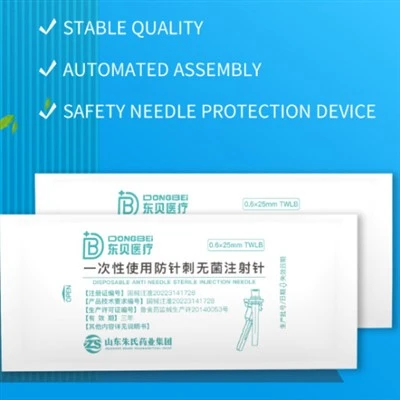
First off, let’s break down the basics so it’s not just a bunch of jargon. You probably already know “cc” is short for cubic centimeter, right? And “ml” is milliliter. Here’s the no-BS fact: in medical measurement, 1 cubic centimeter is mathematically equal to 1 milliliter. But wait—before you close this thinking “oh, so they are the same,” hold on. That’s where the fine print comes in, and that’s why so many people get tripped up. The “1cc” or “1ml” label isn’t just about the total volume of the syringe barrel; it’s tied directly to what these syringes are designed for—specifically, insulin.
Let’s start with the functional design, because that’s the part that matters most for anyone using these. A standard 1cc (which is the same as 1ml in total volume) syringe for insulin isn’t just a mini version of a general-use 1ml syringe. General-purpose 1ml syringes—you know, the ones used for things like small injections of antibiotics or allergy shots—often have finer increments on the scale, like 0.01ml marks. But insulin is measured in units, not milliliters, because insulin doses are standardized in “units” (1 unit of insulin = 0.01ml, if you’re curious). That’s why insulin-specific syringes—whether labeled 1cc or 1ml—are calibrated to match insulin units, not fluid volume.
Wait, so let’s clarify the numbers here: a 1cc insulin syringe is calibrated to hold up to 100 units of insulin, right? Because 1cc = 1ml, and 1ml of insulin is 100 units. That’s why you’ll often see them called “100-unit syringes.” Now, here’s the key difference between a 1cc insulin syringe and a random 1ml general syringe: the needle length and gauge. For insulin use, the needle is super short—usually 5/16 inch or 1/2 inch—because it’s meant for subcutaneous injection, not deep muscle. A general 1ml syringe might have a longer needle, or a thicker gauge, which would be way too painful for daily insulin use. Also, insulin syringes have a tightly fitted plunger and a Luer lock tip (or sometimes slip tip, but only the secure kind) to prevent leaks when you’re drawing up insulin—something a general 1ml syringe isn’t built for.
Now, why do suppliers like us use both terms? Good question. A lot of older medical terminology still floats around—nurses who trained 20 years ago say “cc,” while newer med techs might use “ml.” For our products, we label them both ways to make sure anyone, no matter their background, knows what they’re getting. But here’s the part I want our customers (whether you’re a pharmacy owner, a home health agency, or even a parent stocking for a kid with diabetes) to understand: just because a product says “1ml syringe” doesn’t mean it’s an insulin-specific syringe. I’ve seen too many horror stories where someone ordered a cheap 1ml general syringe and had to adjust doses because the scale was in ml units, not insulin units. For example, a 1ml general syringe might have a mark at 0.5ml, but that’s not 50 units of insulin—it’s just half the volume, which would be a dangerous, incorrect dose.
Another point: safety features, which are non-negotiable for disposable sterile insulin syringes. The 1cc/1ml insulin syringes we supply all have safety caps that lock after use to needlestick prevention—something most basic general 1ml syringes don’t have. And since insulin is a biologic, you don’t want to risk contamination with a syringe that’s not designed for its specific viscosity. Insulin is thicker than plain water, so the barrel of an insulin syringe has a smoother interior and a plunger that creates a tighter seal to make drawing up the thick insulin easy and accurate. A general 1ml syringe might not handle that consistency as well, leading to under-drawing or over-dosing.
Let me also address a common myth: some people think a 1cc insulin syringe is only for people with high insulin needs, like Type 1 diabetics who take 100+ units a day, and a 0.5ml (50-unit) is for smaller doses. But our 1cc insulin syringes are versatile—they can measure doses from 1 unit all the way up to 100 units, as long as you’re using it correctly. The confusion comes when people mix that up with the total volume: 1cc and 1ml total volume are the same, but the design around that volume is what makes it an insulin syringe, not just a syringe. We’ve had clients come to us after wasting hundreds of dollars on bulk “1ml syringes” that were meant for other uses, not for insulin administration. That’s why we always make sure our product descriptions clearly state “insulin-specific” alongside the 1cc/1ml labeling.
What about quality? As a supplier, I know that not all disposable sterile insulin syringes are created equal. A cheap 1ml syringe from a no-name brand might have inconsistent calibration marks—meaning the line for 50 units is actually slightly off, which is a big problem for insulin. Our 1cc/1ml insulin syringes are manufactured with strict ISO standards, calibrated to within 1% accuracy, and individually sealed to maintain sterility. We test every batch for leaks (no one wants insulin leaking mid-injection) and needle sharpness (so no extra pain for daily users). That’s the stuff you don’t see on the product label, but it’s what separates a reliable syringe from one that could cause issues.
I also want to touch on regulatory stuff, because that’s a big deal for anyone in the healthcare supply chain. The FDA (and other global regulatory bodies) classifies insulin syringes as Class II medical devices, which means they have to meet specific safety and performance standards. A general 1ml syringe is often Class I, with less stringent requirements. So when you’re purchasing, make sure the “1ml syringe” you’re looking at is actually classified for insulin use—otherwise, you might not be compliant with local healthcare regulations. We make sure all our products are fully registered and meet all regulatory requirements, so you can rest easy when you order from us.
Let’s wrap this up with a quick takeaway to make it simple: 1cc and 1ml are mathematically the same volume, but when it comes to insulin syringes, the label isn’t just about the number. It’s about the calibration (in insulin units, not ml), the needle size, the safety features, and the design for administering insulin specifically. A general 1ml syringe is not a replacement for a 1cc insulin syringe—no matter what the math says.

If you’re tired of dealing with syringes that don’t fit your needs, whether you’re a clinic manager needing bulk orders, a small pharmacy restocking, or a caregiver sourcing for personal use, we’ve got you covered. Our disposable sterile insulin syringes are available in 1cc, 0.5cc, and 0.3cc sizes, all clearly labeled and designed for accurate, safe insulin delivery. We offer flexible bulk pricing, fast shipping, and all the necessary documentation for regulatory compliance. Don’t settle for generic syringes that don’t meet your needs—reach out to us to talk through your requirements and get a custom quote tailored to your supply needs.
Disposable Sterile Infusion Set References
- World Health Organization. (2021). Medical Injection Devices: Safety and Performance Standards for Insulin Syringes.
- U.S. Food and Drug Administration. (2022). Class II Medical Devices: Insulin Syringe Labeling and Classification Requirements.
- International Organization for Standardization. (2020). ISO 11608-1: Needle-Based Injection Systems – Part 1: Syringes.
- American Diabetes Association. (2023). Insulin Administration: Best Practices for Syringe Selection and Dose Accuracy.
Shandong Zhushi Pharmaceutical Group Co., Ltd.
Shandong Zhushi Pharmaceutical Group Co., Ltd. is one of the most reliable disposable sterile insulin syringe manufacturers and suppliers in China, featured by quality products and good price. Welcome to wholesale CE approved disposable sterile insulin syringe made in China here from our factory. Contact us for customized service and pricelist.
Address: No 6th Food And Drug Industry Park Economic and Technological Development Zone, Shan County 274300 Heze, Shandong People’s Republic of China
E-mail: admin@cnzhushigroup.cn
WebSite: https://www.zhushimed.com/
