If you work in industries like oil & gas, water treatment, or manufacturing, you’ve probably dealt with that annoying, constant hum or rattle from valve actuators. As a valve actuator supplier, I get asked about noise reduction all the time—most folks just want to know how to fix that headache without blowing their maintenance budget or overcomplicating their setup. Let’s break down the practical, science-backed tips that actually work, no fluff, no jargon that makes your eyes glaze over. Valve Actuator

First, let’s cut to why valve actuators make noise in the first place. It’s not just a random nuisance—most noise comes from three main sources: mechanical vibrations inside the actuator, fluid turbulence in the valve itself, and airflow (if it’s a pneumatic actuator, which is super common for on/off and control duties). If you’re hearing a high-pitched whine, that’s usually fluid; a deep rattle? Probably mechanical parts knocking around. A steady hum? That’s often pneumatic airflow.
Let’s start with the low-hanging fruit, the stuff you can check without ordering a single replacement part. First up: inspect your mounting and alignment. I can’t tell you how many actuators I’ve seen bolted unevenly to valve bodies, or where the stem is slightly off-center. Even a tiny misalignment makes the gear train inside the actuator work harder, leading to more vibration and noise. I recommend grabbing a dial indicator (or even a straight edge and feeler gauge, if you’re on a tight budget) once every six months to check alignment. If you see a gap of more than 0.005 inches, tighten the bolts, adjust the stem, and torque them to the manufacturer’s specs—don’t overdo it, though; over-tightening can warp the mounting flange and cause more problems.
Next, lubrication. This is another cheap fix that people neglect. Actuator gears, bearings, and linkages need the right grease or oil to move smoothly, and dry parts grind together, creating friction and noise. But here’s the trick: use the right lubricant, not just any off-the-shelf stuff. For most electric actuators, a high-quality lithium complex grease works, but if yours is in a high-temperature environment (like a furnace exhaust line), you need a synthetic grease that can handle temps over 300°F. For pneumatic actuators, add a pneumatic lubricator to your air line—compressed air is dry by nature, so without lubrication, the cylinder seals and rattle start to wear out faster, which makes noise. I once had a client who was reporting 85 dB noise from a pneumatic actuator; we swapped his generic lubricator for a premium one, and the noise dropped 10 dB in a week. That’s a huge win for almost no cost.
Now, moving to pneumatic actuators specifically, since they’re the most common culprit for noise in our experience. Pneumatic actuators use compressed air to move the valve, and when air flows through the valves and ports at high speeds, it creates that high-pitched whine. The easiest fix here is adding an exhaust silencer—but not just any silencer. A lot of people grab the cheapest silencer off the shelf, which only cuts 2-3 dB, but a properly sized silencer (matched to your actuator’s air flow rate) can cut 10-15 dB. Wait, don’t just pick a silencer by the size of your air line; check your actuator’s CFM rating. If you use a silencer that’s too small, it’ll restrict airflow, which can make your actuator slower or cause it to stall. If it’s too big, it does nothing for noise. Our team usually recommends calculating your max air flow (add up the CFM of all the valves and cylinders in your system) and picking a silencer rated for at least 120% of that number—extra headroom is worth it.
For electric actuators, mechanical noise is the bigger issue. If you’re hearing a rattle from the gearbox, check for worn gears or loose components. Some actuators use plastic gears for light-duty applications, and over time, those can strip or get misaligned, causing vibration. If you can upgrade to metal gears (they last longer, too), that’s a good long-term fix. Another thing: add vibration-damping pads between the actuator and the valve body. These are simple rubber or neoprene pads that absorb the vibration that would otherwise transfer to the pipe, making the whole system vibrate. I’ve seen these cut noise by 5-8 dB, and they’re cheap to install—just stick them on the mounting flange before bolting the actuator down.
Now, for fluid-related noise, which is tricky because it’s tied to the valve, not just the actuator. If your valve is a control valve, the noise usually comes from cavitation or high-velocity flow. Cavitation is when fluid pressure drops below the vapor pressure, forming bubbles that collapse violently when pressure rises again— that’s a loud popping noise, and it’s also damaging your valve. The actuator can’t fix cavitation alone, but you can pair it with a low-noise valve trim. Wait, let me explain: trim is the internal parts of the valve (the plugs, seats, and cages) that control fluid flow. Standard trim lets fluid shoot through at high speed, creating turbulence, but low-noise trim splits the flow into smaller streams, slowing it down and reducing turbulence. If you’re already using a compatible valve, swapping the trim is way cheaper than replacing the whole valve. For example, a client in the chemical industry was getting 92 dB noise from their control valve; we installed a noise-reducing cage trim, and the noise dropped to 78 dB, which is way below OSHA’s 85 dB limit for eight-hour work shifts.
Another fluid tip: if you have a valve that’s throttling frequently (like a control valve being adjusted a lot), look into installing a pressure regulator upstream. High pressure differentials across the valve are the main cause of high-velocity flow and noise. The regulator reduces the pressure before it hits the valve, so the fluid moves slower. Just make sure the regulator is sized for your system—too small, and it won’t handle the flow, too big, and it’s a waste of money.
Wait, let’s talk about when you need to go beyond tweaks and upgrades. If you’ve tried all the above and still have noise, you might need to look at the actuator’s overall design. For example, some older actuators have open gear trains, which let noise escape. Enclosed gearboxes contain the noise inside, so that’s a good upgrade if your current actuator has an open design. Also, for high-noise environments (like power plants, where noise can be over 100 dB), you can add an acoustic enclosure around the actuator. These enclosures are made of sound-absorbing material (like acoustic foam or layered steel) and can cut noise by 15-20 dB. Just make sure the enclosure has vents for airflow, especially if it’s a pneumatic or electric actuator that generates heat—overheating can damage the actuator over time.
Now, let’s cover some mistakes people make that actually make noise worse. First, don’t ignore small noise issues. A little rattle today can turn into a big vibration tomorrow, which wears out parts faster and creates more noise. Second, don’t use generic parts. I’ve seen clients use a silencer from a hardware store on a pneumatic actuator, and it not only didn’t reduce noise but also caused the actuator to fail because of restricted airflow. Third, don’t forget about the pipe system. Even if your actuator is quiet, if the pipe is loose or has weak supports, it will vibrate and amplify the noise. Tighten pipe clamps and add supports every 10-15 feet for large pipes—this cuts down on transmitted noise.
As a valve actuator supplier, I’ve worked with hundreds of clients to reduce noise, and the best results usually come from combining a few small fixes instead of one big upgrade. For example, a water treatment plant we worked on swapped their generic silencer, added vibration pads, and adjusted their actuator alignment—total cost under $500, and noise dropped 12 dB. That’s way better than replacing the whole actuator, which would have cost thousands.
Wait, let’s also mention safety, because noise isn’t just an annoyance—it’s a safety issue. OSHA requires employers to provide hearing protection for workers exposed to 85 dB or more for eight hours a day, but reducing noise at the source is better. It’s cheaper than buying hearing protection for every worker, and it reduces fatigue and errors from constant noise.
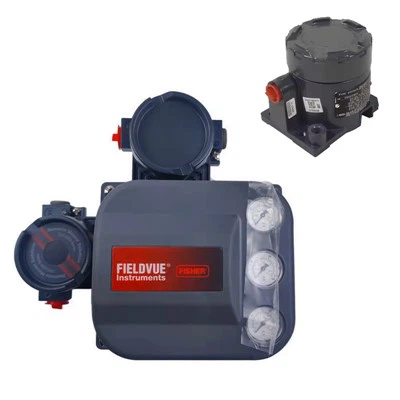
Now, if you’re still stuck, the best thing to do is reach out. We’ve helped clients with all kinds of noise issues, from small electric actuators on residential plumbing to large pneumatic actuators on oil pipelines. We don’t just sell parts—we work with you to assess your setup, figure out the root cause, and pick the right solutions that fit your budget. Whether you need a quick checkup on your actuator alignment, a recommendation for the right silencer, or help with a larger upgrade, we’re here to make it easy.
Fisher Valve Positioner References:
- Valtek International. Control Valve Noise Reduction: A Practical Guide. 2021.
- International Society of Automation (ISA). Noise Control in Process Automation Systems. ISA-TR12.01.01, 2019.
- Fluid Power Society. Pneumatic Actuator Noise Sources and Mitigation. FPS Technical Report 47, 2020.
- National Institute for Occupational Safety and Health (NIOSH). Reducing Occupational Noise Exposure. Publication No. 2018-108, 2018.
Century Weiye (Dalian) Control Equipment Co., Ltd.
As one of the leading valve actuator manufacturers and suppliers in China, we warmly welcome you to buy discount valve actuator in stock here from our factory. If you have any enquiry about quotation, please feel free to email us. Quality products and reasonable price are available.
Address: 2205, Building 8, Red Star International, Ganjingzi District, Dalian City, Liaoning Province
E-mail: serena@valve-sjwy.com
WebSite: https://www.valve-sjwy.com/
