If you’ve ever stared at a perfectly wrapped stack of chocolate chip cookies on a grocery store shelf and wondered how they go from a warm, freshly baked tray to that neat, shelf-ready package, you’re not alone. As someone who’s been designing and building cookie production lines for small-batch artisanal bakers and large-scale commercial brands alike for over 15 years, I get asked this question at least twice a week: “What actually happens in that packaging step, and why does it matter so much?” Most people think packaging is just tossing cookies into a bag and sealing it—but skip a single step or cut a corner, and you end up with crumbs, stale cookies, or even spoilage that makes your entire batch unmarketable. Let me walk you through the real, science-backed process we build into every cookie line, tailored to keep your product fresh, consistent, and ready for retailers. Cookie Production Line
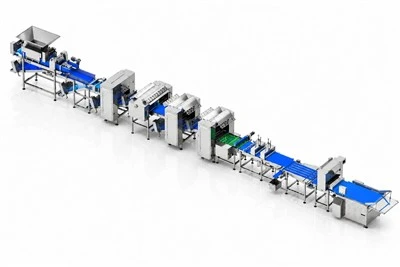
First, let’s set the stage: packaging for cookies isn’t one-size-fits-all. A line for soft, gooey molasses cookies needs different handling than one for thin, crisp sugar wafers, and a 10,000-cookies-per-hour commercial line is way different from a 500-cookies-per-hour artisanal line. That’s why our teams start every project with a deep dive into a baker’s specific product and goals, but the core process stays the same. It all kicks off right after baking and cooling—wait, hold on, cooling is non-negotiable, and it’s not just to let cookies cool down. Hot cookies release moisture, and if you pack them too early, that moisture gets trapped inside the package, turning crisp cookies soggy or growing mold. A good cooling tunnel, built into our lines, uses controlled, filtered air (usually 60 to 65 degrees Fahrenheit, with 40 to 45 percent humidity) to pull surface moisture off cookies over 15 to 20 minutes, depending on size. We also add temperature sensors along the cooling belt to make sure cookies hit no higher than 80 degrees before moving to packaging—skip that, and you’re asking for problems.
The next step is inspection. No baker wants a broken cookie or one with excess dough, burnt edges, or a foreign object in their package. That’s why our lines include both automated and manual inspection stations, depending on the line size. For large-scale operations, we use high-resolution, color-matching cameras that can spot a cookie that’s 10 percent darker than it should be or has a tiny piece of broken dough crumb that got left behind. We also put in metal detectors—critical for baked goods, since a stray piece of equipment from mixing or cutting could make it into the batch. For small-batch lines, we keep a gentle conveyor belt where a team member can spot-check cookies, flagging any that the automation misses. This step is make-or-break: we once worked with a cookie brand that skipped inspection, and they had to recall 20,000 packages because a metal sliver got into a batch—costing them millions, not to mention customer trust. That’s why we build inspection stations as non-negotiable parts of every line.
Once cookies pass inspection, they move to sorting and separating. This is where we separate single cookies for individual packaging, or group them into the counts retailers want—like 12 chocolate chip cookies per family pack, or 3 shortbread cookies per snack size. For cookies that tend to stick together (like soft, chewy peanut butter ones), we use gentle air nozzles or soft mechanical fingers to separate them without breaking. We also align them consistently, so they fit perfectly into their packaging without wasted space. This step is important for both product presentation and cost efficiency: if cookies are misaligned, you end up with empty space that increases packaging material waste, or you have to use more bags to fit the same number of cookies. We calibrate our sorting stations to adjust for different cookie sizes, so a line that works for 2-inch sugar cookies can be tweaked for 3-inch oatmeal raisin cookies without downtime.
Now we get to the core packaging steps—first, primary packaging. This is the actual material that touches the cookies, and it’s the most important for keeping them fresh. The primary packaging choice depends on the cookie: crisp cookies often use plastic-film rolls (polypropylene or polyethylene) that seal tightly to block moisture and oxygen, while soft cookies might use a laminate film that’s slightly permeable to let a tiny bit of air in, keeping them chewy without getting moldy. We use vertical form-fill-seal (VFFS) machines for most individual or family pack lines: the film roll is fed through the machine, folded into a tube, and opened at the bottom to create a pouch. Then, a metering device drops the sorted cookies into the pouch—we calibrate this to make sure the count is exact, so every package has the same number of cookies, no more, no less. Then, the top of the pouch is sealed. Sealing quality is critical here: a bad seal means air gets in, and cookies go stale in weeks instead of months. We use heat sealing with pressure sensors, so the seal is consistent across every package, and we test seal strength on every line at our factory before it ships. For cookies that are more delicate, like decorated sugar cookies, we often use individual paper or plastic clamshells instead of film pouches, which offer more protection against crushing.
Wait, what about modified atmosphere packaging (MAP)? A lot of people don’t realize this, but MAP is a game-changer for cookie shelf life, and we build it into our lines for brands that want their cookies to last 6 to 12 months instead of 1 to 2 months. MAP works by replacing the air inside the package with a mix of gases—usually 70 percent nitrogen, 20 percent carbon dioxide, and 10 percent oxygen. Carbon dioxide kills mold and bacteria, nitrogen keeps the packaging from collapsing and prevents cookies from going stale, and a tiny bit of oxygen keeps the packaging from getting too wrinkly. Our MAP machines automatically flush the gas mix into the pouch before sealing, and we test the gas concentration on every package to make sure it’s within the correct range. This is especially important for brands that distribute their cookies nationally or internationally, since longer shelf life means less waste and happier retailers.
Once primary packaging is done, we move to secondary packaging. This is the box or cardboard tray that holds multiple primary packages, making it easier to ship and display on store shelves. Secondary packaging has its own set of steps. First, we usually collect the sealed primary packages in groups—say, 10 individual snack packs go into a family size shipping box, or 20 pouches go into a retail display case. For this, we use robotic pick-and-place systems for large-scale lines, which are precise and fast, and that’s a big part of why our lines can run at up to 15,000 packages per hour for large commercial operations. For smaller lines, we use semi-automatic tray loaders that a team member can operate, which keeps labor costs low without sacrificing consistency.
Next, secondary packaging gets sealed, labeled, and coded. We use case sealers to close the cardboard boxes with tape, and then apply labels that have important information: nutrition facts, expiration date, brand name, and lot number for traceability. Traceability is a big deal now, especially with food safety regulations. Our lines include date coding machines that print the lot number and expiration date directly onto primary and secondary packages, using ink that’s resistant to smudging and fading, even in cold storage. We also can integrate label applicators that print barcodes for inventory tracking, so brands can track exactly where their batches are in the supply chain, from the packaging line to the store shelf.
Wait, there’s one step most people forget: palletizing. Once secondary packaging is done, the boxes need to be stacked onto pallets for shipping. We incorporate robotic palletizers into most of our full lines, which stack boxes in stable patterns to prevent them from falling during transport. For smaller operations, we offer semi-automatic palletizers that work with a team member, or even manual palletizing options for very small batches. We also add stretch wrapping stations to wrap the entire pallet in plastic, keeping the boxes secure and protected from dust, moisture, and damage during shipping. This is especially important for long-distance distribution, where pallets might be moved between trucks, warehouses, and stores.
But here’s the thing: every part of this process has to be flexible. We’ve had clients come to us with a line that works for chocolate chip cookies, then switch to making custom shortbread for a holiday season, and they need to adjust the line without having to buy a whole new machine. That’s why we build modular lines, where you can swap out parts—different sorting fingers, different film rolls, even adjust the cooling speed—with minimal downtime. We also train our clients’ teams on how to operate every part of the line, from troubleshooting small seal issues to adjusting the inspection cameras, so they don’t have to wait for a technician every time something comes up.
I’ve seen first-hand what happens when you skip a step. A few years ago, we worked with a startup cookie brand that tried to cut costs by using a generic packaging line that didn’t have proper temperature-controlled cooling. Their cookies were 10 degrees too hot when sealed, and within a week, half their batch was moldy. They lost $50,000 in product and had to shut down production for a week to fix their process. That’s why, when we build a cookie production line, we don’t just sell equipment—we build a system that’s designed for cookies, not just generic packaged goods. We take into account the delicate texture of cookies, their moisture content, and the food safety standards that apply to baked goods, so our clients don’t have to worry about avoidable mistakes.
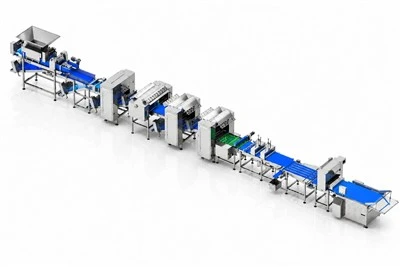
Whether you’re a small-batch baker looking to scale up to 1,000 packages a week or a large commercial brand producing millions of cookies a year, the packaging process is the final line of defense for your product. It’s what turns a great-tasting cookie into one that customers buy again and again, because it stays fresh, looks perfect, and is safe to eat. If you’re thinking about upgrading your packaging line, or building a new line from scratch, let’s talk. We can walk through your product, your goals, and build a custom solution that fits your needs, no matter the size.
Food Forming Machine References
- Food and Agriculture Organization of the United Nations. (2019). Packaging Technologies for Bakery Products. Rome: FAO.
- Institute of Food Technologists. (2021). "Modified Atmosphere Packaging for Baked Goods and Snacks." Food Technology Journal, Vol. 75, No. 4, pp. 32-38.
- American Society for Bakery Engineers. (2020). Production Line Guidelines for Commercial Cookie Packaging. Arlington, VA: ASBE.
- National Food Processors Association. (2018). Food Safety and Quality Control in Packaged Baked Goods. Washington, DC: NFPA.
Shanghai Longyu Electro-Mechanic Technology Co., Ltd.
Shanghai Longyu Electro-Mechanic Technology Co., Ltd. is one of the most professional cookie production line manufacturers and suppliers in China, featured by quality products and good service. Please feel free to wholesale advanced cookie production line made in China here from our factory. Also, custom service is available.
Address: No.66, Guangfulin East Road, Zhongshan Subdistrict, Songjiang District, Shanghai, China
E-mail: sales4@longyu-sh.com
WebSite: https://www.longyu-sh.com/
